Draceane / CC BY-SA 4.0, via Wikimedia Commons
Prickly heath (Gaultheria mucronata): growing guide
Gaultheria mucronata
Want to see Prickly heath (Gaultheria mucronata): growing guide in your garden?
Full design in HD: €7.99
Look after your Prickly heath with the GardenWorld app
Identify plants with your camera and get a care calendar with reminders for this plant.


Overview
Prickly heath (Gaultheria mucronata) is the shrub that fills garden centre benches every autumn: small pots crammed with white, pink, red or purple berries, often sold alongside heathers and skimmias for seasonal containers. What many people do not realise is that it makes a fine permanent garden plant too. It is evergreen, hardy and holds its berries from September well into spring. For a long time it was known as Pernettya mucronata, and that name still appears on plenty of labels, although botanists have since merged Pernettya into Gaultheria.
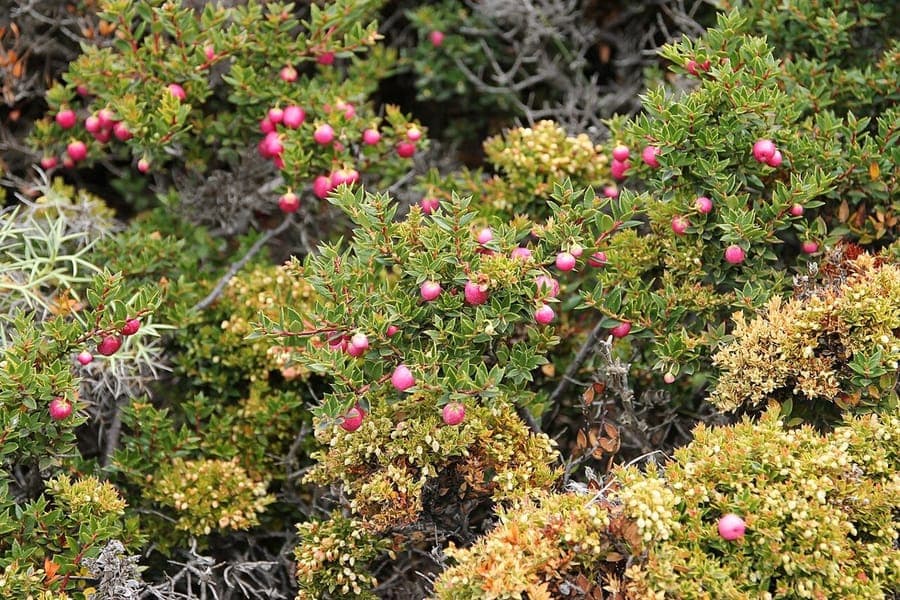
The species comes from the far south of South America, from central Chile down to Tierra del Fuego and neighbouring Argentine Patagonia. There it grows on heaths, woodland edges and open, windswept plains, usually among other low shrubs. The photograph shows exactly that kind of wild planting in Patagonia, with pink berries scattered among the small, pointed leaves. In gardens it usually reaches 50 cm to 1 metre, occasionally a little more, and slowly spreads by suckers into a dense, broad clump.
Two things are worth knowing before you plant it. First, prickly heath is dioecious, meaning there are separate male and female plants. Only females bear berries, and only if a male plant grows nearby to pollinate them. Second, the plant is toxic, particularly the berries. They look tempting but are ornamental, not edible. Eating them can cause nausea, vomiting, stomach pain and diarrhoea in people, and dogs, cats and other pets can also be made ill. Keep children and animals away from the fruit.
On gardenworld.app you can have a garden design drawn up in which prickly heath brings winter colour together with heathers, skimmias and other acid-loving plants.
Appearance and bloom cycle
The leaves are small, 1 to 2 cm long, stiff, glossy dark green and tipped with a sharp point. That is what the name mucronata refers to: ending in a short, sharp tip. Reach into the shrub with bare hands and you will feel it straight away. The young shoots are often reddish, which adds a warm tone in winter.
In May and June the plant produces small white, bell- or urn-shaped flowers just a few millimetres long, typical of the heather family. They hang in numbers along the shoots and are visited by bees and bumblebees. They are not showy, but without them there would be no berries.
The berries are the real attraction. They are round, 1 to 1.5 cm across and ripen in late summer. Depending on the cultivar they are white, pale pink, bright pink, red, purple or almost black. Birds tend to leave them alone longer than many other fruits, so they often stay on the bush until March or April. Well-known female selections include 'Wintertime' with white berries and 'Parelmoer' with pale pink berries. A few selections with bisexual flowers exist too, such as 'Bell's Seedling' with dark red berries, which can pollinate themselves.
Ideal location
Prickly heath tolerates more sun than many plants in the heather family. In full sun to light shade it stays compact and sets the most fruit. In deep shade it becomes leggy and berry production drops off. It copes well with wind, including coastal wind, as long as the soil is acid.
Plant several females in a group with one male among them. A common rule of thumb is one male to every five to seven females, no more than a few metres apart. Garden centres stock males less often because they carry no berries themselves, so ask for one specifically or choose a self-fertile selection. In pots and window boxes it also does well, especially as part of an autumn and winter display.
Free preview
Want to see Prickly heath (Gaultheria mucronata): growing guide in your garden? Make a free preview of your design.
Soil requirements
Like nearly all members of the heather family, prickly heath needs acid soil with a pH between 4.5 and 6. On chalky ground the leaves yellow and the plant fades away. Sandy soil with some humus, or a light acid loam, is ideal. On heavy clay or limy soil, grow it in a raised bed filled with ericaceous compost.
The soil can be moist but must drain well, as standing water around the roots is poorly tolerated. When planting, mix peat-free ericaceous compost and some composted bark into the top layer. A mulch of pine bark or pine needles keeps the soil cool and acidic. Feed sparingly: a small dose of ericaceous fertiliser in March is plenty.
Watering
Water a newly planted prickly heath regularly through its first year so the root ball never dries out. After that it is fairly self-sufficient, but in long dry summers it needs extra water, otherwise the berries shrivel or drop early. Use rainwater where possible, because hard tap water gradually raises the pH.
Pots and containers dry out faster. Check them every few days in summer and water occasionally in dry, frost-free weather in winter. Make sure there is a good drainage hole, as wet feet in a pot quickly lead to root rot.
Pruning
Prickly heath needs little pruning. In March or April, remove dead branches or any that have grown out of shape. Older plants that have become open can be cut back fairly hard in spring; they regrow well, though some of that year's berries will be lost.
Keep an eye on the suckers. The shrub sends out underground runners and can slowly take over more space than you intended. Slice off unwanted shoots at the edge with a sharp spade. Those rooted pieces can be replanted elsewhere. Wear gloves when pruning, because of the spiny leaf tips and the toxic berries.
Maintenance calendar
March–April: Prune out dead and overlong branches. Give a light feed of ericaceous fertiliser. Remove unwanted suckers.
May–June: Flowering. Make sure a male plant is flowering nearby for good pollination.
July–August: The berries swell. Water during dry spells, especially container plants.
September–October: Berries colour up. A good time to plant and to fill autumn containers.
November–February: The berries brighten the winter garden. Protect pots in hard frost.
Winter hardiness
Prickly heath is reliably hardy. The Royal Horticultural Society rates it H6, meaning hardy to around -20 °C, so it comes through winters in Britain and the Low Countries in open ground without difficulty. In very severe winters the shoot tips may brown slightly, but the plant regrows normally in spring.
Container plants are more vulnerable because the root ball can freeze. During prolonged frost, move them against a sheltered wall and wrap the pot in hessian or bubble wrap.
Companion plants
Prickly heath is at home with other acid-loving plants. Heather (Calluna vulgaris) is the classic partner in autumn containers and heather gardens. Skimmia japonica adds yet more winter colour with its red flower buds. Its relative the checkerberry (Gaultheria procumbens) is a low, red-berried ground cover that sits nicely in front.
For more structure, combine it with Leucothoe fontanesiana, whose arching stems often turn reddish bronze in winter. A clipped Japanese holly (Ilex crenata) brings calm among all those berries. Avoid lime-loving plants in the same bed.
Final thoughts
Prickly heath is far more than a throwaway plant for autumn pots. Given acid soil, plenty of light and a male plant nearby, Gaultheria mucronata produces a wealth of colourful berries year after year, from September into spring. Just remember that those berries are toxic, and keep them out of reach of children and pets.
Want to see how this colourful shrub would fit into your garden? On gardenworld.app you can have a garden design made in which prickly heath, heathers and skimmias create a warm winter display together.
Frequently asked questions about Prickly heath
Is Prickly heath winter hardy?
Prickly heath is reliably hardy. The Royal Horticultural Society rates it H6, meaning hardy to around -20 °C, so it comes through winters in Britain and the Low Countries in open ground without difficulty.
When and how do you prune Prickly heath?
Prickly heath needs little pruning. In March or April, remove dead branches or any that have grown out of shape.
How much water does Prickly heath need?
Water a newly planted prickly heath regularly through its first year so the root ball never dries out. After that it is fairly self-sufficient, but in long dry summers it needs extra water, otherwise the berries shrivel or drop early.
Where does Prickly heath grow best?
Prickly heath tolerates more sun than many plants in the heather family. In full sun to light shade it stays compact and sets the most fruit.
What soil does Prickly heath need?
Like nearly all members of the heather family, prickly heath needs acid soil with a pH between 4.5 and 6. On chalky ground the leaves yellow and the plant fades away.

See it in your garden
See Prickly heath in your garden
One photo of your garden and a few questions. You see the result in about a minute.
Try it with a photoIdentify this plant in your own garden. Identify a plant
Similar plants
Heather: complete guide
Calluna vulgaris
Discover how to grow and care for Calluna vulgaris: ideal soil, pruning tips, companion plants and winter care. Perfect for UK and US gardens.
Skimmia japonica: complete guide
Skimmia japonica
Evergreen shrub with red berries and fragrant leaves that remain visible long. Winter hardy to -10C, perfect for shade.
Gaultheria procumbens: complete guide
Gaultheria procumbens L.
Wintergreen is an elegant low shrub with white flowers and glossy bright red berries. Perfect for shaded corners and beautiful woodland gardens today.
