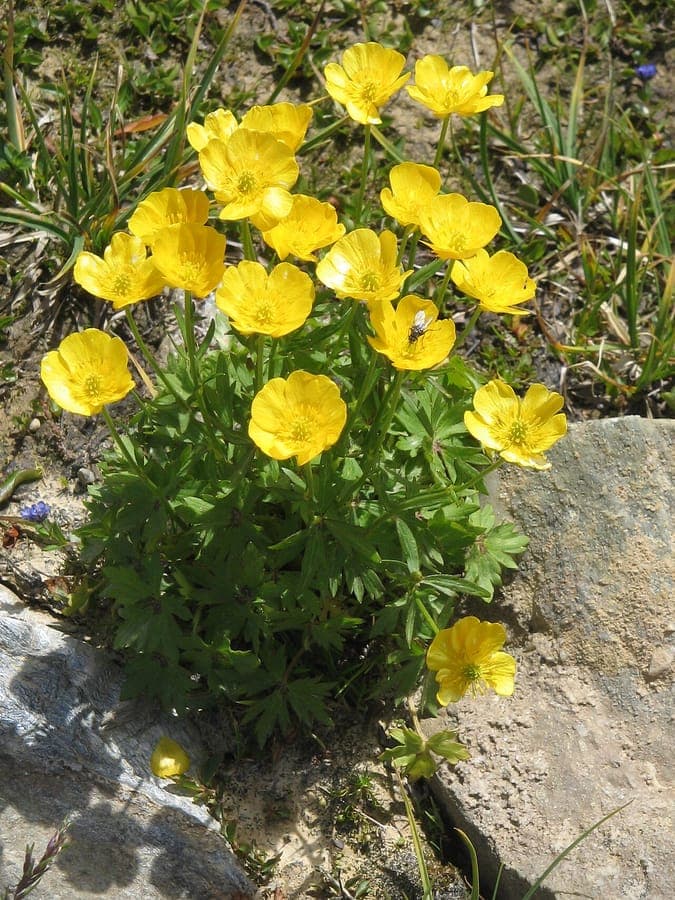
Meneerke bloem / CC BY-SA 3.0, via Wikimedia Commons
Ranunculus montanus: complete guide
Ranunculus montanus
Want to see Ranunculus montanus: complete guide in your garden?
Full design in HD: €7.99
Look after your Ranunculus montanus with the GardenWorld app
Identify plants with your camera and get a care calendar with reminders for this plant.


Overview
Ranunculus montanus, commonly known as mountain buttercup, is a delightful alpine perennial from the Ranunculaceae family. This mountain jewel thrives in the rocky peaks of central to southern Europe, displaying brilliant golden-yellow flowers that seem to catch and hold sunlight. The plant is celebrated for its resilience in harsh alpine conditions and has become increasingly popular with gardeners seeking authentic alpine specimens for rock gardens and mountain landscapes.
If you love the challenge of alpine gardening, Ranunculus montanus rewards careful placement and proper drainage with years of golden displays. This is genuine alpine character translated to garden scale.
Appearance and bloom
Mountain buttercup forms tight, compact mounds typically 15-25 centimeters in height. The standout feature is the glossy yellow flowers with five silky petals that appear May through August. Each blossom has a lacquer-like finish that makes the blooms gleam in morning light. Leaves are narrow and deeply cut, creating an elegant green foundation.
The flowers emerge in successive flushes throughout the growing season. In truly alpine conditions, the plant sometimes disappears entirely under a carpet of bloom. This free-flowering nature and compact habit make it ideal for small gardens and alpine troughs.
Ideal location
Mountain buttercup thrives in full sun - minimum six hours of direct daily exposure. This alpine species loves elevation and wind exposure. Site the plant on raised beds, rock gardens, or the highest points available. While the plant tolerates partial shade, flowering diminishes significantly.
In lowland gardens, create raised alpine beds with excellent drainage. The plant's preference for alpine conditions means you should plant as high as possible. Avoid low, damp pockets.
Soil requirements
The critical success factor is soil drainage. Ranunculus montanus demands excellent drainage - poor drainage kills this species quickly. In standard garden soil, incorporate coarse sand, pea gravel, and small stones generously. Ideal pH ranges 7.0 to 7.5.
We recommend integrating the plant into rock gardens using broken stone and gravel to ensure good drainage. A mix of alpine soil, coarse sand, and fine gravel works excellently. Never plant in heavy clay without major amendment.
Free preview
Want to see Ranunculus montanus: complete guide in your garden? Make a free preview of your design.
Watering
Despite its mountain origins, regular moisture during growth and bloom periods is essential. Water when the top centimeter of soil feels dry. In winter, minimize watering - the soil should never become waterlogged.
Excellent drainage is non-negotiable; standing water causes root rot within days. Water early morning directly to soil, not foliage, to prevent fungal disease.
Pruning and maintenance
Ranunculus montanus requires minimal intervention. Remove spent flowers to encourage continued blooming. The plant grows only several centimeters annually, so aggressive pruning is unnecessary.
Remove any dead or damaged portions in spring. This alpine species asks little - no supplemental feeding is needed or desired.
Maintenance calendar
May to June: Monitor for mold; water regularly in dry periods. July to August: Peak bloom season; water if rainfall lapses. September to October: Remove spent flowers and dead foliage. November to April: Minimal care; reduce watering significantly.
Watch particularly for waterlogging in winter and occasional slugs in spring.
Winter hardiness
Ranunculus montanus is extremely cold-hardy, suitable for USDA zones 4-8 (to approximately -30 degrees Celsius). The plant tolerates freezing without protection. In extremely cold winters, mulch around the base to prevent frost heave. In most of Europe and North America, no winter protection is needed.
Beware of waterlogged soil in winter. In poorly draining conditions, frost heave lifts the plant partially from soil, exposing roots to cold winds and dehydration.
Companion plants
Ranunculus montanus combines beautifully with other alpine residents:
- Saxifraga species: concurrent bloom and complementary colors
- Sedum and stonecrop: similar drainage requirements
- Campanula alpina: other low-growing alpine flowers with blue tones
- Sempervivum: architectural interest against delicate flowers
Closing
Ranunculus montanus is a magnificent choice for rock gardens, alpine troughs, and mountain enthusiasts. With excellent drainage, abundant sunshine, and minimal maintenance, this alpine treasure will provide years of golden beauty. Source alpine plants from specialty nurseries or online retailers. For more alpine gardening inspiration and design ideas, visit gardenworld.app.
Planting Ranunculus montanus is an investment in sustainable beauty - pure alpine elegance in your own garden.
Frequently asked questions about Ranunculus montanus
Is Ranunculus montanus winter hardy?
Ranunculus montanus is extremely cold-hardy, suitable for USDA zones 4-8 (to approximately -30 degrees Celsius). The plant tolerates freezing without protection.
When and how do you prune Ranunculus montanus?
Ranunculus montanus requires minimal intervention. Remove spent flowers to encourage continued blooming.
How much water does Ranunculus montanus need?
Despite its mountain origins, regular moisture during growth and bloom periods is essential. Water when the top centimeter of soil feels dry.
Where does Ranunculus montanus grow best?
Mountain buttercup thrives in full sun - minimum six hours of direct daily exposure. This alpine species loves elevation and wind exposure.
What soil does Ranunculus montanus need?
The critical success factor is soil drainage. Ranunculus montanus demands excellent drainage - poor drainage kills this species quickly.

See it in your garden
See Ranunculus montanus in your garden
One photo of your garden and a few questions. You see the result in about a minute.
Try it with a photoIdentify this plant in your own garden. Identify a plant
Similar plants
Chinese Aconite (Aconitum carmichaelii): complete guide
Aconitum carmichaelii
Everything about Chinese aconite (Aconitum carmichaelii): position, soil, pruning and care, plus clear advice on its severe toxicity to people and pets.
Bugbane (Actaea simplex): complete guide
Actaea simplex
Everything about bugbane (Actaea simplex): position, soil, pruning and hardiness of this shade-loving perennial with fragrant white spires in September and October.
Grecian windflower: complete guide
Anemone blanda
Everything about Grecian windflower (Anemone blanda): soaking and planting the tubers, position, soil, March to April flowering and naturalising. Tips for a blue carpet.
