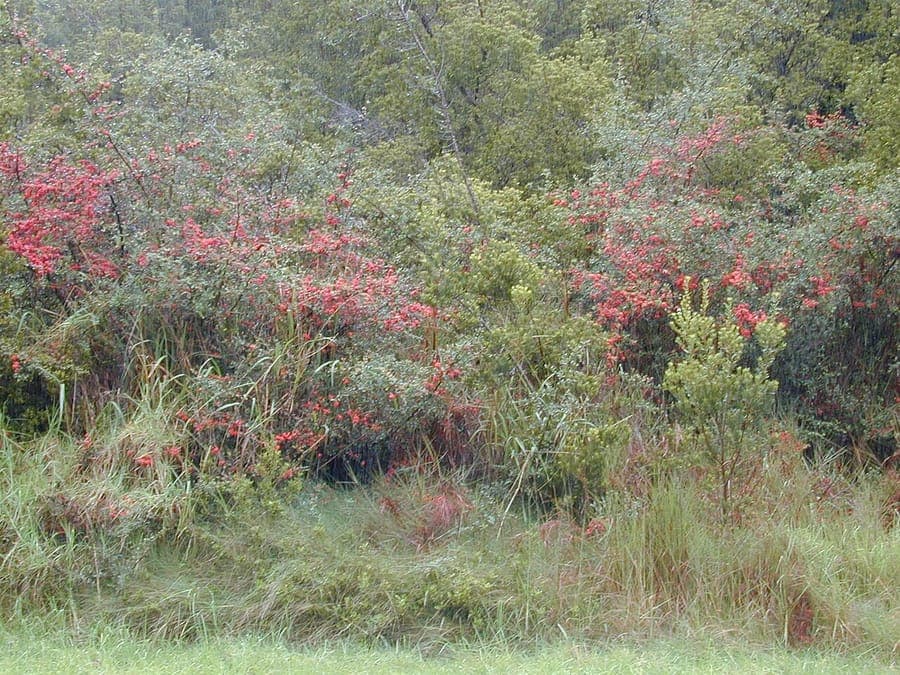
Forest & Kim Starr / CC BY 3.0, via Wikimedia Commons
Pyracantha fortuneana: complete guide
Pyracantha fortuneana
Want to see Pyracantha fortuneana: complete guide in your garden?
Full design in HD: €7.99
Look after your Pyracantha fortuneana with the GardenWorld app
Identify plants with your camera and get a care calendar with reminders for this plant.


Overview
Pyracantha fortuneana, better known as Chinese firethorn or Red firethorn, is a beautiful, thorny shrub from China. This plant is celebrated for its abundant white flowers in spring and spectacular red or orange berries in autumn and winter. It's an excellent choice for wall plants, hedge plantings, and bird-friendly gardens. The plant is very hardy and requires minimal maintenance.
Appearance & Bloom
Chinese firethorn is an upright to spreading shrub that can reach 2-4 meters tall. The leaves are small, dark green, and glossy. In spring, numerous small white flowers appear in dense flower clusters with a pleasant fragrance. These flowers attract bees and other pollinators. After flowering, the characteristic red to orange, glossy berries appear that persist on the plant for a long time, often into winter. The thorny branches give the plant a defensive appearance.
Ideal Location
Chinese firethorn grows best in full sun, where it produces the most flowers and berries. The plant can also grow in light partial shade, although this may reduce flowering and berry production. The plant is very suitable for wall plantings and can grow against south or west-facing walls. Ensure good air circulation to prevent fungal infections. The plant tolerates many different environments and is quite versatile.
Soil
Chinese firethorn is not fussy and grows well in most soils. The plant grows best in well-draining, moderately fertile soils. The plant can also grow on less fertile soil, although growth may be slower. Heavy clay soil should be improved with sand or compost. The plant tolerates slightly acidic to alkaline soils (pH 5.5 to 8.0). Good drainage prevents root rot.
Free preview
Want to see Pyracantha fortuneana: complete guide in your garden? Make a free preview of your design.
Watering
Once established, Chinese firethorn is fairly drought-tolerant. During the first growing season, water regularly to establish the plant well. After establishment, you can reduce watering significantly. During dry summer periods, supplemental water may be helpful. Avoid waterlogging; excessive water can cause root rot. In winter, minimal water is sufficient.
Pruning
Chinese firethorn requires minimal pruning but responds well to it. After flowering, you can prune the plant to control its shape and encourage dense growth. For wall plantings, you can train branches as desired. Remove dead or damaged branches in early spring. Careful pruning increases berry production. Heavy pruning can cause root rot in following years.
Maintenance Calendar
Spring: Remove winter damage, prune for shape. Summer: Water regularly in first years, remove unwanted growth. Autumn: Harvest and process berries if desired. Winter: Minimal maintenance; berries provide nutrition for birds.
Winter Hardiness
Pyracantha fortuneana is very hardy, suitable for USDA zones 6-10 (temperatures down to about -20 degrees Celsius). In temperate climates like the Netherlands and Belgium, the plant can remain outdoors. The plant is cold-resistant and retains its leaves in winter. Snow load can cause branches to break, so remove heavy snow when possible.
Companion Plants
Chinese firethorn works beautifully with climbing plants such as climbing roses and clematis. Plant it alongside bird-friendly plants like holly, elder, and rowan. Find more combinations for bird-friendly gardens on gardenworld.app. The plant combines well with low-growing plants beneath the shrub.
Closing
Chinese firethorn is a beautiful, bird-friendly planting ideal for walls, fences, and hedge formations. With minimal maintenance, this hardy shrub produces nutrition for birds for years. Available at major garden centers. Discover more plant guides on gardenworld.app.
Frequently asked questions about Pyracantha fortuneana
Is Pyracantha fortuneana winter hardy?
Pyracantha fortuneana is very hardy, suitable for USDA zones 6-10 (temperatures down to about -20 degrees Celsius). In temperate climates like the Netherlands and Belgium, the plant can remain outdoors.
When and how do you prune Pyracantha fortuneana?
Chinese firethorn requires minimal pruning but responds well to it. After flowering, you can prune the plant to control its shape and encourage dense growth.
How much water does Pyracantha fortuneana need?
Once established, Chinese firethorn is fairly drought-tolerant. During the first growing season, water regularly to establish the plant well.
Where does Pyracantha fortuneana grow best?
Chinese firethorn grows best in full sun, where it produces the most flowers and berries. The plant can also grow in light partial shade, although this may reduce flowering and berry production.
What soil does Pyracantha fortuneana need?
Chinese firethorn is not fussy and grows well in most soils. The plant grows best in well-draining, moderately fertile soils.

See it in your garden
See Pyracantha fortuneana in your garden
One photo of your garden and a few questions. You see the result in about a minute.
Try it with a photoIdentify this plant in your own garden. Identify a plant
Similar plants
New Zealand bur (Acaena microphylla): care guide
Acaena microphylla
Acaena microphylla forms a low, bronze-green carpet with red spiny burs in summer. Advice on position, soil, trimming, hardiness and keeping its spread in check.
Apple serviceberry: complete guide
Amelanchier × grandiflora
Everything about apple serviceberry (Amelanchier × grandiflora): white April flowers, edible berries, autumn colour, position, pruning and cultivars such as 'Ballerina'.
Dwarf goat's beard (Aruncus aethusifolius): complete guide
Aruncus aethusifolius
Everything about dwarf goat's beard (Aruncus aethusifolius): position, soil, watering, pruning and hardiness. A compact perennial with lacy leaves for shade and rock gardens.
