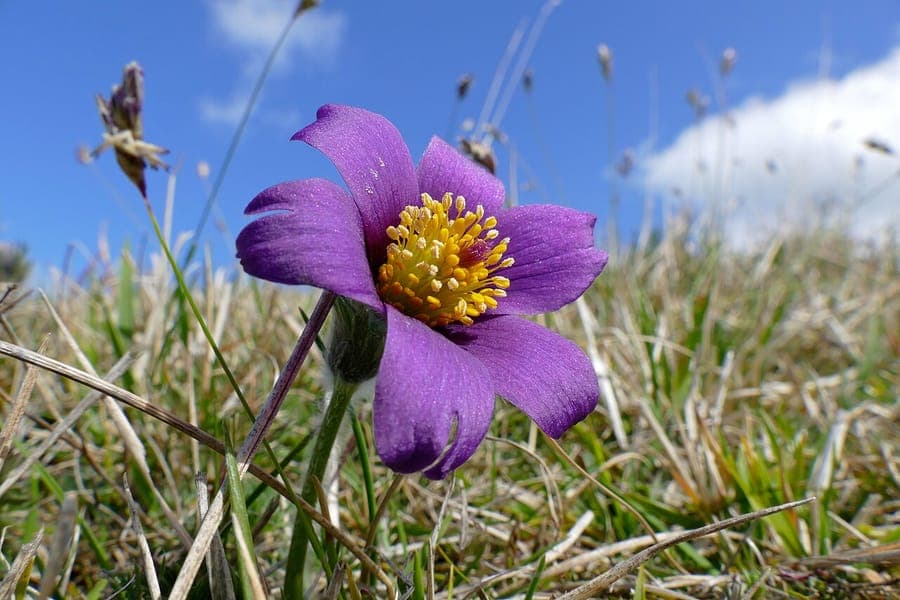
Bernard DUPONT from FRANCE / CC BY-SA 2.0, via Wikimedia Commons
European Pasqueflower: complete guide
Pulsatilla vulgaris
Want to see European Pasqueflower: complete guide in your garden?
Full design in HD: €7.99
Look after your European Pasqueflower with the GardenWorld app
Identify plants with your camera and get a care calendar with reminders for this plant.


European Pasqueflower (Pulsatilla vulgaris) is a captivating spring-blooming perennial famous for its delicate, hairy leaves and enchanting purple flowers. This woodland classic deserves a place in every gardener's collection. The plant offers easy care requirements and reliable performance year after year.
Overview
European Pasqueflower is a long-lived perennial from the Ranunculaceae family. This striking plant has gained renewed popularity thanks to its distinctive appearance and low-maintenance nature. With silky seed plumes and elegant blossoms, Pasqueflower creates magnificent focal points in borders and rock gardens.
Appearance and bloom
The plant develops finely cut, feathery foliage that appears hairy in spring. Blooming occurs from March to April, producing beautiful purple to violet flowers. After flowering, distinctive silvery seed plumes form, adding extended ornamental interest throughout summer and autumn.
Ideal location
Plant Pasqueflower in full sun to light shade locations. The plant thrives in well-drained, dry soil. Good drainage is essential to prevent root rot during wet seasons. Position in borders or rock gardens where deep roots can develop freely without waterlogging.
Soil requirements
Use well-draining, lean soil without heavy clay content. Pasqueflower grows best in alkaline or neutral soils. Add sand and gravel to heavy soils to improve drainage. Fungal diseases develop quickly in waterlogged conditions.
Free preview
Want to see European Pasqueflower: complete guide in your garden? Make a free preview of your design.
Watering
European Pasqueflower tolerates drought better than excessive moisture. Water only during extended dry periods. In typical years, supplemental watering is unnecessary. After blooming, the plant benefits from drier conditions.
Pruning
Remove spent flowers immediately after blooming. This encourages seed formation for natural self-seeding. Allow seed plumes to persist for ornamental value. Avoid cutting healthy foliage, which may stress the plant.
Maintenance calendar
February: Water carefully if soil is completely dry. March-April: Plant blooms beautifully. May-June: Seed plumes develop ornamentally. July-August: Plant rests, minimal attention required.
Winter hardiness
European Pasqueflower is extremely hardy throughout Northern Europe. The plant survives temperatures well below minus 15 degrees Celsius. Foliage persists partially through winter months, providing structure to borders.
Companion plants
Complementary partners include sedums, lavender, and ornamental grasses. These combinations create sunny, well-drained planting schemes. Avoid moisture-loving plants that promote root rot. Bergenia and Helleborus work well in partial shade situations.
Closing thoughts
European Pasqueflower is an exceptional plant for every gardener. Find quality plants at local garden centers. For more spring garden ideas, visit gardenworld.app today. Gardenworld.app helps you design complete garden schemes with seasonal interest throughout the year.
Frequently asked questions about European Pasqueflower
Is European Pasqueflower winter hardy?
European Pasqueflower is extremely hardy throughout Northern Europe. The plant survives temperatures well below minus 15 degrees Celsius.
When and how do you prune European Pasqueflower?
Remove spent flowers immediately after blooming. This encourages seed formation for natural self-seeding.
How much water does European Pasqueflower need?
European Pasqueflower tolerates drought better than excessive moisture. Water only during extended dry periods.
Where does European Pasqueflower grow best?
Plant Pasqueflower in full sun to light shade locations. The plant thrives in well-drained, dry soil.
What soil does European Pasqueflower need?
Use well-draining, lean soil without heavy clay content. Pasqueflower grows best in alkaline or neutral soils.

See it in your garden
See European Pasqueflower in your garden
One photo of your garden and a few questions. You see the result in about a minute.
Try it with a photoIdentify this plant in your own garden. Identify a plant
Similar plants
Chinese Aconite (Aconitum carmichaelii): complete guide
Aconitum carmichaelii
Everything about Chinese aconite (Aconitum carmichaelii): position, soil, pruning and care, plus clear advice on its severe toxicity to people and pets.
Bugbane (Actaea simplex): complete guide
Actaea simplex
Everything about bugbane (Actaea simplex): position, soil, pruning and hardiness of this shade-loving perennial with fragrant white spires in September and October.
Grecian windflower: complete guide
Anemone blanda
Everything about Grecian windflower (Anemone blanda): soaking and planting the tubers, position, soil, March to April flowering and naturalising. Tips for a blue carpet.
