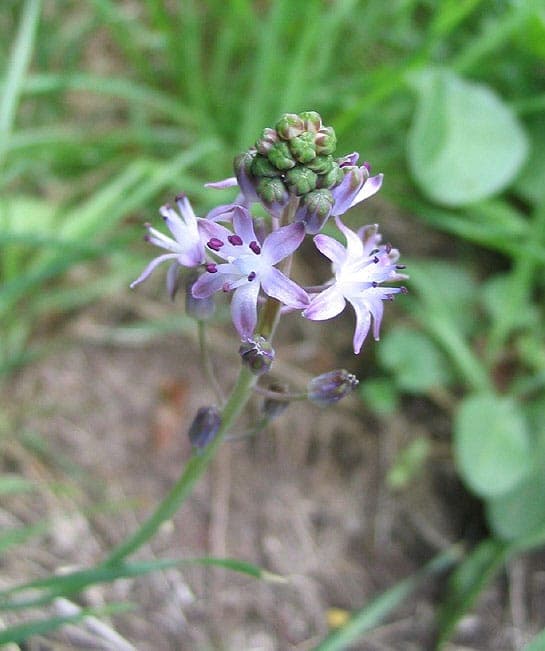
Wikimedia Commons / CC BY-SA 3.0, via Wikimedia Commons
Prospero autumnale: complete guide
Prospero autumnale
Want to see Prospero autumnale: complete guide in your garden?
Full design in HD: €7.99
Look after your Prospero autumnale with the GardenWorld app
Identify plants with your camera and get a care calendar with reminders for this plant.


Overview
Prospero autumnale commonly called autumn squill or autumn starflower is charming bulbous plant from Asparagaceae family. This small but elegant bulb flowers primarily in autumn providing valuable color when many other plants fade. The species originates from Western Europe to Mediterranean region and has become popular in gardens worldwide.
The characteristic blue star-shaped flowers are enchanting and bring fresh accent to autumn and early winter gardens. Standing merely 10 to 30 centimeters tall it offers elegant accent planting among borders between other plants or in containers. The flowering period extends from August through October crucial for garden continuity.
Appearance and bloom
Prospero autumnale is small bulbous plant with narrow grass-like leaves that appear before flowers. The foliage is dark green and pleasingly linear creating fresh texture. The plant typically reaches 10 to 30 centimeters height.
The flowers represent this plants absolute highlight. They appear in loose star-shaped clusters in beautiful sky-blue to violet-blue. Each small flower measures approximately 5 to 8 millimeters diameter gathered in clusters conspicuous in autumn gardens. Flowers appear on thin upright stems and maintain appearance long. After flowering the plant produces small seed capsules containing seeds.
Ideal location
Prospero autumnale grows best in sunny to partially shaded locations. The plant requires at least six to eight hours direct sunlight daily for optimal flowering. Shadier positions result in fewer flowers.
The plant works well in rock gardens between stones along borders in perennial beds or in well-draining containers. It integrates beautifully in naturalized plantings beneath small trees or in rocky areas. The narrow growth habit suits border fronts and placement between larger specimens.
Soil
Prospero autumnale tolerates various soil types but prefers well-drained lime-free to limy soils with pH 7.5 to 8.0. The plant grows well in sandy to loamy soils and tolerates fairly poor substrates.
Always ensure excellent drainage because the plant dislikes wet feet in winter. Adding sand or gravel improves drainage problems. The plant struggles in heavy clay and may fail in such conditions.
Free preview
Want to see Prospero autumnale: complete guide in your garden? Make a free preview of your design.
Watering
Once established Prospero autumnale is fairly independent regarding watering. The plant is moderately drought-tolerant and requires occasional water during growth. Regularly moist not wet soil is ideal during growing season.
In autumn and winter when the plant actively grows gentle watering supports development. Ensure water drains well and does not accumulate. Overly wet conditions cause leaf spot problems and rotting.
Pruning
Prospero autumnale requires virtually no pruning. The plant grows compactly and maintains itself well. Faded flowers may be removed for neater appearance. However leave some flowers for seed ripening for next season.
Faded foliage may be removed after winter when it browns. This stimulates new leaf growth. Alternatively allow the plant to manage itself naturally.
Maintenance calendar
- May-June: Plant bulbs at 5-8 cm depth
- August-October: Autumn flowering and seed ripening
- October-November: Collect seeds or lift bulbs
- December-March: Plant dormancy bulbs overwinter
- April-May: New foliage emerges
Winter hardiness
Prospero autumnale is completely hardy to minus 15 degrees Celsius and grows well in temperate European climates. Bulbs cannot tolerate excessively wet winters so ensure good drainage. Damage from wet feet is more likely than frost damage.
In continental climates with cold winters extra protection helps. In warmer regions the plant grows well without special winter care. Bulbs perform well in ground and need not be lifted annually.
Companion plants
Prospero autumnale combines beautifully with Sedum (stonecrop), Sempervivum (houseleek), Liriope (lilyturf), Carex (sedge), Stipa (feather grass), Teucrium (germander) and Allium (ornamental onion). These combinations exploit autumn flowering and create beautiful texture combinations.
Closing
Prospero autumnale is much-underestimated plant offering unique autumn color and elegance when many gardens fade. Its compact growth enchanting blue flowers and winter hardiness make it essential in every modern garden. With intelligent design from GardenWorld integrate this gem into your front yard and ensure lasting enjoyment. Discover how these flowering stars transform your autumn garden and add character to your outdoor spaces.
Frequently asked questions about Prospero autumnale
Is Prospero autumnale winter hardy?
Prospero autumnale is completely hardy to minus 15 degrees Celsius and grows well in temperate European climates. Bulbs cannot tolerate excessively wet winters so ensure good drainage.
When and how do you prune Prospero autumnale?
Prospero autumnale requires virtually no pruning. The plant grows compactly and maintains itself well.
How much water does Prospero autumnale need?
Once established Prospero autumnale is fairly independent regarding watering. The plant is moderately drought-tolerant and requires occasional water during growth.
Where does Prospero autumnale grow best?
Prospero autumnale grows best in sunny to partially shaded locations. The plant requires at least six to eight hours direct sunlight daily for optimal flowering.
What soil does Prospero autumnale need?
Prospero autumnale tolerates various soil types but prefers well-drained lime-free to limy soils with pH 7.5 to 8.0. The plant grows well in sandy to loamy soils and tolerates fairly poor substrates.

See it in your garden
See Prospero autumnale in your garden
One photo of your garden and a few questions. You see the result in about a minute.
Try it with a photoIdentify this plant in your own garden. Identify a plant
Similar plants
Great camas (Camassia leichtlinii): planting and care
Camassia leichtlinii
Everything about great camas (Camassia leichtlinii): planting the bulbs, heavy wet soil, naturalising in grass, hardiness and the best partners for a flowering meadow.
Pineapple lily (Eucomis bicolor): planting, care and overwintering
Eucomis bicolor
Everything about the pineapple lily (Eucomis bicolor): planting the bulbs, watering and feeding, overwintering in pots or the ground, and the best border partners.
Pineapple lily (Eucomis comosa): growing and overwintering
Eucomis comosa
Eucomis comosa is the tallest and best-known pineapple lily, with creamy spikes topped by a leafy tuft in late summer. Planting, overwintering and leaf cuttings.
