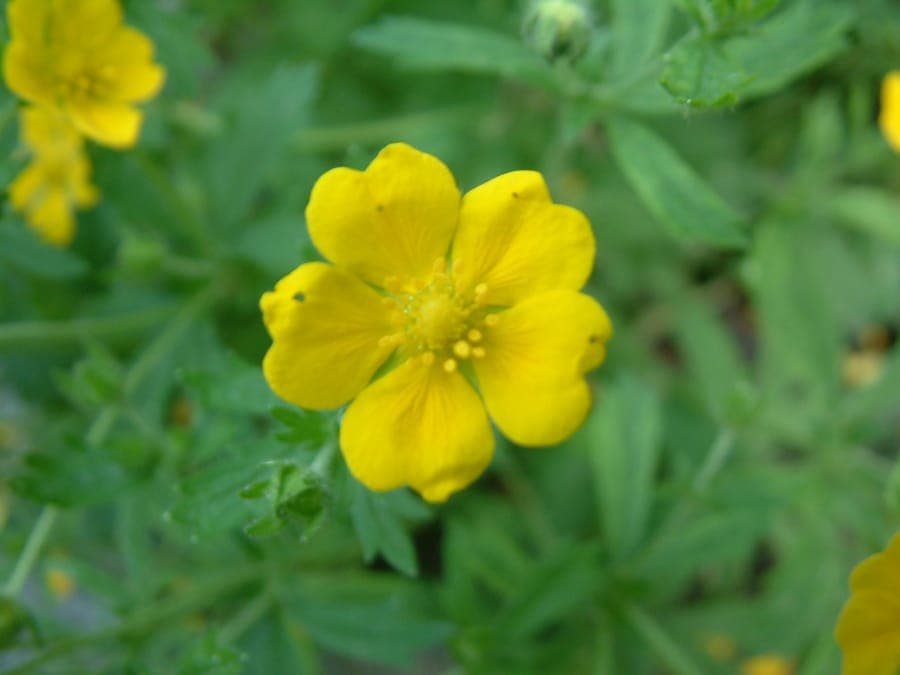
Wikimedia Commons / CC BY-SA 3.0, via Wikimedia Commons
European cinquefoil: complete guide
Potentilla thuringiaca
Want to see European cinquefoil: complete guide in your garden?
Full design in HD: €7.99
Look after your European cinquefoil with the GardenWorld app
Identify plants with your camera and get a care calendar with reminders for this plant.


Overview
The European cinquefoil (Potentilla thuringiaca) is an elegant, low-growing perennial from the rose family. This plant is renowned for its fine, finely dissected foliage and countless small yellow flowers that appear throughout the summer. It is an exceptionally tough species that fits most garden styles and requires virtually no maintenance.
Originally from Central and Eastern Europe, this plant grows on mountain terrain and grasslands. It has proven itself as a reliable choice for temperate gardens, especially where you need a low, colorful ground cover.
Appearance and bloom cycle
The European cinquefoil grows in compact rosettes approximately 30-40 cm tall and 50-60 cm wide. The leaves are deeply divided into five to seven narrow lobes, giving the plant its characteristic fine appearance. The foliage is green and maintains good appearance throughout the year.
Flowers appear from May through September in profuse clusters. Each flower is only 1-2 cm in diameter, but their sheer quantity creates a spectacular yellow display. This extended bloom period makes it ideal for summer color in any garden scheme.
Explore more plants on gardenworld.app for professional garden design.
Ideal location
The European cinquefoil thrives in full sun. Provide at least 6 hours of direct sunlight daily for optimal flowering. The plant can tolerate partial shade, but you will get significantly fewer flowers in shadier positions.
Choose an open spot in your garden where air can circulate freely. This helps prevent diseases. Avoid locations where water pools after rainfall or where soil remains waterlogged.
Soil requirements
This plant is not fussy about soil composition. It grows in well-draining soil of low to moderate fertility. Heavy clay without good drainage causes root rot and poor performance.
Add grit or sand if you have heavy soil. A pH of neutral to slightly acidic (pH 6.5-7.5) is ideal. The plant thrives in poor soil, so excessive feeding is unnecessary and may actually cause excessive vegetative growth at the expense of flowers.
Free preview
Want to see European cinquefoil: complete guide in your garden? Make a free preview of your design.
Watering
Once established, the European cinquefoil is very drought tolerant. During the first growing season (first summer), water regularly if rainfall is less than once per two weeks.
Later it becomes almost entirely self-sufficient. Only during prolonged drought (more than 3 weeks without rain) provide extra water. Overwatering causes more harm than underwatering ever could.
In containers: water more regularly as they dry out faster. Check daily and water when the top 2 cm of soil feels dry.
Pruning
Minimal pruning required. Remove spent flowers by late September to keep the plant tidy and stimulate continued flowering. Remove all dead stems in early spring (March-April).
Remove yellowed or damaged leaves as you notice them. No other aggressive pruning necessary. The plant maintains a neat form naturally.
Maintenance calendar
March-April: Remove dead stems from the previous year. Add a thin layer of compost as soil conditioner.
May-September: Enjoy the blooms. Deadhead spent flowers mid-summer for tidiness and continued flowering.
October-November: The plant dies back. Leave stems for winter structure in the garden.
December-February: Rest period. No activity required.
Winter hardiness
The European cinquefoil is very hardy to USDA zone 4 (down to -30°C). It will survive all temperate region winters without protection. Snow and frost pose no problems whatsoever.
In exceptionally wet winters, root rot can be an issue; ensure perfect drainage. Mulching is not necessary, though a thin layer of leaf mulch in harsher climates may help.
Companion plants
The yellow flowers work beautifully with blue and purple-flowering plants such as forget-me-nots, speedwell, or salvia. Combine with silver-foliaged plants like dusty miller or wormwood for striking contrast.
In borders it works well at the base of shrubs or as underplanting beneath taller perennials. Also functions well in terrace crevices and paving gaps.
Closing
The European cinquefoil is an uncomplicated ground cover that flowers year after year with minimal care. When planning a sunny area of your garden on gardenworld.app you'll discover how this plant fits into your landscape. It's a perfect example of combining toughness with genuine beauty.
Frequently asked questions about European cinquefoil
Is European cinquefoil winter hardy?
The European cinquefoil is very hardy to USDA zone 4 (down to -30°C). It will survive all temperate region winters without protection.
When and how do you prune European cinquefoil?
Minimal pruning required. Remove spent flowers by late September to keep the plant tidy and stimulate continued flowering.
How much water does European cinquefoil need?
Once established, the European cinquefoil is very drought tolerant. During the first growing season (first summer), water regularly if rainfall is less than once per two weeks.
Where does European cinquefoil grow best?
The European cinquefoil thrives in full sun. Provide at least 6 hours of direct sunlight daily for optimal flowering.
What soil does European cinquefoil need?
This plant is not fussy about soil composition. It grows in well-draining soil of low to moderate fertility.

See it in your garden
See European cinquefoil in your garden
One photo of your garden and a few questions. You see the result in about a minute.
Try it with a photoIdentify this plant in your own garden. Identify a plant
Similar plants
New Zealand bur (Acaena microphylla): care guide
Acaena microphylla
Acaena microphylla forms a low, bronze-green carpet with red spiny burs in summer. Advice on position, soil, trimming, hardiness and keeping its spread in check.
Apple serviceberry: complete guide
Amelanchier × grandiflora
Everything about apple serviceberry (Amelanchier × grandiflora): white April flowers, edible berries, autumn colour, position, pruning and cultivars such as 'Ballerina'.
Dwarf goat's beard (Aruncus aethusifolius): complete guide
Aruncus aethusifolius
Everything about dwarf goat's beard (Aruncus aethusifolius): position, soil, watering, pruning and hardiness. A compact perennial with lacy leaves for shade and rock gardens.
