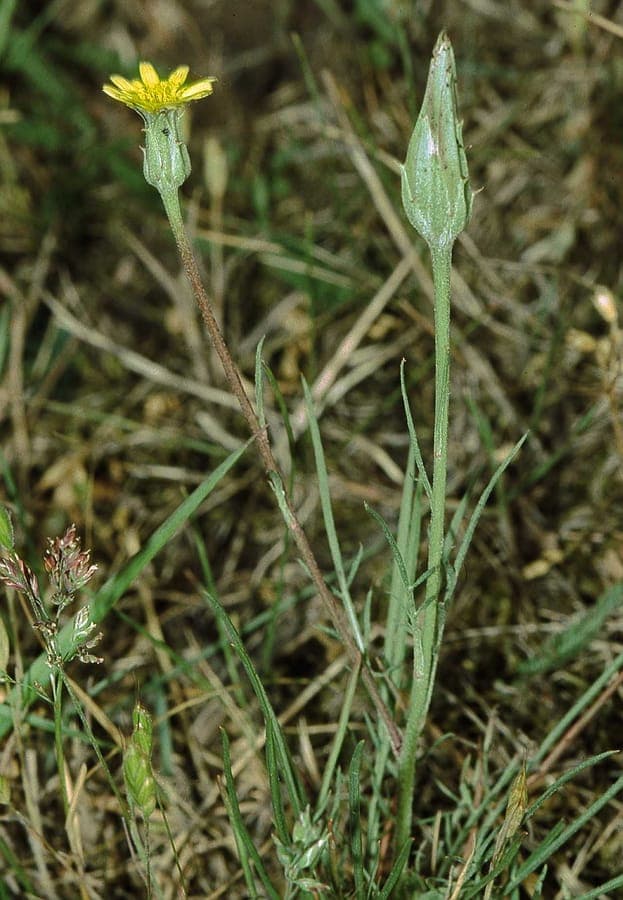
User:Fornax[1] / CC BY-SA 3.0, via Wikimedia Commons
Podospermum laciniatum: complete guide
Podospermum laciniatum
Want to see Podospermum laciniatum: complete guide in your garden?
Full design in HD: €7.99
Look after your Podospermum laciniatum with the GardenWorld app
Identify plants with your camera and get a care calendar with reminders for this plant.


Overview
Podospermum laciniatum, commonly known as scorzonera or viper's-grass, is a fascinating wildflower from the Asteraceae family. This unique plant is known for its bright yellow flowers and its distinctive, fringed leaves. Despite its modest appearance, scorzonera offers subtle beauty and is a bird attraction and friend to insects.
Appearance and bloom
Scorzonera grows as an elegant plant of 30-80 centimeters tall. The leaves are deeply cut and beautifully shaped, with a hairy, silvery appearance. The flowers are bright yellow, resembling small dandelions, and appear from June to October. The seed heads are particularly striking, furnished with a long, thin stem (hence the name scorzonera).
Ideal location
Scorzonera likes full sun and well-draining soil. It thrives in dry, sunny locations and is tolerant of poor soil. The plant is very hardy and can tolerate extreme cold. An open, windy spot helps keep the plant strong.
Soil
The soil must drain well and can be quite poor, sandy or gravelly soil. A pH of 6.0 to 7.5 is ideal. Scorzonera doesn't need heavy feeding and actually grows better in less fertile soil. Too much feeding can lead to excessive growth and fewer flowers.
Free preview
Want to see Podospermum laciniatum: complete guide in your garden? Make a free preview of your design.
Watering
Once established, scorzonera is very drought tolerant and requires little water. Water only during extended drought periods. Excessive water can lead to root rot. The plant values good drainage more than regular watering.
Pruning
Scorzonera doesn't need to be pruned, but removing withered flowers stimulates further flowering. If you don't want the seed to spread, remove seed heads before they ripen. In autumn, dead leaves can be removed.
Maintenance calendar
Scorzonera is a low maintenance plant. Sow seeds in spring directly in the ground. Once established, it requires minimal care. Occasionally check for weeds and do not apply fertilizer. The plant grows best without much attention.
Winter hardiness
Scorzonera is completely winter hardy and can tolerate temperatures down to -20 degrees Celsius. It survives even in very cold, snowy winters. A mulch layer is not necessary.
Companion plants
Scorzonera combines well in wild plantings with other drought-tolerant plants such as sunflowers, various grasses and other Asteraceae family members. It also works well in gravel or rock gardens.
Closing
Scorzonera is a useful, low-maintenance plant that contributes to the biodiversity of your garden. Its yellow flowers and unique seed structure provide years of interest with minimal care. For wildflower enthusiasts, scorzonera is a valuable addition.
Frequently asked questions about Podospermum laciniatum
Is Podospermum laciniatum winter hardy?
Scorzonera is completely winter hardy and can tolerate temperatures down to -20 degrees Celsius. It survives even in very cold, snowy winters.
When and how do you prune Podospermum laciniatum?
Scorzonera doesn't need to be pruned, but removing withered flowers stimulates further flowering. If you don't want the seed to spread, remove seed heads before they ripen.
How much water does Podospermum laciniatum need?
Once established, scorzonera is very drought tolerant and requires little water. Water only during extended drought periods.
Where does Podospermum laciniatum grow best?
Scorzonera likes full sun and well-draining soil. It thrives in dry, sunny locations and is tolerant of poor soil.
What soil does Podospermum laciniatum need?
The soil must drain well and can be quite poor, sandy or gravelly soil. A pH of 6.0 to 7.5 is ideal.

See it in your garden
See Podospermum laciniatum in your garden
One photo of your garden and a few questions. You see the result in about a minute.
Try it with a photoIdentify this plant in your own garden. Identify a plant
Similar plants
Frikart's aster (Aster × frikartii): complete guide
Aster × frikartii
Everything about Frikart's aster (Aster × frikartii): position, soil, pruning and hardiness of the aster that flowers lavender-blue from July to October.
False aster (Boltonia asteroides): complete guide
Boltonia asteroides
False aster (Boltonia asteroides) covers itself in white daisies from late August to October. How to plant, cut back and combine this tough, tall perennial.
Daisy bush (Brachyglottis greyi): care guide
Brachyglottis greyi
Brachyglottis greyi, formerly Senecio greyi, pairs silver felted leaves with yellow summer daisies. Advice on position, soil, pruning, hardiness and companions.
