
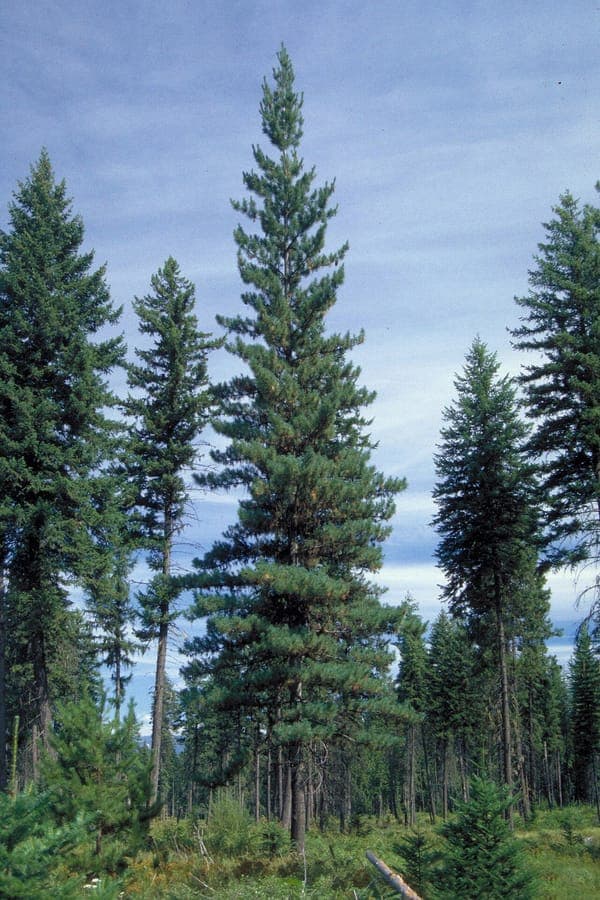
Chris Schnepf, University of Idaho, USA / CC BY 3.0 us, via Wikimedia Commons
Pinus monticola: complete guide
Pinus monticola
Want to see Pinus monticola: complete guide in your garden?
1 minute, no credit card
Overview
Pinus monticola, the Western White Pine or Idaho White Pine, is a majestic conifer native to mountainous regions of western Canada and the United States. This fast-growing pine reaches considerable height and forms an elegant columnar silhouette. With soft green needle foliage and regular growth habit, this tree is excellent for large landscapes and estate gardens.
Appearance and growth habit
Western White Pine forms a regular columnar crown with horizontally spreading branches. The trunk grows straight and elegantly upward. Needles are soft, greenish, approximately 5-10 cm long, grouped in bundles of five. Cones are long, about 15-25 cm, positioned high in the crown. Young bark is gray and smooth; older trees develop rougher texture.
Ideal location
Pinus monticola grows best in sunny locations. Provide at least 6-8 hours of direct sunshine daily. This tree thrives in mountainous areas with cool, fresh air. In lower elevations, light afternoon shade helps prevent heat stress. Avoid very hot, dry lowlands. A north or east-facing slope is ideal.
Soil requirements
Western White Pine prefers well-draining, slightly acidic soil. A pH of 5.5 to 7.0 is preferred. Ensure adequate drainage to prevent root rot. This tree grows on rocky, sandy mountain soils in its natural habitat. In gardens, add organic matter and pumice to improve drainage. Highly fertile garden soil is less suitable.
Watering
Water regularly after planting until the tree is well-rooted (first growing season). Thereafter, this tree is fairly drought-tolerant. During very dry periods or on young trees, provide supplemental water. This tree tolerates dry mountain air well. Excessive water can be harmful. Once established, supplemental water is usually unnecessary except during extreme drought.
Free design
Want to see Pinus monticola: complete guide in your garden? Make a free design now.
Pruning
Pinus monticola requires minimal pruning. Dead branches can be removed. Diseased or damaged branches should be carefully pruned. Formal pruning is generally unnecessary as the tree naturally assumes a neat form. Avoid heavy pruning.
Maintenance calendar
Spring: Growth period, regular watering for young trees. Summer: Monitor for drought. Autumn: Observe autumn coloring, no action needed. Winter: Dormancy, check for snow damage. Annual inspection for diseases like blister rust.
Winter hardiness
Pinus monticola is extremely hardy and tolerates temperatures to -30 degrees Celsius. In temperate European climates, this tree grows without additional protection. Very young plants may benefit from wind protection in their first year. Once established, extreme hardiness is guaranteed.
Companion plants
Use as a specimen tree in large gardens and parks. Combine with other mountain trees and shrubs. Plant in groups for greater impact. Underplanting can include low-growing pines, junipers, or rhododendrons. The vertical form contrasts beautifully with hydrangeas or other broad-leaved plants.
Final thoughts
Pinus monticola is an excellent choice for large gardens and landscapes. With its rapid growth, elegant form, and hardiness, this tree adds value to any setting. Plant for long-term landscape distinction. Available from well-stocked tree nurseries. Find more inspiration at gardenworld.app/en
Want to see Pinus monticola: complete guide in your garden? Make a free design now.
Upload a photo, pick a style, and get a photorealistic design with plant list in under a minute.
No credit card required


Similar plants
Abies delavayi: complete guide
Abies delavayi
Delavayi fir is an elegant, medium-sized coniferous tree from the Pinaceae family with dark green needles. This Asian evergreen is perfect for alpine gardens and large landscapes.
Taiwan fir: complete guide
Abies kawakamii
Discover the magnificent Taiwan fir, a rare evergreen conifer from Taiwan's mountain regions. Learn growth requirements, care tips, and why this beautiful tree is perfect for collectors of unique garden specimens.
Farges fir: complete guide
Abies fargesii
Discover the majestic Farges fir, an impressive conifer from China's mountains with elegant foliage and columnar form. Ideal for large gardens.