
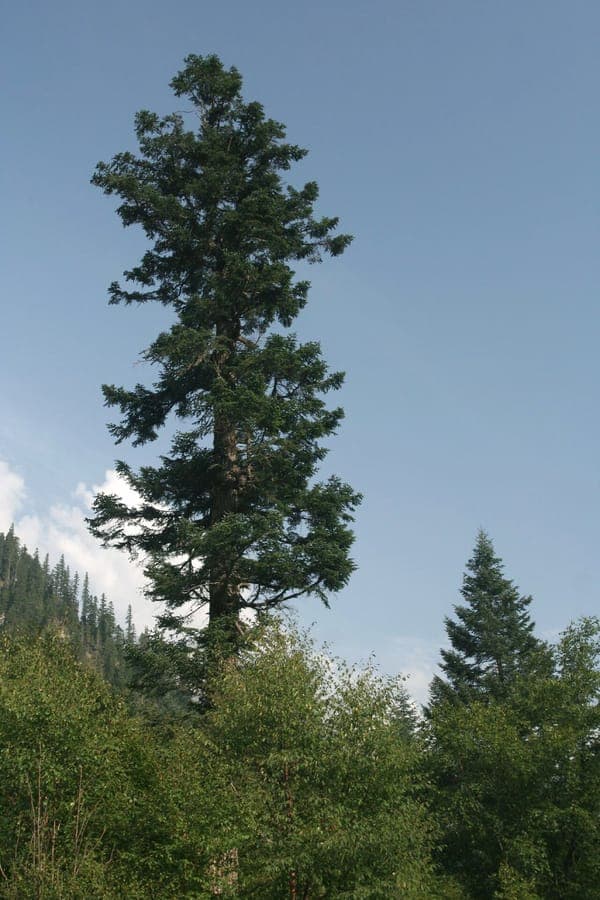
HK James Ho on Flickr / CC BY-SA 2.0, via Wikimedia Commons
Farges fir: complete guide
Abies fargesii
Want to see Farges fir: complete guide in your garden?
1 minute, no credit card
Overview
The Farges fir (Abies fargesii), also known as Bashan fir, is a striking conifer native to the mountain forests of central and southern China. This evergreen belongs to the Pinaceae family and was named after French botanist Paul Farges, who discovered the species in the late nineteenth century. With its columnar shape and dense foliage, the Farges fir makes an impressive statement in larger gardens and park landscapes.
In its natural habitat, this tree grows in mountain forests at elevations of 1,500 to 3,000 meters, where it adapts to cool temperatures and moderate rainfall. The tree can reach heights of up to 40 meters under ideal conditions and develops an elegant conical crown.
Appearance and Bloom
The Farges fir is an imposing tree with a strict columnar growth form. The needles are approximately 2-3 cm long and are grey-green in color. They are flat and densely arranged on the branches, resulting in a compact, elegant appearance.
The cones are strikingly beautiful, approximately 8-15 cm long with a purple-brown color when ripe. They stand upright on the branches and are highly decorative. The bark is smooth and greyish.
The tree flowers in spring, with male and female cones developing on the same plant. This makes it a reliable seed producer in suitable climates.
Ideal Location
The Farges fir thrives best in locations with full sun and well-draining soil. Provide at least 6 hours of direct sunlight daily for optimal growth. The tree is robust enough to grow in full sun, which promotes dense, healthy foliage.
Avoid planting in wind-exposed locations, especially when the tree is young. A position at the edge of wooded gardens or as a solitary specimen works well. The tree does not tolerate urban pollution well, so select clean sites for planting.
Soil
The Farges fir prefers acidic soil with a pH of 5.5-6.5. Ensure very well-draining soil, as this tree cannot tolerate wet or waterlogged conditions. A mixture of garden soil, peat moss, and coarse sand works excellently.
Make the planting hole at least three times as wide and as deep as the root ball. Ensure good drainage by adding drainage material if planting on clay soil. Annual mulching helps maintain stable soil moisture.
Free design
Want to see Farges fir: complete guide in your garden? Make a free design now.
Watering
Water regularly during the growing season, especially during dry periods. Consistent, even moisture is important, but waterlogging must be avoided. In the first year after planting, check daily and water if the top 5 cm of soil feels dry.
Once established, the tree is fairly drought-tolerant, but regular rainfall is appreciated. Water additionally during dry summers, especially young trees. Adequate water is crucial in winter, as the tree remains moisture-demanding year-round.
Pruning
The Farges fir requires minimal pruning, as it naturally assumes an elegant form. Remove only dead, damaged, or diseased branches. This is best done in late spring.
Thinning techniques can be employed to make the tree less dense and improve structure. Avoid pruning the central stem, as this can damage the elegant form.
Maintenance Calendar
February-March: Inspect for winter damage and perform careful pruning. April-May: Begin regular watering if dry. June-July: Add mulch to retain moisture. August-September: Continue regular watering. October-November: Prepare for winter. December-January: Protect young trees.
Winter Hardiness
The Farges fir is highly winter-hardy and can tolerate temperatures down to -20 degrees Celsius. In most parts of Europe, the tree grows without additional winter protection. In very harsh climates, young trees may benefit from windbreaks.
Companion Plants
The Farges fir combines well with other shade-tolerant shrubs and trees, such as rhododendrons and other fir species. Underplant with shade-loving groundcovers like ivy or lamium.
Avoid planting direct competitors such as other large conifers in close proximity.
Conclusion
The Farges fir is an exceptional choice for gardens with space for a large, majestic specimen. With its elegant form, green needles, and decorative cones, this tree delivers beauty for years to come. Want to learn more about specimen conifers? Visit gardenworld.app for additional information.
Purchasing your Farges fir from specialty nurseries ensures quality stock. For more inspiration and design ideas, explore gardenworld.app!
Want to see Farges fir: complete guide in your garden? Make a free design now.
Upload a photo, pick a style, and get a photorealistic design with plant list in under a minute.
No credit card required


Similar plants
Abies delavayi: complete guide
Abies delavayi
Delavayi fir is an elegant, medium-sized coniferous tree from the Pinaceae family with dark green needles. This Asian evergreen is perfect for alpine gardens and large landscapes.
Taiwan fir: complete guide
Abies kawakamii
Discover the magnificent Taiwan fir, a rare evergreen conifer from Taiwan's mountain regions. Learn growth requirements, care tips, and why this beautiful tree is perfect for collectors of unique garden specimens.
Tsuga dumosa: complete guide
Tsuga dumosa
Discover Tsuga dumosa (Himalayan hemlock), an elegant slow-growing Asian conifer. Perfect for sheltered gardens and shaded corners. Growing, care, winter hardiness, and design tips.