
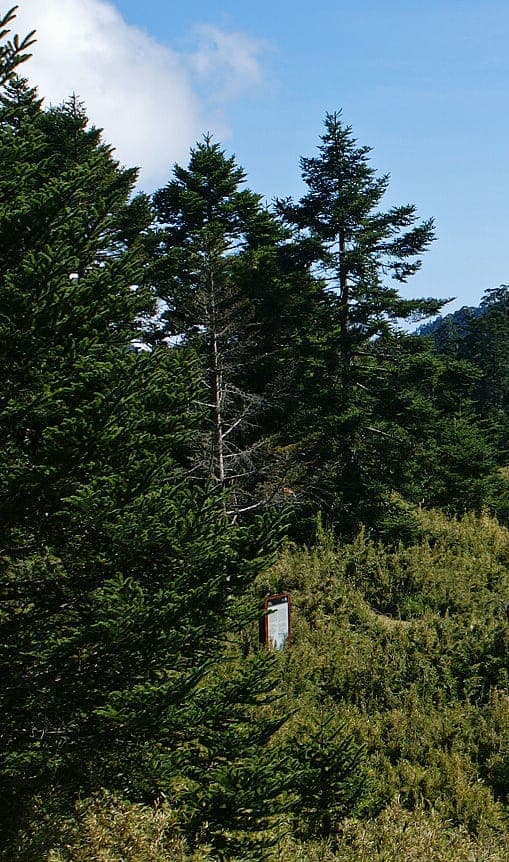
User:Peellden / CC BY-SA 3.0, via Wikimedia Commons
Taiwan fir: complete guide
Abies kawakamii
Want to see Taiwan fir: complete guide in your garden?
1 minute, no credit card
Overview
The Taiwan fir (Abies kawakamii) is a magnificent and rare coniferous tree native to the mountain regions of Taiwan. Also known as the Formosan fir, this beautiful species is renowned for its elegant form, deep green foliage, and distinctive characteristics. It represents an excellent choice for gardeners seeking unusual specimens with year-round interest and a dramatic presence in larger landscapes.
Appearance and Bloom
In its native habitat, Taiwan fir can reach 30-40 meters in height, though cultivated specimens typically remain more compact. The bark is dark gray to grayish-brown, peeling in vertical strips with age. Needles are approximately 2-3 centimeters long, soft, and glossy dark green, arranged in two flat ranks. Young shoots are reddish-brown and covered with fine hairs. Cones measure 6-8 centimeters in length, greenish-brown, and mature in their second year. The overall growth habit is pyramidal and symmetrical.
Ideal Location
Plant Taiwan fir in a position receiving full sun, at least six hours of direct sunlight daily. The tree tolerates partial shade but grows more slowly in such conditions. Shelter from strong winds is beneficial, particularly for young specimens. A protected location in northern or eastern garden areas works best, where afternoon shade in hot climates provides relief from intense summer sun.
Soil
Taiwan fir performs best in light, well-draining soils. Sandy loam to light clay is appropriate, provided excess water can drain freely. A slightly acidic to neutral pH (5.5-7.0) suits this species well. Heavy, compacted soils that retain moisture should be avoided. Incorporate organic matter at planting time and ensure adequate drainage to prevent root rot.
Free design
Want to see Taiwan fir: complete guide in your garden? Make a free design now.
Watering
Once established, Taiwan fir demonstrates reasonable drought tolerance due to its deep root system. During the growing season, water when the upper soil layer becomes dry to the touch. Young trees require more frequent watering than mature specimens. In extended drought periods exceeding two weeks without rainfall, supplement with irrigation. Avoid waterlogging, which compromises root health.
Pruning
Pruning is generally unnecessary, as the natural pyramidal form requires minimal intervention. Only remove dead or damaged branches carefully and selectively. Avoid large pruning wounds that can create entry points for disease. Lower branches may be removed gradually to create a lifted crown and reveal attractive bark.
Maintenance Calendar
Spring (March-April): Inspect for winter damage and remove dead wood. Plant young trees in early spring. Summer (June-August): Monitor moisture levels, particularly during dry spells. Autumn (September-October): No specific maintenance required. Winter (November-February): Protect young trees from heavy snowfall by gently brushing snow from branches.
Winter Hardiness
Taiwan fir is highly hardy, tolerating temperatures down to -15 to -20 degrees Celsius. In most regions of Northern Europe, it thrives without significant issues. Very young trees may experience minor damage in extreme winters, particularly on new growth. Wind protection in the first years provides additional security.
Companion Plants
Taiwan fir complements other hardy conifers and shade-tolerant groundcovers. Azaleas, rhododendrons, and other acid-loving shrubs plant well beneath its canopy. Avoid fast-growing trees that would shade the specimen or create competition.
Closing
Taiwan fir represents an exceptional choice for gardeners seeking distinctive specimens that create vertical emphasis and structure. Its elegant form, rustic character, and moderate growth rate promise years of beauty and interest. In suitable climates with proper drainage, it develops into a remarkable tree commanding admiration. Specialist garden centers often stock young trees during spring plantings.
Want to see Taiwan fir: complete guide in your garden? Make a free design now.
Upload a photo, pick a style, and get a photorealistic design with plant list in under a minute.
10,000+ gardens designed already
No credit card required


Similar plants
Abies delavayi: complete guide
Abies delavayi
Delavayi fir is an elegant, medium-sized coniferous tree from the Pinaceae family with dark green needles. This Asian evergreen is perfect for alpine gardens and large landscapes.
Farges fir: complete guide
Abies fargesii
Discover the majestic Farges fir, an impressive conifer from China's mountains with elegant foliage and columnar form. Ideal for large gardens.
Tsuga dumosa: complete guide
Tsuga dumosa
Discover Tsuga dumosa (Himalayan hemlock), an elegant slow-growing Asian conifer. Perfect for sheltered gardens and shaded corners. Growing, care, winter hardiness, and design tips.