
SarahDepper on Flickr / CC BY 2.0, via Wikimedia Commons
Abies delavayi: complete guide
Abies delavayi
Want to see Abies delavayi: complete guide in your garden?
1 minute, no credit card
Overview
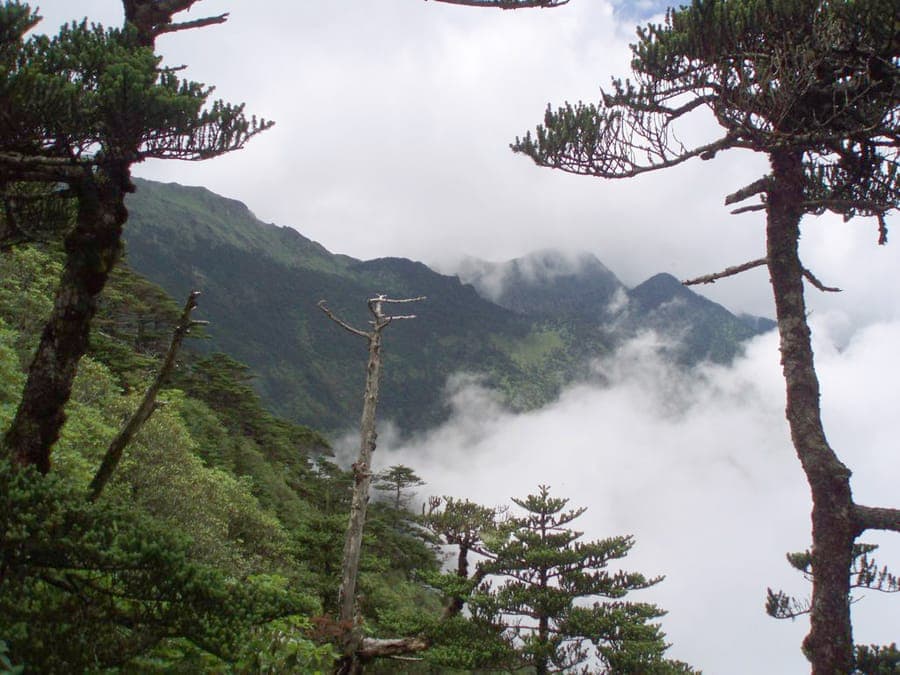
Abies delavayi, also known as Delavayi fir or Yunnan fir, is an elegant, medium-sized coniferous tree from the Pinaceae family. This tree is native to the mountainous regions of East Himalaya, Tibet, Yunnan (South-central China), and Myanmar. The tree is known for its dense, conical form and dark green needles. In the wild, it grows at elevations of 2500-4000 meters, meaning it is exceptionally cold hardy. As a garden plant, Delavayi fir is an excellent choice for large alpine gardens, forest landscapes, and as a specimen tree where height is desired.
Appearance and Bloom
Abies delavayi grows as a slender, conical tree with densely clothed branching. The needles are linear, abruptly pointed, and very dark green, sometimes almost blackish-green. The needles have two whitish stomatal bands on the undersides, giving a subtle sheen. The tree produces small, upright cones that are purplish-red when young and later become brownish. The cones are approximately 6-9 cm long and open to release their seeds.
Ideal Location
Abies delavayi grows best in full sun to lightly shaded locations, receiving at least four to six hours of direct daily sunlight. The tree prefers cool, mountainous climates and tolerates mountain winds well. In hot, dry climates, the tree may experience stress, so place it in a cool location. This is a tree for large gardens and landscapes, not suitable for small, urban gardens.
Soil
Abies delavayi prefers deep, well-draining soils. The tree grows best in acidic to neutral soils (pH 5.5-7.0). Slightly fertile soil with good structure is ideal. The tree tolerates poorly wet, heavy clay soils. Ensure good drainage and avoid waterlogging. In mountainous regions, the natural terrain is usually stony and well-drained.
Free design
Want to see Abies delavayi: complete guide in your garden? Make a free design now.
Watering
Once established, Delavayi fir is fairly drought-tolerant, though it grows best with regular moisture. Young trees must be watered regularly until a strong root system develops (2-3 years). Water must drain well. Avoid standing water. In alpine gardens, rainwater is usually sufficient, but in dry periods extra water may be needed.
Pruning
Abies delavayi requires minimal pruning. Remove only dead branches and tangled branches that cross. Heavy pruning can destroy the natural form. The tree naturally develops a beautiful, conical shape and does not need pruning.
Maintenance Calendar
Spring: Check for winter damage. Remove dead branches. Ensure good drainage. Summer: Water during extremely dry periods. Ensure adequate light. Autumn: No special maintenance required. Winter: Protect newly planted trees against heavy snow.
Winter Hardiness
Abies delavayi is very cold hardy and can tolerate temperatures down to -20 degrees Celsius. This makes it ideal for mountainous areas and regions with cold winters. The tree can tolerate mountain winds and extreme temperature fluctuations.
Companion Plants
In mountain landscapes, Delavayi fir combines well with other conifers such as Abies, Picea (spruce), and Pinus species. It also combines well with deciduous trees such as Betula (birch) for contrast between evergreen and seasonally deciduous foliage.
Closing
Abies delavayi is a beautiful, cold-hardy coniferous tree for those seeking an impressive mountain specimen. With its elegant form, dark green needles, and exceptional winter hardiness, it offers years of beauty in forest landscapes. Available from specialized tree nurseries, or visit gardenworld.app for more plant advice.
Want to see Abies delavayi: complete guide in your garden? Make a free design now.
Upload a photo, pick a style, and get a photorealistic design with plant list in under a minute.
No credit card required


Similar plants
Taiwan fir: complete guide
Abies kawakamii
Discover the magnificent Taiwan fir, a rare evergreen conifer from Taiwan's mountain regions. Learn growth requirements, care tips, and why this beautiful tree is perfect for collectors of unique garden specimens.
Farges fir: complete guide
Abies fargesii
Discover the majestic Farges fir, an impressive conifer from China's mountains with elegant foliage and columnar form. Ideal for large gardens.
Tsuga dumosa: complete guide
Tsuga dumosa
Discover Tsuga dumosa (Himalayan hemlock), an elegant slow-growing Asian conifer. Perfect for sheltered gardens and shaded corners. Growing, care, winter hardiness, and design tips.