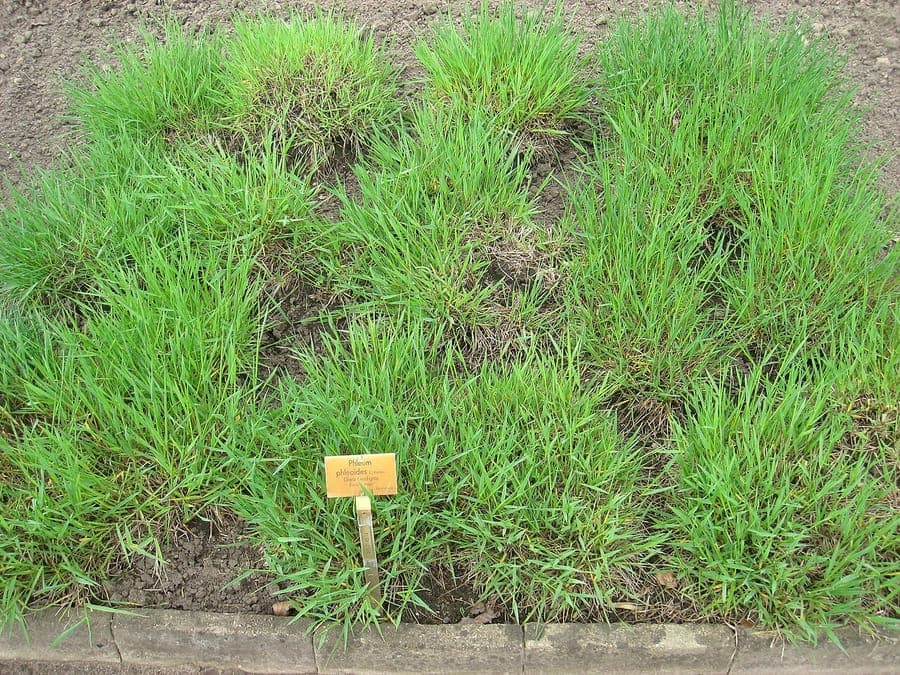
Daderot / Public domain, via Wikimedia Commons
Boehmer's cat's-tail: complete guide
Phleum phleoides
Want to see Boehmer's cat's-tail: complete guide in your garden?
Full design in HD: €7.99
Look after your Boehmer's cat's-tail with the GardenWorld app
Identify plants with your camera and get a care calendar with reminders for this plant.


Overview
Boehmer's cat's-tail (Phleum phleoides) is an elegant ornamental grass ranging from North Africa to Siberia and Iran. This fine, beautiful grass belongs to the Poaceae family and is known for its delicate appearance and refined inflorescence. With its thin grass blades and graceful spikes, it is an ideal accent grass for modern gardens and flower border schemes.
In the wild it grows on dry grasslands, steppes, and hillsides where it has adapted to extreme temperature swings and low moisture conditions. In gardens it is primarily used as an accent in borders, in alpine compositions, and in modern garden designs.
Appearance and Bloom
Boehmer's cat's-tail typically grows 30-60 cm tall depending on growing conditions. The grass blades are extremely fine, almost hair-like, giving a very delicate, soft appearance. The grass clump forms a loose, open mound rather than a dense horst.
The inflorescence is particularly graceful: very fine, elongated to cylindrical spikes 2-4 cm long appearing June through August. These spikes have a pale gray to yellow-green color. Unlike many other cat's-tail species, the spikes are much finer and more delicate, creating a light, airy effect in the garden.
Ideal Location
Boehmer's cat's-tail thrives in full sun to partially shaded locations. It is very suitable for dry, somewhat elevated positions. The plant prefers some air circulation which helps prevent fungal diseases in humid summers.
Use this grass as an accent in borders, to create movement in flower schemes, or as part of modern, minimalist garden designs. The very fine texture contrasts beautifully with larger foliage plants and provides lightness.
Soil
Boehmer's cat's-tail is unpretentious regarding soil requirements. It actually thrives better on leaner, more marginal soils than on very nutrient-rich soils. Well-draining soil is essential, both sandy and gravelly soils work well.
The plant is very tolerant of pH variations and thrives in acidic to alkaline conditions. It requires no special soil amendment and actually performs better without addition of compost or fertilizer.
Free preview
Want to see Boehmer's cat's-tail: complete guide in your garden? Make a free preview of your design.
Watering
Boehmer's cat's-tail is drought-tolerant once established. In the first growing season careful watering may help with establishment, but thereafter supplemental watering is seldom needed. It actually prefers dry conditions.
The plant can suffer from fungal diseases in very moist conditions, especially in autumn. Ensure good drainage and ventilation to prevent problems.
Pruning
Boehmer's cat's-tail requires minimal pruning. Dead foliage can be removed in late winter or early spring, but many gardeners leave it standing for winter protection and natural interest. A gentle comb or soft brush is sufficient.
The grass does not need to be cut back drastically. The delicate natural form is exactly what makes the plant so beautiful in gardens.
Maintenance Calendar
Spring: Plant in spring in well-drained soil. No feeding needed. Summer: Water only in first year extreme drought. Enjoy fine blooms June-August. Fall: Leave foliage standing for winter interest. Winter: Grass can remain semi-evergreen. Protection not needed.
Winter Hardiness
Boehmer's cat's-tail is very winter hardy, to USDA zone 3-4 depending on local conditions. It survives cold winters without problem. In Netherlands and Germany it is reliably winter hardy. The grass retains much of its green foliage in winter in mild conditions.
Companion Plants
Combine with other fine-textured plants like catmint, sage, and other Mediterranean mint species. Larger structural plants like artemisia provide contrast. Light flowers like gaura and cosmos form a beautiful backdrop for the fine grass texture.
In alpine or modern borders it pairs well with other small grasses and rock garden plants. The delicate appearance contrasts beautifully with larger, darker-leaved plants.
Closing
Boehmer's cat's-tail is a very elegant, low-maintenance grass for those who appreciate fine texture. The drought tolerance and winter hardiness make it practical, while the delicate bloom makes it aesthetically interesting.
Available through specialized plant nurseries across Europe. Check gardenworld.app for local availability and combination tips with complementary plantings.
Gardenworld.app helps you create modern, elegant gardens with fine-textured grass species. Discover more ornamental grasses and border combinations in our complete guides.
Frequently asked questions about Boehmer's cat's-tail
Is Boehmer's cat's-tail winter hardy?
Boehmer's cat's-tail is very winter hardy, to USDA zone 3-4 depending on local conditions. It survives cold winters without problem.
When and how do you prune Boehmer's cat's-tail?
Boehmer's cat's-tail requires minimal pruning. Dead foliage can be removed in late winter or early spring, but many gardeners leave it standing for winter protection and natural interest.
How much water does Boehmer's cat's-tail need?
Boehmer's cat's-tail is drought-tolerant once established. In the first growing season careful watering may help with establishment, but thereafter supplemental watering is seldom needed.
Where does Boehmer's cat's-tail grow best?
Boehmer's cat's-tail thrives in full sun to partially shaded locations. It is very suitable for dry, somewhat elevated positions.
What soil does Boehmer's cat's-tail need?
Boehmer's cat's-tail is unpretentious regarding soil requirements. It actually thrives better on leaner, more marginal soils than on very nutrient-rich soils.

See it in your garden
See Boehmer's cat's-tail in your garden
One photo of your garden and a few questions. You see the result in about a minute.
Try it with a photoIdentify this plant in your own garden. Identify a plant
Similar plants
Pheasant's tail grass (Anemanthele lessoniana): a guide
Anemanthele lessoniana
Pheasant's tail grass (Anemanthele lessoniana) is an evergreen New Zealand grass with orange-streaked leaves and airy summer flower heads. Siting, soil, care and hardiness.
Korean feather reed grass (Calamagrostis brachytricha): guide
Calamagrostis brachytricha
Everything about Korean feather reed grass (Calamagrostis brachytricha): position, soil, cutting back and planting partners for its glistening autumn plumes.
Northern sea oats (Chasmanthium latifolium): growing guide
Chasmanthium latifolium
Northern sea oats (Chasmanthium latifolium) carries flat, dangling spikelets and thrives in part shade. Learn how to site, water, cut back and partner it.
