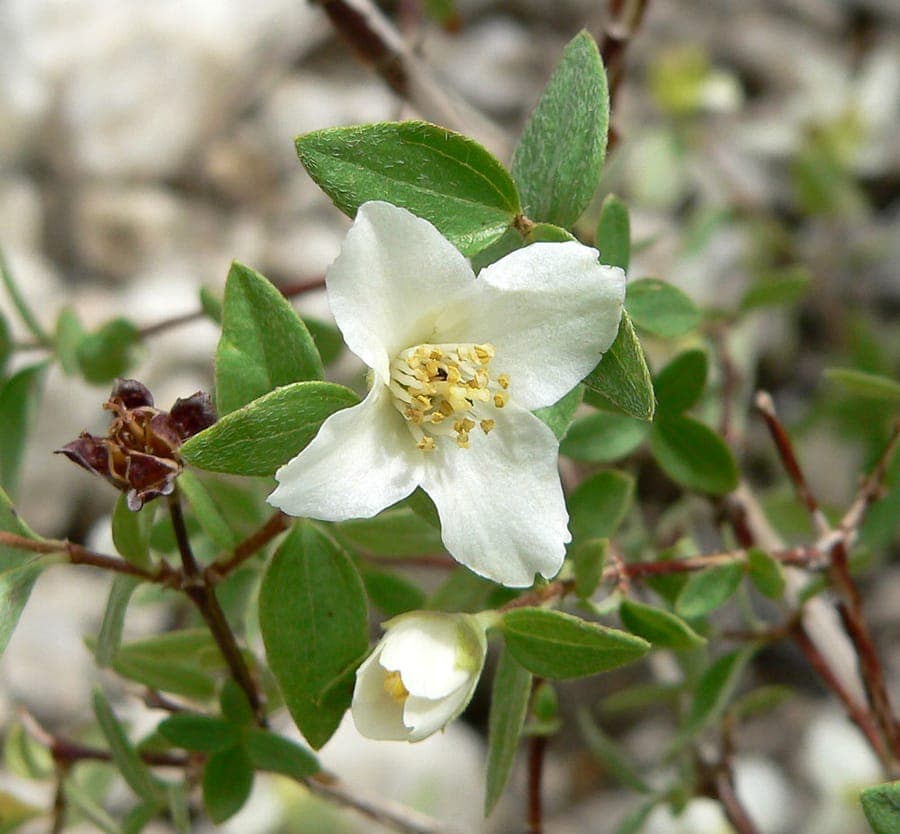
Stan Shebs / CC BY-SA 3.0, via Wikimedia Commons
Philadelphus microphyllus: complete guide
Philadelphus microphyllus
Want to see Philadelphus microphyllus: complete guide in your garden?
Full design in HD: €7.99
Look after your Philadelphus microphyllus with the GardenWorld app
Identify plants with your camera and get a care calendar with reminders for this plant.


Overview
Philadelphus microphyllus, commonly known as Desert Mock Orange or Littleleaf Mock Orange, is a compact, drought-tolerant deciduous shrub from southwestern USA and northern Mexico. This plant is renowned for its pure white, fragrant flowers that appear in May and June. With its modest stature and tiny leaves, this plant is ideal for xeriscape gardens, dry borders, and small spaces.
The plant grows to approximately 1-1.5 meters height and forms dense branching. Philadelphus microphyllus brings elegance and fragrance to dry, warm gardens and is perfect for gardeners seeking water-efficient alternatives.
Appearance and bloom
Philadelphus microphyllus has very small, glossy green leaves that are finely branched. The foliage forms a compact, rounded shrub shape. The flowers are pure white with yellow stamens and appear in numerous small clusters along the branches. The fragrance is delightful and most noticeable in late morning.
The blooming period runs from May through June. The flowers last long and provide the plant with an attractive flowering period. After blooming, the plant produces small fruit capsules.
Ideal location
Philadelphus microphyllus thrives best in locations with full sun. The plant requires at least 6-8 hours of direct sunlight daily. In partial shade, flowering will be less prolific. This plant is perfect for warm, sunny corners where other shrubs struggle.
Ideal in dry borders, against heat-reflecting walls, or as a specimen plant on dry terraces. Also suitable for containers in dry environments.
Soil requirements
Philadelphus microphyllus is renowned for its soil tolerance. The plant grows well in heavy clay soils to very sandy, poor soils. The plant does excellently in calcareous, neutral to slightly alkaline soils with pH 7.0-8.5.
Good drainage is essential, especially during rainy periods. Add sand to heavy soils. The plant appreciates mineral, lean soils.
Free preview
Want to see Philadelphus microphyllus: complete guide in your garden? Make a free preview of your design.
Watering
Philadelphus microphyllus is very drought tolerant. Once established (after 1-2 seasons), the plant needs very little supplemental water. Water regularly in the first growing season until well established. After that, water only in extreme drought.
Overwatering can be harmful, especially in winter. This plant is perfect for areas with limited rainfall and dry summers.
Pruning
Pruning after flowering helps keep the plant compact. Cut back immediately after flowers fade to healthy wood. This stimulates dense growth and more flowers next season. Remove all dead wood in early spring.
The plant can be pruned more severely every 3-4 years to maintain shape.
Maintenance calendar
March-April: Prune in early spring, remove dead wood. May: Growth begins. June: Peak flowering period. July: Prune immediately after flowering. August-September: Plant recovers. October-February: Minimal care, no watering during rain periods.
Winter hardiness
Philadelphus microphyllus is winter hardy to zone 7-8 (-15 to -10 degrees Celsius). In the Netherlands, the plant grows outdoors without issues in southern regions. In northern areas, winter protection may be needed in very severe winters. Good drainage is crucial for winter survival.
In northern regions, the plant can be grown in large containers and protected for winter.
Companion plants
Philadelphus microphyllus combines well with other drought-tolerant plants such as Cistus, Helianthemum, Salvia, and various Artemisia species. Also good with sandy shrubs and grasses. Plant groups of 3 specimens for maximum effect in xeriscape designs.
The white flowers contrast nicely with dark green and gray foliage of other desert plants.
Closing
Philadelphus microphyllus is an excellent choice for those seeking a beautiful, fragrant shrub without high water demands. With its charming white flowers and minimal maintenance needs, it is a smart plant choice for modern, sustainable gardens.
Visit gardenworld.app for inspiration for your xeriscape garden design. Find Philadelphus microphyllus at specialist growers and garden centres, where advice for drought-tolerant plants is available. Create a water-efficient garden model with gardenworld.app.
Frequently asked questions about Philadelphus microphyllus
Is Philadelphus microphyllus winter hardy?
Philadelphus microphyllus is winter hardy to zone 7-8 (-15 to -10 degrees Celsius). In the Netherlands, the plant grows outdoors without issues in southern regions.
When and how do you prune Philadelphus microphyllus?
Pruning after flowering helps keep the plant compact. Cut back immediately after flowers fade to healthy wood.
How much water does Philadelphus microphyllus need?
Philadelphus microphyllus is very drought tolerant. Once established (after 1-2 seasons), the plant needs very little supplemental water.
Where does Philadelphus microphyllus grow best?
Philadelphus microphyllus thrives best in locations with full sun. The plant requires at least 6-8 hours of direct sunlight daily.
What soil does Philadelphus microphyllus need?
Philadelphus microphyllus is renowned for its soil tolerance. The plant grows well in heavy clay soils to very sandy, poor soils.

See it in your garden
See Philadelphus microphyllus in your garden
One photo of your garden and a few questions. You see the result in about a minute.
Try it with a photoIdentify this plant in your own garden. Identify a plant
Similar plants
Mountain Hydrangea: complete guide
Hydrangea serrata
Everything about the mountain hydrangea (Hydrangea serrata): position, soil, flower colour, March pruning and hardiness. A compact lacecap for partial shade.
Yellow wax bells (Kirengeshoma palmata): complete guide
Kirengeshoma palmata
Everything about yellow wax bells (Kirengeshoma palmata): position, soil, pruning and hardiness of this shade perennial with maple-like leaves and waxy blooms.
Evergreen climbing hydrangea (Pileostegia viburnoides): complete guide
Pileostegia viburnoides
Everything about Pileostegia viburnoides: position, support, pruning and hardiness of this self-clinging evergreen climber with creamy late-summer flowers for shade.
