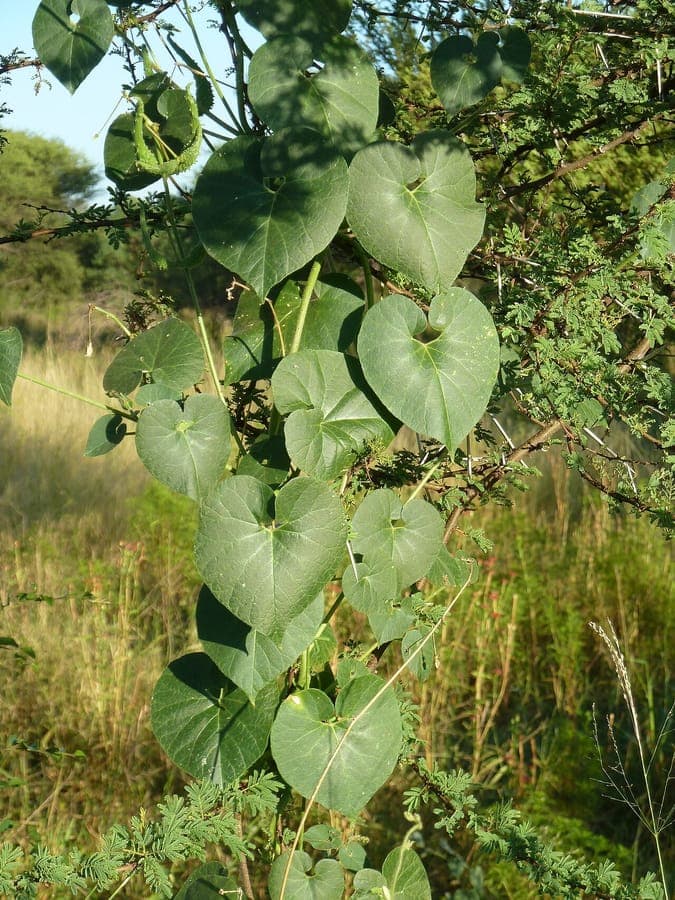
JMK / CC BY-SA 3.0, via Wikimedia Commons
Pergularia daemia: complete guide
Pergularia daemia
Want to see Pergularia daemia: complete guide in your garden?
Full design in HD: €7.99
Look after your Pergularia daemia with the GardenWorld app
Identify plants with your camera and get a care calendar with reminders for this plant.


Overview
Pergularia daemia, also known as Trellis-vine, is a fascinating tropical and subtropical climbing plant from Africa and Asia. This plant belongs to the Apocynaceae family, the same family as Asclepias (milkweed).
The name "Pergularia" refers to pergolas that this climbing plant loves to twine around. The plant is valued for its pleasant fragrance, interesting seed pods, and its climbing growth habit. It is an excellent choice for gardeners who want to grow exotic, climate-adapted plants.
Appearance and bloom
Pergularia daemia is a vigorous climbing plant that can grow 3-4 meters long in ideal conditions. The stems are slender and flexible, providing perfect attachment opportunities to supports.
The flowers are the main feature: they are small, about 1 centimeter in diameter, but very fragrant. The flower is yellow to yellow-orange in color and has a unique honeycomb texture. The flowers appear in clusters along the stems.
After flowering, distinctive, elongated seed pods develop that can reach 5-10 centimeters in length. These pods have a ribbed structure and contain numerous seeds with silky hairs, adding an interesting biological element.
The leaves are lance-shaped, slightly hairy, and have a pleasant scent when crushed. They are 5-10 centimeters long and give the plant a fine texture.
Ideal location
Pergularia daemia thrives best in warm, sunny locations with at least 6-8 hours of direct sunlight daily. The plant loves warmth and grows slowly in cool conditions.
This climbing plant is ideal for pergolas, fences, trellises, and walls where it can elegantly wind. In tropical and subtropical gardens, it can grow permanently outdoors. In temperate zones, it can be grown in containers and brought indoors in winter.
The plant works well in coastal areas and has some salt tolerance. It can also tolerate harsh wind conditions, though shelter is beneficial.
Soil
Pergularia daemia is not fussy about soil type, but thrives best in well-draining, slightly sandy soil with organic matter. It can grow in relatively poor soil, but responds well to feeding.
Add compost or organic matter to the planting hole. For container growing, use general potting soil with perlite addition for drainage. The plant can tolerate acidic to neutral pH.
Free preview
Want to see Pergularia daemia: complete guide in your garden? Make a free preview of your design.
Watering
Once established, Pergularia daemia is fairly drought-tolerant, though regular water promotes growth. Water regularly during the growing and flowering season, allowing the soil to dry slightly between waterings.
In winter, when growth slows, give much less water. The plant can endure short dry spells. In very hot climates, daily watering can be beneficial.
Water at the base of the plant, not over the foliage, to prevent fungal disease.
Pruning
Pruning is used to control growth pattern and encourage compact growth. In early spring, long vines can be cut back drastically. This stimulates branching and more flowering.
Remove dead or damaged stems annually. Excess growth can be removed during the growing season.
Maintenance calendar
Spring: Begin watering as temperatures rise. Prune back for shape. Start applying fertilizer with a low-salt program.
Summer: Water regularly. Enjoy fragrant flowers and interesting seed pods. Add support as needed.
Fall: Gradually reduce watering as temperatures drop. Harvest seed pods before they fall.
Winter: Give minimal water. In subtropical climates, growth may continue. In temperate zones, bring indoors before frost threatens.
Winter hardiness
Pergularia daemia is not hardy in frosty climates. It dies back at temperatures below approximately 5 degrees Celsius. The plant is best suited for tropical and subtropical climates (zones 10-11).
In temperate zones, it can only be grown as a container plant. Bring it indoors before frost threatens.
Companion plants
Pergularia daemia combines well with other tropical and subtropical climbing plants:
- Jasminum (Jasmine) for double fragrance
- Passiflora (Passionflower) for dramatic bloom
- Clematis for textural difference
- Bougainvillea for color contrast
- Ipomoea (Morning glory) for full coverage
These combinations create an exotic, fragrant pergola or fence.
Closing thoughts
Pergularia daemia is a unique climbing plant that gives gardens an exotic atmosphere. With its fragrant flowers and interesting seed pods, it offers much visual appeal. It is ideal for warm-climate gardeners or as a container plant in temperate zones. Visit gardenworld.app for advice on tropical garden designs and climbing plants.
Seeds can be purchased from specialized tropical plant nurseries. Young plants are available at garden centers in warm climates.
Frequently asked questions about Pergularia daemia
Is Pergularia daemia winter hardy?
Pergularia daemia is not hardy in frosty climates. It dies back at temperatures below approximately 5 degrees Celsius.
When and how do you prune Pergularia daemia?
Pruning is used to control growth pattern and encourage compact growth. In early spring, long vines can be cut back drastically.
How much water does Pergularia daemia need?
Once established, Pergularia daemia is fairly drought-tolerant, though regular water promotes growth. Water regularly during the growing and flowering season, allowing the soil to dry slightly between waterings.
Where does Pergularia daemia grow best?
Pergularia daemia thrives best in warm, sunny locations with at least 6-8 hours of direct sunlight daily. The plant loves warmth and grows slowly in cool conditions.
What soil does Pergularia daemia need?
Pergularia daemia is not fussy about soil type, but thrives best in well-draining, slightly sandy soil with organic matter. It can grow in relatively poor soil, but responds well to feeding.

See it in your garden
See Pergularia daemia in your garden
One photo of your garden and a few questions. You see the result in about a minute.
Try it with a photoIdentify this plant in your own garden. Identify a plant
Similar plants
Arkansas bluestar: complete guide
Amsonia hubrichtii
Everything about Arkansas bluestar (Amsonia hubrichtii): position, soil, watering, cutting back and hardiness. A prairie perennial with pale blue stars and golden autumn colour.
String of hearts (Ceropegia woodii): care guide
Ceropegia woodii
How to grow string of hearts (Ceropegia woodii): light, watering, potting mix, propagating from tubers, winter care and whether it is safe for cats and dogs.
Wax plant (Hoya carnosa): complete guide
Hoya carnosa
Everything about the wax plant (Hoya carnosa): light, watering, flowering spurs, a cool winter rest, cuttings and toxicity. Not toxic to cats and dogs.
