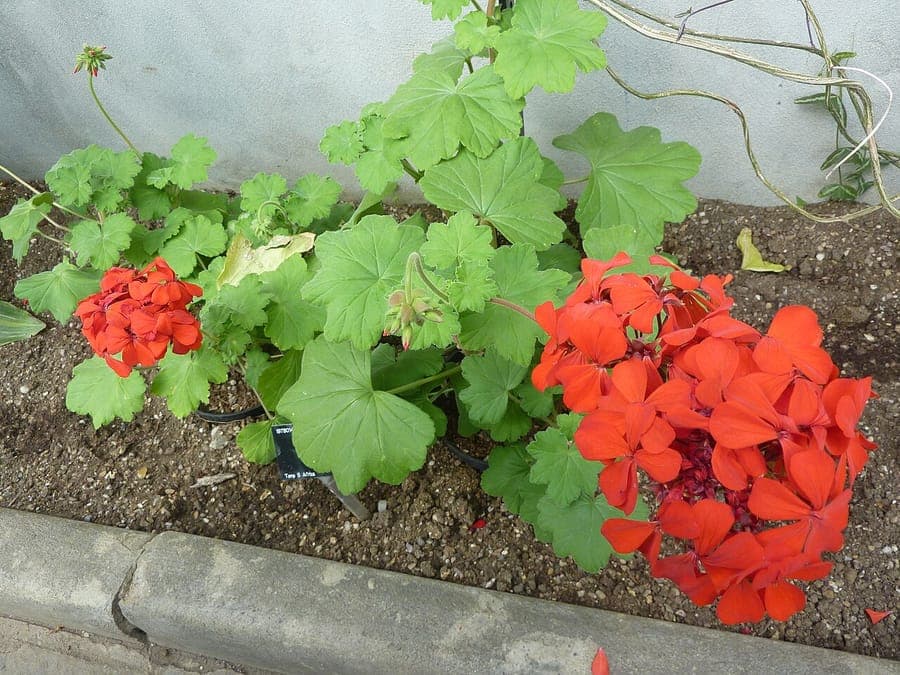
Magnus Manske / CC BY-SA 3.0, via Wikimedia Commons
Pelargonium inquinans: complete guide
Pelargonium inquinans
Want to see Pelargonium inquinans: complete guide in your garden?
Full design in HD: €7.99
Look after your Pelargonium inquinans with the GardenWorld app
Identify plants with your camera and get a care calendar with reminders for this plant.


Overview
Pelargonium inquinans, known as Scarlet geranium or red geranium, is a colourful ornamental plant from the Geraniaceae family. This South African plant has been beloved by gardeners for centuries due to its profuse red flowers and long blooming period. The plant brings warmth and vitality to balconies, patios and gardens.
Thanks to robust growth and simple cultivation, Pelargonium inquinans ranks among the most successful ornamental plants for European gardens.
Appearance and Bloom
Scarlet geranium grows as a compact, bushy plant 40 to 60 centimetres tall. The plant forms rounded, full shapes with dense foliage. The leaves are round to kidney-shaped, dark green with soft pubescence and a characteristic red spot on the leaf surface explaining the plant name.
Flowers represent the main feature of Pelargonium inquinans. They appear in large, spherical flower heads ("umbels") composed of intensely red or scarlet florets. Blooming begins early in season and continues until first frost.
Ideal Location
Scarlet geranium grows optimally in sunny to partially shaded locations. The plant requires minimum four to six hours direct sunlight daily for full blooming and compact growth. In excessive shade, the plant becomes leggy and produces fewer flowers.
Gardenworld.app advises planting in sheltered, wind-protected locations on patios or balconies. Strong wind can damage plants and blow off flowers.
Soil
Pelargonium inquinans grows in fertile, well-draining potting soil. For balcony containers, best use commercial universal potting mix with extra organic matter. Add perlite or sand for improved drainage.
The plant has no special soil requirements but thrives in slightly acidic to neutral soil. In permanent garden settings, mix potting soil with humus-rich compost for sustained nutrition.
Watering
Water regularly, especially during dry periods and when the plant blooms. Ensure good drainage so water does not stagnate around roots. The plant tolerates brief dry periods better than waterlogging.
With balcony containers, water carefully from above to keep foliage dry. Wet foliage can cause fungal problems. During rainy weather, watering may be omitted.
Free preview
Want to see Pelargonium inquinans: complete guide in your garden? Make a free preview of your design.
Pruning
Prune the plant regularly to maintain compact, full form. Remove faded flowers to encourage continued blooming. Pinch back young shoots to stimulate branching.
In early spring, cut the plant back hard to approximately 15-20 centimetres for fresh growth. This creates space for many more flowers throughout the season.
Maintenance Calendar
May: Plant from pre-grown seedlings; harden off in sheltered spot June to July: Regular watering; remove faded flowers August: Continuous pruning; fertilise every two weeks September: Reduce fertilising; prepare for autumn October: Remove dead parts; prepare for overwintering November-April: Keep quiet in cool location; minimal watering
Winter Hardiness
Pelargonium inquinans is not frost-hardy outdoors and does not survive European winters in the garden. The plant is therefore usually treated as an annual. However, gardeners may overwinter mother plants indoors in cool, bright location (8-10 degrees) with very minimal watering.
This overwintered plant can be propagated in spring by cuttings and replanted.
Companion Plants
Scarlet geranium combines beautifully with white-flowering plants like white lobelia and snapdragon, creating contrast. Also attractive paired with silver-leaved plants like hollyhock (Senecio) and grey cineraria.
In large containers, group three to five geraniums around blue or yellow accent plants for maximum visual effect.
Conclusion
Pelargonium inquinans offers gardeners simplicity, reliability and beauty throughout summer. With its full red flowers, compact growth and easy cultivation, this plant deserves a place on every patio. Enjoy the constant ornamental value of this South African beauty.
Available at leading garden centres. Plant in May after last frost. For more inspiration and gardening tips, visit gardenworld.app/en and discover how to integrate red geraniums into your garden design.
Frequently asked questions about Pelargonium inquinans
Is Pelargonium inquinans winter hardy?
Pelargonium inquinans is not frost-hardy outdoors and does not survive European winters in the garden. The plant is therefore usually treated as an annual.
When and how do you prune Pelargonium inquinans?
Prune the plant regularly to maintain compact, full form. Remove faded flowers to encourage continued blooming.
How much water does Pelargonium inquinans need?
Water regularly, especially during dry periods and when the plant blooms. Ensure good drainage so water does not stagnate around roots.
Where does Pelargonium inquinans grow best?
Scarlet geranium grows optimally in sunny to partially shaded locations. The plant requires minimum four to six hours direct sunlight daily for full blooming and compact growth.
What soil does Pelargonium inquinans need?
Pelargonium inquinans grows in fertile, well-draining potting soil. For balcony containers, best use commercial universal potting mix with extra organic matter.

See it in your garden
See Pelargonium inquinans in your garden
One photo of your garden and a few questions. You see the result in about a minute.
Try it with a photoIdentify this plant in your own garden. Identify a plant
Similar plants
Geranium renardii: the velvet-leaved cranesbill
Geranium renardii
Geranium renardii is a compact cranesbill from the Caucasus with sage-green, velvety leaves and white flowers veined in violet. How to grow it in a dry, sunny spot.
Cambridge cranesbill (Geranium × cantabrigiense): guide
Geranium × cantabrigiense
Everything about Geranium × cantabrigiense, the low cranesbill for dry shade: cultivars such as 'Biokovo', position, pruning, division and companions.
Purple cranesbill: complete guide
Geranium × magnificum
Everything about purple cranesbill (Geranium × magnificum): violet-blue flowers in June, position, soil, cutting back after flowering and the best rose partners.
