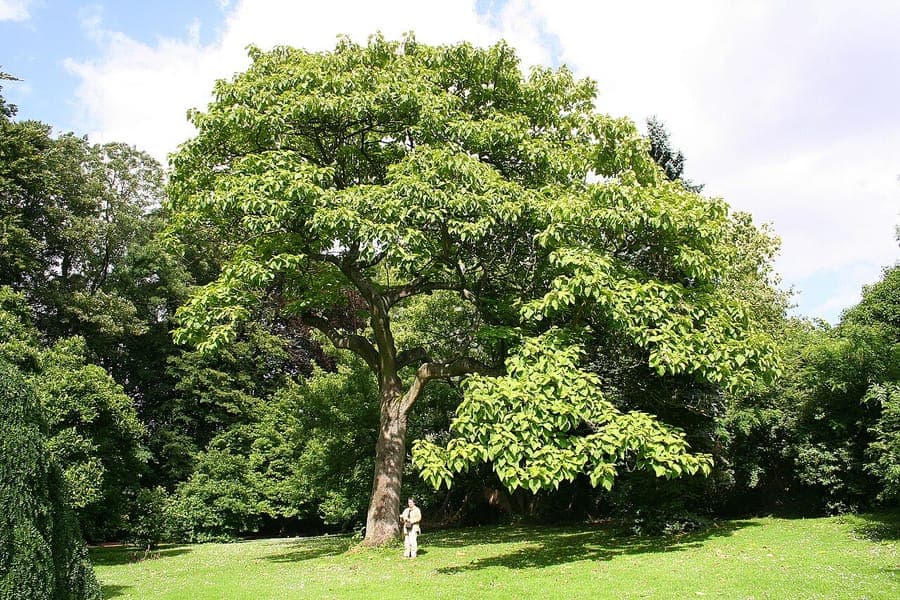
Jean-Pol GRANDMONT / CC BY 2.5, via Wikimedia Commons
Paulownia tomentosa: complete guide
Paulownia tomentosa
Want to see Paulownia tomentosa: complete guide in your garden?
Full design in HD: €7.99
Look after your Paulownia tomentosa with the GardenWorld app
Identify plants with your camera and get a care calendar with reminders for this plant.


Overview
Paulownia tomentosa, commonly known as Princess Tree or Foxglove Tree, is a remarkable deciduous tree from China and Korea that has been cherished in European gardens since the 19th century. Its impressive stature, enormous heart-shaped foliage, and abundant spring blooms make it an outstanding focal point for any garden. The tree creates an instant tropical atmosphere and commands attention with its bold architectural presence.
Appearance and Bloom Time
Paulownia tomentosa grows as a deciduous tree reaching 15 to 20 meters in height. The leaves are exceptionally large, sometimes reaching 40 centimeters in length, with a soft downy texture that lends a bird-wing appearance to the canopy. The flowers appear in May, before the leaves have fully emerged, creating a magnificent pre-leaf display.
The blossoms are light purple to lilac, arranged in upright panicles measuring 25-30 centimeters tall. These fragrant flowers attract bees and butterflies throughout the blooming season. After flowering, decorative seed pods develop that persist into winter, adding visual interest to the tree's winter silhouette.
Ideal Location
Princesses Tree thrives in full sun exposure. A minimum of six hours of direct sunlight daily is essential for robust flowering and foliage development. While the tree tolerates partial shade, flowering performance diminishes significantly in shadier positions. Protect young trees from strong winds, as the large leaves can suffer damage.
The tree requires adequate space and works best in medium to large gardens where it can develop its natural form without restriction or constant pruning.
Soil
Paulownia tomentosa adapts to almost all soil types but prefers well-draining conditions. Heavy clay soils should be amended with compost or peat to improve drainage. A neutral to slightly acidic pH around 6-7 is optimal for growth. While the tree tolerates poor soils, richer, well-nourished ground produces more vigorous specimens.
Apply a mulch layer of 5-10 centimeters around the base to retain moisture and suppress weeds effectively.
Watering
Consistent moisture during the growing season from May through September is important for optimal development. Young trees in their first year require regular watering until they establish a strong root system. Once established, mature trees demonstrate respectable drought tolerance.
During dry periods and hot summers, provide supplemental irrigation. Guard against waterlogging in winter, as saturated soil causes root rot and winter dieback.
Free preview
Want to see Paulownia tomentosa: complete guide in your garden? Make a free preview of your design.
Pruning
Fast-growing Paulownia trees benefit from regular maintenance pruning. February and March, before bud break, is the optimal pruning window. Remove dead wood, crossing branches, and downward-growing limbs to maintain a strong framework.
Annual maintenance pruning keeps the tree healthy and promotes flowering. Avoid severe pruning, which can disfigure the natural form and reduce blooming the following year.
Maintenance Calendar
- January-February: Winter pruning, assess frost damage
- March: Apply balanced fertilizer for spring growth
- May: Enjoy spectacular lilac-purple flower display
- June-July: Water regularly during dry spells
- September: Monitor as tree prepares for dormancy
- October-November: Cleanup fallen leaves and debris
- December: Protect young trees against severe frosts
Winter Hardiness
Paulownia tomentosa demonstrates winter hardiness to approximately -12 to -15 degrees Celsius. In northern Europe, extreme winters can stress the tree significantly. Young specimens benefit from protective wrapping during severe cold snaps. Mature, well-established trees tolerate freezing temperatures better than newly planted ones.
Companion Planting
Princesses Tree pairs beautifully with other Asian species such as Japanese maples and magnolias. Underplanting with shade-tolerant perennials like hostas and ferns creates excellent contrast and interest. In larger gardens, the tree also performs superbly as a specimen plant with room to mature fully.
For supplies and gardening tools, visit local garden centers such as larger DIY retailers for quality implements suitable for tree cultivation and maintenance.
Closing Thoughts
Paulownia tomentosa delivers that coveted piece of exotic Asian beauty many gardeners dream of. With proper placement and attentive care, this spectacular tree rewards you with years of enjoyment and unforgettable spring blooms. Discover how to incorporate this impressive tree into your garden design with gardenworld.app's personalized suggestions and inspiration.
With gardenworld.app, you can design your complete front garden with professional guidance based on your photo and preferences. Explore how the stunning Paulownia tomentosa fits into your space and receive expert recommendations for creating your perfect green outdoor sanctuary.
Frequently asked questions about Paulownia tomentosa
Is Paulownia tomentosa winter hardy?
Paulownia tomentosa demonstrates winter hardiness to approximately -12 to -15 degrees Celsius. In northern Europe, extreme winters can stress the tree significantly.
When and how do you prune Paulownia tomentosa?
Fast-growing Paulownia trees benefit from regular maintenance pruning. February and March, before bud break, is the optimal pruning window.
How much water does Paulownia tomentosa need?
Consistent moisture during the growing season from May through September is important for optimal development. Young trees in their first year require regular watering until they establish a strong root system.
Where does Paulownia tomentosa grow best?
Princesses Tree thrives in full sun exposure. A minimum of six hours of direct sunlight daily is essential for robust flowering and foliage development.
What soil does Paulownia tomentosa need?
Paulownia tomentosa adapts to almost all soil types but prefers well-draining conditions. Heavy clay soils should be amended with compost or peat to improve drainage.

See it in your garden
See Paulownia tomentosa in your garden
One photo of your garden and a few questions. You see the result in about a minute.
Try it with a photoIdentify this plant in your own garden. Identify a plant
Similar plants
Glossy abelia: complete guide
Abelia × grandiflora
Everything about glossy abelia (Abelia × grandiflora): position, soil, pruning and hardiness of a shrub that flowers from July to October with scented white bells.
Trailing abutilon (Abutilon megapotamicum): care guide
Abutilon megapotamicum
Grow trailing abutilon (Abutilon megapotamicum) in a basket or against a wall: watering, feeding, pruning and overwintering for red and yellow lantern flowers.
Flowering maple (Abutilon): container shrub guide
Abutilon × hybridum
How to grow flowering maple (Abutilon × hybridum) in a pot: position, watering, feeding, March pruning and overwintering indoors for flowers from May to October.
