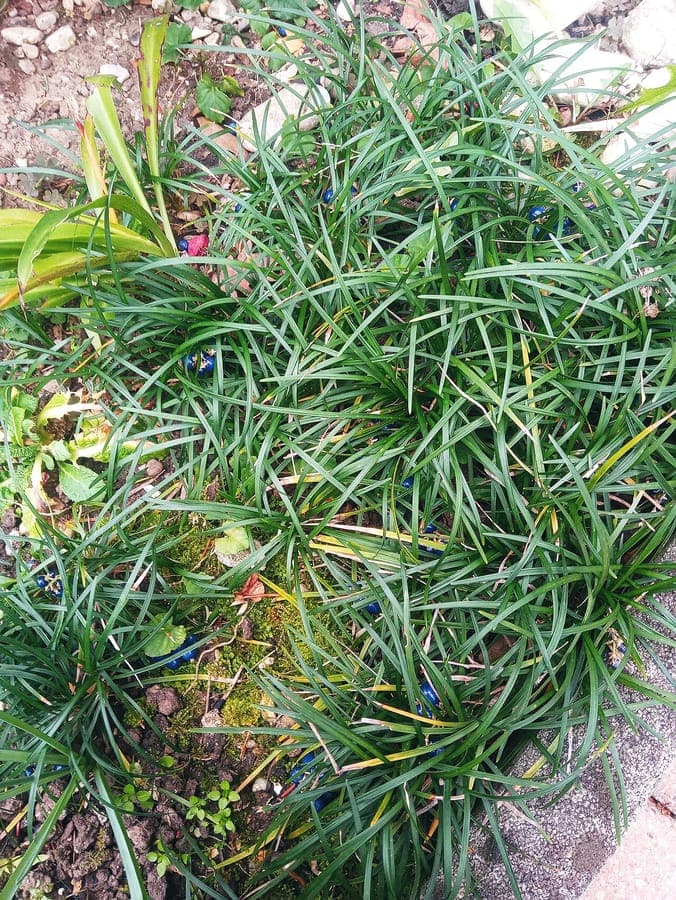
Shabicht / CC0, via Wikimedia Commons
Japanese lilyturf: complete guide for shaded ground covers
Ophiopogon japonicus
Want to see Japanese lilyturf: complete guide for shaded ground covers in your garden?
Full design in HD: €7.99
Look after your Japanese lilyturf with the GardenWorld app
Identify plants with your camera and get a care calendar with reminders for this plant.


Japanese lilyturf (Ophiopogon japonicus) is a low ground cover originating from East Asia to Vietnam. This plant is renowned for its small, black fruits and its ability to grow in shade where many other plants struggle.
Overview
Ophiopogon japonicus is a dwarf plant naturally occurring from central and southern China to Vietnam. The plant grows only 20-30 cm tall and forms compact ground cover. It is an ideal choice for shady corners where nothing else grows.
Appearance and Blooming
The plant grows with narrow, grass-like, dark green leaves arranged in clusters. In spring, small lilac or white flowers appear on short stems. These flowers are followed by characteristic black fruits that provide excellent aesthetic value.
Ideal Location
This plant grows best in partial to full shade. It tolerates full sun but leaves can scorch in hot summers. Ideal for shady corners under trees or along hedges where little else grows.
Soil Composition
Ophiopogon japonicus grows optimally in humus-rich, well-draining soil. The plant tolerates diverse soil types but thrives best in slightly acid to neutral soil. Add compost for better growth.
Free preview
Want to see Japanese lilyturf: complete guide for shaded ground covers in your garden? Make a free preview of your design.
Watering
Once established, this plant needs little water. Water regularly during the first growing season. Thereafter, water only in extreme drought. Excessive water must be avoided as it can cause root rot.
Pruning and Maintenance
Minimal pruning needed. Remove dead or damaged leaves in spring. The plant slowly spreads via underground rhizomes and naturally forms a dense carpet. Leave gnarled leaves intact for winter protection.
Maintenance Calendar
Spring: Clean dead leaves, add compost. Summer: Enjoy low growth and fruits. Autumn: Nothing special, plant grows slower. Winter: Plant stays green, no care needed.
Winter Hardiness
Ophiopogon japonicus is hardy to about -15 degrees Celsius. In milder climates, the plant stays green year-round. In colder regions, leaves may die and regrow in spring.
Companion Plants
Pair well with other shade plants like heartleaf and hostas. For texture: sedge and other ornamental grasses. Also combine with flowering shade plants like astilbe and heuchera for color contrast.
Closing Thoughts
Japanese lilyturf is the solution for difficult shady spots. This ground cover requires minimal care and looks interesting year-round. Find young plants at garden centers. Discover inspiration on gardenworld.app for shaded gardens with decorative ground covers and design ideas.
Frequently asked questions about Japanese lilyturf
Is Japanese lilyturf winter hardy?
Ophiopogon japonicus is hardy to about -15 degrees Celsius. In milder climates, the plant stays green year-round.
When and how do you prune Japanese lilyturf?
Minimal pruning needed. Remove dead or damaged leaves in spring.
How much water does Japanese lilyturf need?
Once established, this plant needs little water. Water regularly during the first growing season.
Where does Japanese lilyturf grow best?
This plant grows best in partial to full shade. It tolerates full sun but leaves can scorch in hot summers.
What soil does Japanese lilyturf need?
Ophiopogon japonicus grows optimally in humus-rich, well-draining soil. The plant tolerates diverse soil types but thrives best in slightly acid to neutral soil.

See it in your garden
See Japanese lilyturf in your garden
One photo of your garden and a few questions. You see the result in about a minute.
Try it with a photoIdentify this plant in your own garden. Identify a plant
Similar plants
Great camas (Camassia leichtlinii): planting and care
Camassia leichtlinii
Everything about great camas (Camassia leichtlinii): planting the bulbs, heavy wet soil, naturalising in grass, hardiness and the best partners for a flowering meadow.
Pineapple lily (Eucomis bicolor): planting, care and overwintering
Eucomis bicolor
Everything about the pineapple lily (Eucomis bicolor): planting the bulbs, watering and feeding, overwintering in pots or the ground, and the best border partners.
Pineapple lily (Eucomis comosa): growing and overwintering
Eucomis comosa
Eucomis comosa is the tallest and best-known pineapple lily, with creamy spikes topped by a leafy tuft in late summer. Planting, overwintering and leaf cuttings.
