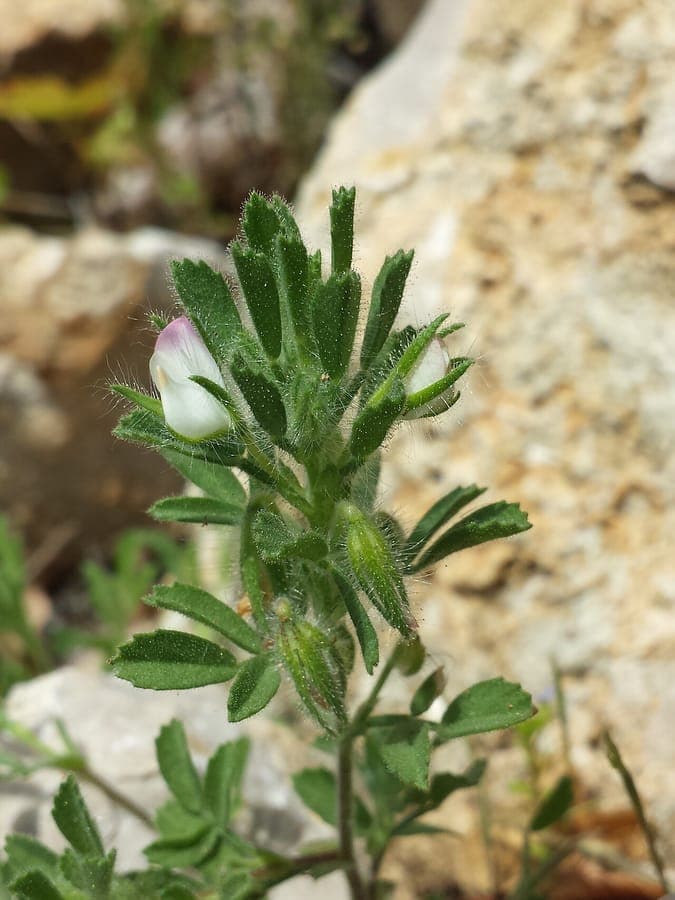
Stefan.lefnaer / CC BY-SA 4.0, via Wikimedia Commons
Small restharrow: complete guide for Mediterranean and rock gardens
Ononis reclinata
Want to see Small restharrow: complete guide for Mediterranean and rock gardens in your garden?
Full design in HD: €7.99
Look after your Small restharrow with the GardenWorld app
Identify plants with your camera and get a care calendar with reminders for this plant.


The small restharrow (Ononis reclinata) is a low-growing Mediterranean plant originating from the Mediterranean region through to Iran and Ethiopia. This delicate plant is renowned for its purple flowers and robust nature despite its small stature.
Overview
Ononis reclinata is a small, herbaceous plant naturally occurring from Macaronesia and Western Europe through the Mediterranean region to Iran and Ethiopia. The plant grows only 20-40 cm tall and forms compact clumps. It is ideal for gardening where space is limited.
Appearance and Blooming
This small plant grows low and dense with tiny, three-lobed leaves. Purple flowers are 1-1.5 cm across and appear from May to July. The flowers stand upright giving the plant a striking appearance. Small pea pods follow after flowering.
Ideal Location
Choose a fully sunny spot for this plant. It grows in partial shade but flowers less abundantly. Ensure good visibility from seating areas, as the flowers show better in full sun.
Soil Composition
The small restharrow grows optimally in lean, well-draining soil. Heavy soils can be improved with sand and gravel. The plant loves rocky or stony environments, as in its native habitat.
Free preview
Want to see Small restharrow: complete guide for Mediterranean and rock gardens in your garden? Make a free preview of your design.
Watering
This plant is very drought tolerant. Water regularly only during growth and flowering. Once established, water minimally. The plant tolerates drought better than excessive moisture.
Pruning and Maintenance
Minimal pruning is needed. Remove dead leaves and flowers after blooming. The plant can be lightly pruned to keep it compact, but this is not necessary.
Maintenance Calendar
Spring: Prune carefully if needed. Summer: Check water regularly. Autumn: Reduce watering. Winter: In frost areas, plant dies back; bring indoors or protect.
Winter Hardiness
Small restharrow has limited hardiness, only to about 0 to -5 degrees Celsius. Protection may help in severe winters. In the Netherlands, the plant is better grown in a greenhouse or as an annual.
Companion Plants
Pair with other small Mediterranean plants like thyme and oregano. Rock plants like sedums and arabis fit well. For color: scattered dianthus.
Closing Thoughts
Ononis reclinata is perfect for small gardens and rock gardens. This small Mediterranean plant adds character to any garden corner. Find rock garden materials and inspiration on gardenworld.app for small Mediterranean gardens.
Frequently asked questions about Small restharrow
Is Small restharrow winter hardy?
Small restharrow has limited hardiness, only to about 0 to -5 degrees Celsius. Protection may help in severe winters.
When and how do you prune Small restharrow?
Minimal pruning is needed. Remove dead leaves and flowers after blooming.
How much water does Small restharrow need?
This plant is very drought tolerant. Water regularly only during growth and flowering.
Where does Small restharrow grow best?
Choose a fully sunny spot for this plant. It grows in partial shade but flowers less abundantly.
What soil does Small restharrow need?
The small restharrow grows optimally in lean, well-draining soil. Heavy soils can be improved with sand and gravel.

See it in your garden
See Small restharrow in your garden
One photo of your garden and a few questions. You see the result in about a minute.
Try it with a photoIdentify this plant in your own garden. Identify a plant
Similar plants
Pineapple broom (Argyrocytisus battandieri): complete guide
Argyrocytisus battandieri
Everything about pineapple broom (Argyrocytisus battandieri), the Moroccan wall shrub with silver leaves and pineapple-scented flowers: site, pruning and hardiness.
Blue false indigo: complete guide
Baptisia australis
Everything about blue false indigo (Baptisia australis): position, soil, watering, cutting back, hardiness and toxicity. A long-lived prairie perennial with indigo flowers.
Warminster broom (Cytisus × praecox): complete guide
Cytisus × praecox
Everything about Warminster broom (Cytisus × praecox): position, poor soil, pruning after flowering, hardiness and what you need to know about its toxicity.
