
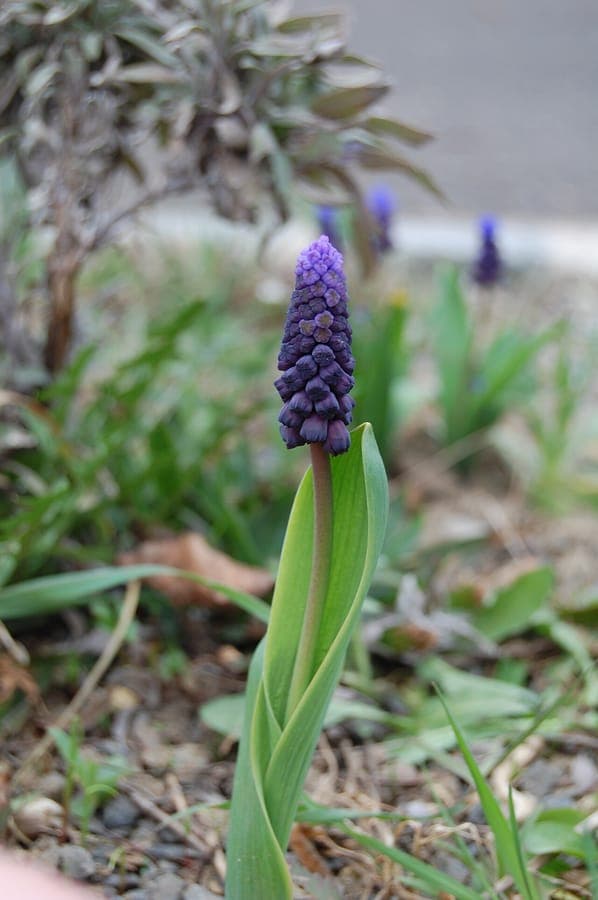
Muscari / CC BY-SA 3.0 de, via Wikimedia Commons
Broad-leaved grape hyacinth (Muscari latifolium): complete guide
Muscari latifolium
Want to see Broad-leaved grape hyacinth (Muscari latifolium): complete guide in your garden?
1 minute, no credit card
Overview
Broad-leaved grape hyacinth (Muscari latifolium), also called indigo grape hyacinth, is a distinctive spring bulb in the Asparagaceae family. Native to western and southern Turkey, this plant stands out with unique bicolored flowers: purple-blue fertile florets at the base and paler blue sterile florets at the apex. It's a gem for borders and alpine gardens.
Appearance & Bloom Cycle
This compact bulb reaches 15-25 centimeters in height with broad linear green leaves emerging early in the season. Distinctive spikes appear in April-May, displaying double rows of small spherical florets. The characteristic two-tone pattern makes identification easy - dark purple-blue lower florets, pale blue upper sterile florets creating striking contrast.
Ideal Location
Plant broad-leaved grape hyacinth in full sun to partial shade, ideally receiving four to six hours of direct light daily. Alpine settings and rock gardens are perfect. In very warm regions, afternoon shade mitigates heat stress. This muscari tolerates shade better than most varieties.
Soil Requirements
This bulb thrives in well-draining soil - not overly wet but not parched either. A mixture of compost, sand, and gravel works well. Ideal pH is 6.0-7.5. Heavy soil must be substantially improved to prevent bulb rot. Reliable drainage is essential for success.
Watering
Water regularly during the growing season, keeping soil moist but never waterlogged. After flowering, reduce water gradually. The bulb prefers relatively dry conditions overwinter - water cautiously in winter. Avoid overhead watering to prevent leaf disease.
Free design
Want to see Broad-leaved grape hyacinth (Muscari latifolium): complete guide in your garden? Make a free design now.
Pruning & Maintenance
Remove spent flower spikes to prevent seed formation and maintain neatness. Allow foliage to persist until it yellows naturally - this reserves energy for next season's growth. No further pruning required. This tidy plant maintains itself with minimal intervention.
Maintenance Calendar
September-October: Plant bulbs 8-10 centimeters deep. March-April: Flowering period; water as needed. May-June: Remove spent flowers; allow foliage to persist. July-August: Foliage declines; water minimally.
Winter Hardiness
Broad-leaved grape hyacinth is hardy (USDA zones 3-7) and overwinters reliably outdoors. It tolerates temperatures down to -15°C. In severe Northern European winters, a layer of dry mulch offers extra protection, though usually unnecessary.
Companion Plants
Pair broad-leaved grape hyacinth with other spring bulbs: narcissus, snowdrops, and crocuses. The blue flowers contrast beautifully with yellow narcissus or white snowdrops. Plant in drifts in alpine troughs, rock gardens, and spring borders for maximum impact.
Conclusion
Broad-leaved grape hyacinth adds unique color to spring gardens and alpine plantings. This distinctive bulb offers reliable blooms year after year with minimal care. Plant bulbs this autumn and look forward to their striking bicolored display next spring. For more garden design inspiration, visit gardenworld.app.
Want to see Broad-leaved grape hyacinth (Muscari latifolium): complete guide in your garden? Make a free design now.
Upload a photo, pick a style, and get a photorealistic design with plant list in under a minute.
No credit card required


Similar plants
Narrow-leaved dracaena: complete guide
Dracaena angustifolia
Everything about Dracaena angustifolia - the narrow-leaved dracaena: location, care, overwintering and use as a houseplant or patio plant.
Chaparral yucca: complete guide to Hesperoyucca whipplei
Hesperoyucca whipplei
Hesperoyucca whipplei (Our Lord's candle) is a dramatic rosette-forming plant from California that produces a towering flower spike, ideal for dry and gravel gardens.
False lily-of-the-valley: complete guide
Maianthemum dilatatum
Everything about Maianthemum dilatatum, the false lily-of-the-valley. Care, shade location, propagation and garden combinations for this popular shade ground cover.