Rantingsteve at English Wikipedia / Public domain, via Wikimedia Commons
Curry leaf tree: complete guide
Murraya koenigii
Want to see Curry leaf tree: complete guide in your garden?
Full design in HD: €7.99
Look after your Curry leaf tree with the GardenWorld app
Identify plants with your camera and get a care calendar with reminders for this plant.


Overview
The Curry leaf tree (Murraya koenigii), also known as Curry bush or Indian jasmine, is a small tropical shrub or tree that is native to India. Despite its name, the plant contains no turmeric, but its fragrant, delicately aromatic leaves are widely used in Indian and Asian cuisine. In Europe, the plant is primarily cultivated as a decorative potted or topiary plant, especially in warmer climates or in temperate greenhouses.
Appearance and Bloom
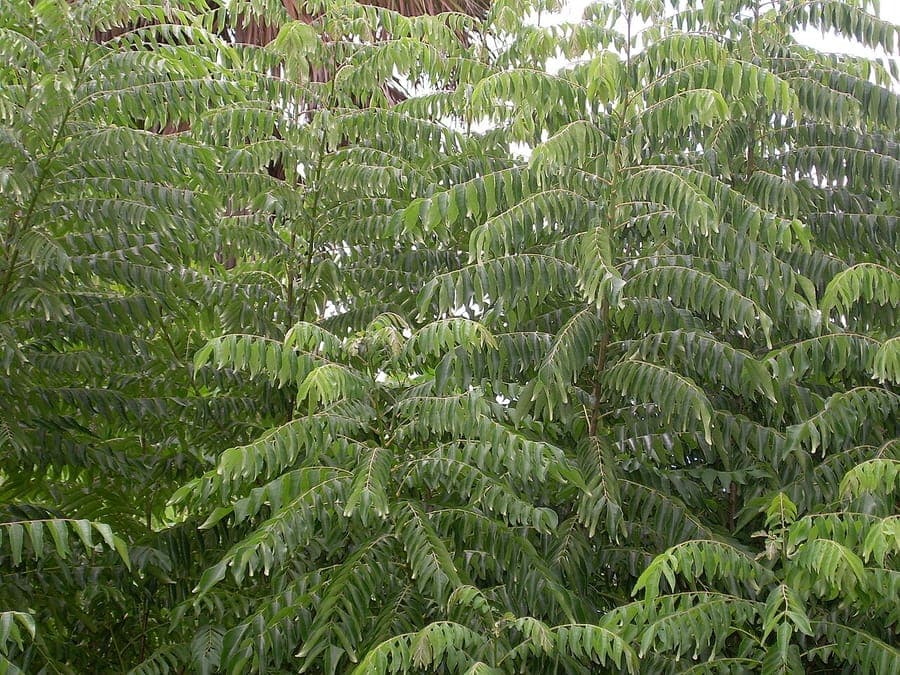
The Curry leaf tree grows to approximately 2-4 meters tall, though in pots it typically remains smaller. The plant has thin, delicate-looking pinnate compound leaves that are strongly aromatic and smell curry-like when crushed. The plant flowers with small, delicate white flowers that are very fragrant and appear in spring and summer. After flowering, small black or red fruits appear, depending on the cultivar.
Ideal Location
The Curry leaf tree requires plenty of warmth and light and grows best in full sun locations. In temperate climates, it should receive a minimum of 6 hours of direct sun daily. If grown indoors, provide a location near a warm, southeast-facing window. The plant is not frost-hardy and must be protected from temperatures below 10 degrees Celsius.
Soil
The Curry leaf tree requires well-draining, fertile soil. A mixture of garden loam, peat, and sand works well. The plant prefers a pH around 6.0-7.0. Ensure the pot has good drainage holes to prevent root rot. Repotting into a slightly larger pot is necessary as root growth increases.
Free preview
Want to see Curry leaf tree: complete guide in your garden? Make a free preview of your design.
Watering
The Curry leaf tree prefers moist, but not waterlogged, soil. Water regularly during the growing season (spring and summer), less frequently in autumn and winter. Ensure the soil dries somewhat between waterings. Excessive water can lead to root rot. In hot periods, daily misting of leaves can be beneficial.
Pruning
The Curry leaf tree responds well to pruning and can be cut to maintain a more compact, bushy form. Pruning can take place during the growing season. Regular pinching of young shoots encourages more leaves and denser growth. It is best to remove dead or diseased branches immediately.
Maintenance Calendar
Spring: Begin clear growth, water regularly. Summer: Feed out regularly and water regularly; harvest leaves as desired. Autumn: Lower watering as growth slows. Winter: Limited water and protect from cold.
Winter Hardiness
The Curry leaf tree is very sensitive to cold and does not survive outdoors in severely cold climates. In Southern Europe, it can grow outdoors, but in Northern Europe it must be kept indoors or in a temperate greenhouse in winter. Temperatures below 10 degrees can cause damage or death.
Companion Plants
The Curry leaf tree can be combined with other heat-loving plants in a greenhouse or tropical garden, such as bougainvillea, passionflower, and other aromatic herbs. In container cultivation, it can be combined with complementary tropical plants.
Closing
The Curry leaf tree is a fascinating choice for garden design in warm climates or for greenhouse/container cultivation in temperate regions. The combination of ornamental value and culinary value makes it attractive to herb enthusiasts. Available through specialized nurseries and plant suppliers.
Frequently asked questions about Curry leaf tree
Is Curry leaf tree winter hardy?
The Curry leaf tree is very sensitive to cold and does not survive outdoors in severely cold climates. In Southern Europe, it can grow outdoors, but in Northern Europe it must be kept indoors or in a temperate greenhouse in winter.
When and how do you prune Curry leaf tree?
The Curry leaf tree responds well to pruning and can be cut to maintain a more compact, bushy form. Pruning can take place during the growing season.
How much water does Curry leaf tree need?
The Curry leaf tree prefers moist, but not waterlogged, soil. Water regularly during the growing season (spring and summer), less frequently in autumn and winter.
Where does Curry leaf tree grow best?
The Curry leaf tree requires plenty of warmth and light and grows best in full sun locations. In temperate climates, it should receive a minimum of 6 hours of direct sun daily.
What soil does Curry leaf tree need?
The Curry leaf tree requires well-draining, fertile soil. A mixture of garden loam, peat, and sand works well.

See it in your garden
See Curry leaf tree in your garden
One photo of your garden and a few questions. You see the result in about a minute.
Try it with a photoIdentify this plant in your own garden. Identify a plant
Similar plants
Mandarin: complete guide to growing it in a pot
Citrus reticulata
Everything about the mandarin (Citrus reticulata) as a container plant: position, compost, watering, pruning, overwintering indoors and harvesting your own fruit.
Calamondin: complete guide to the indoor citrus
Citrus × microcarpa
Everything about the calamondin (Citrus × microcarpa): position indoors and out, compost, watering, pruning, overwintering and what to do with the sour little fruit.
Skimmia × confusa 'Kew Green': complete guide
Skimmia × confusa
Everything about Skimmia × confusa and 'Kew Green': partial shade, acid soil, watering, pruning and hardiness for this compact, fragrant evergreen shrub.
