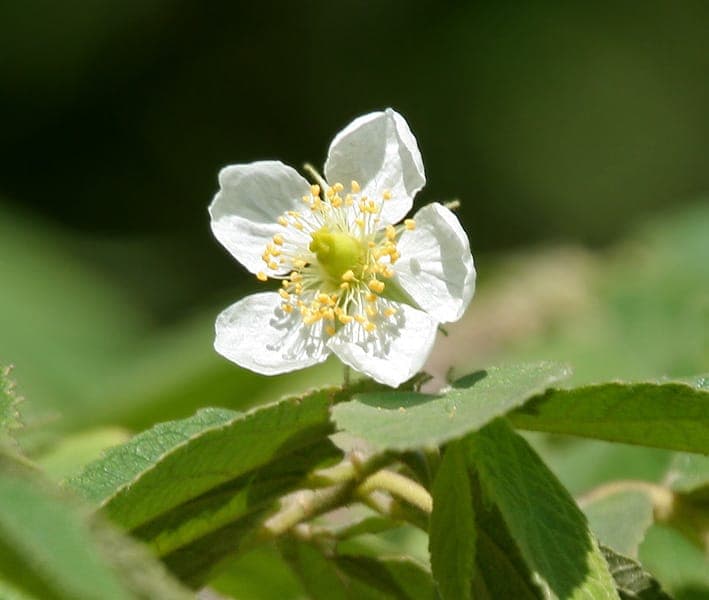
J.M.Garg / CC BY-SA 4.0, via Wikimedia Commons
Muntingia calabura: complete guide
Muntingia calabura
Want to see Muntingia calabura: complete guide in your garden?
Full design in HD: €7.99
Look after your Muntingia calabura with the GardenWorld app
Identify plants with your camera and get a care calendar with reminders for this plant.


Overview
Muntingia calabura, commonly known as the calabur tree or Jamaica cherry, is a fast-growing tree from Central and South America. This tree stands out for its continuous production of small red fruits that are highly attractive to birds. With its rapid growth and prolific fruiting, this tree is a perfect choice for gardens seeking a tropical atmosphere.
Appearance and Blooms
The calabur tree grows to an average height of 5 to 7 meters with a broad crown. The leaves are small, dark green, and lance-shaped, giving the tree fine texture. The small white flowers appear frequently during the growing season and are followed by small red fruits the size of cherries.
These fruits are not only decorative but also edible, offering a sweet-tart flavor.
Ideal Location
The calabur tree thrives in sunny locations. Ensure the tree is planted in a sunny spot where it receives at least 6 hours of direct sunlight daily. The tree is not wind-fussy, although young trees can benefit from protection.
In temperate climates, the tree can be planted in a sheltered, sunny spot or grown in containers and brought indoors during frost.
Soil
Muntingia calabura grows in diverse soil types, from sand to clay, as long as the soil is reasonably well-draining. The tree prefers slightly acidic to neutral pH. Ensure you use nutrient-rich soil with organic matter for optimal growth.
The tree is not particularly sensitive to soil characteristics but grows best in nutrient-rich, well-draining soil.
Free preview
Want to see Muntingia calabura: complete guide in your garden? Make a free preview of your design.
Watering
The calabur tree enjoys regular watering, especially during dry periods and the growing season. Ensure the soil remains moist but not waterlogged. In container cultivation, water should be given regularly, especially in summer.
In winter, watering can be reduced.
Pruning
The calabur tree responds well to pruning and can be pruned to shape or control height. Pruning also encourages fuller, more branched growth. You can remove dead or damaged branches throughout the year.
To keep the tree compact, you can prune heavily in spring.
Maintenance Calendar
- Spring: Begin pruning, start feeding
- Summer: Water regularly, watch for pests
- Autumn: Gradually reduce watering
- Winter: Minimal maintenance, protect in frost
Winter Hardiness
Muntingia calabura is frost-tender and cannot overwinter outdoors in temperate climates. In the UK and northern Europe, the tree must be grown in containers and moved to a warm location during frost. The tree is ideal for gardens with protected, warm microclimates or for seasonal use.
Companion Plants
The calabur tree combines well with other tropical plants such as banana trees, passion fruits, and other exotic plants. For underplanting, you can use tropical groundcovers.
The red fruit of the calabur tree provides a nice contrast with green and silver-leafed plants.
Conclusion
Muntingia calabura is a spectacular tree that offers rapid growth and prolific fruiting. With its attractive fruits and fast growth, this tree is perfect for gardens seeking something exotic and dynamic. With regular watering and sunny location, you will see results quickly.
Available at garden centers.
Check gardenworld.app for inspiration on integrating tropical elements into your front garden.
Frequently asked questions about Muntingia calabura
Is Muntingia calabura winter hardy?
Muntingia calabura is frost-tender and cannot overwinter outdoors in temperate climates. In the UK and northern Europe, the tree must be grown in containers and moved to a warm location during frost.
When and how do you prune Muntingia calabura?
The calabur tree responds well to pruning and can be pruned to shape or control height. Pruning also encourages fuller, more branched growth.
How much water does Muntingia calabura need?
The calabur tree enjoys regular watering, especially during dry periods and the growing season. Ensure the soil remains moist but not waterlogged.
Where does Muntingia calabura grow best?
The calabur tree thrives in sunny locations. Ensure the tree is planted in a sunny spot where it receives at least 6 hours of direct sunlight daily.
What soil does Muntingia calabura need?
Muntingia calabura grows in diverse soil types, from sand to clay, as long as the soil is reasonably well-draining. The tree prefers slightly acidic to neutral pH.

See it in your garden
See Muntingia calabura in your garden
One photo of your garden and a few questions. You see the result in about a minute.
Try it with a photoIdentify this plant in your own garden. Identify a plant
Similar plants
Glossy abelia: complete guide
Abelia × grandiflora
Everything about glossy abelia (Abelia × grandiflora): position, soil, pruning and hardiness of a shrub that flowers from July to October with scented white bells.
Trailing abutilon (Abutilon megapotamicum): care guide
Abutilon megapotamicum
Grow trailing abutilon (Abutilon megapotamicum) in a basket or against a wall: watering, feeding, pruning and overwintering for red and yellow lantern flowers.
Flowering maple (Abutilon): container shrub guide
Abutilon × hybridum
How to grow flowering maple (Abutilon × hybridum) in a pot: position, watering, feeding, March pruning and overwintering indoors for flowers from May to October.
