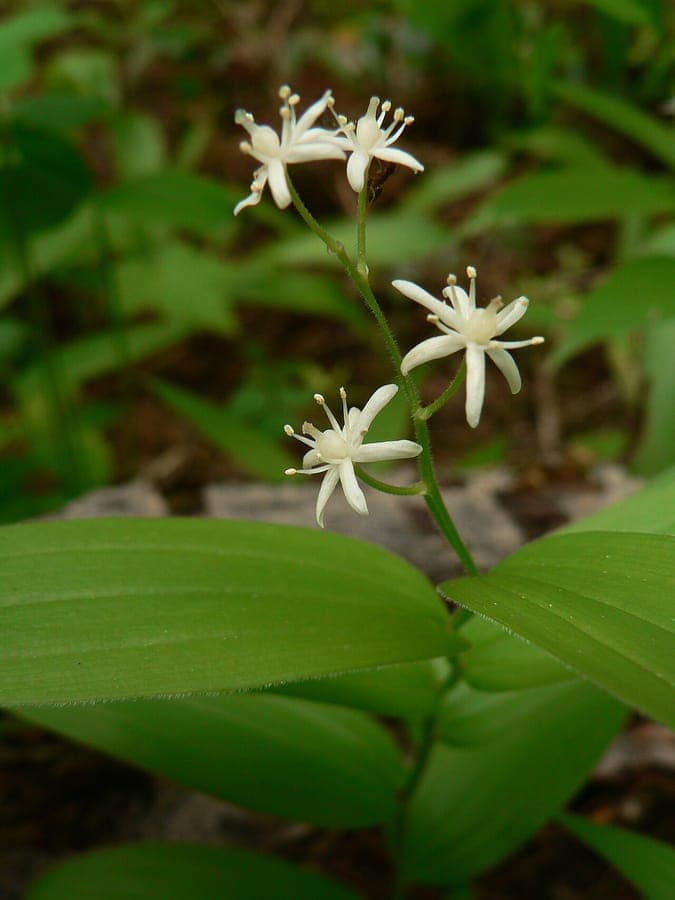
Walter Siegmund (talk) / CC BY 2.5, via Wikimedia Commons
Maianthemum stellatum: complete guide to starflower false Solomon's seal
Maianthemum stellatum
Want to see Maianthemum stellatum: complete guide to starflower false Solomon's seal in your garden?
Full design in HD: €7.99
Look after your Maianthemum stellatum with the GardenWorld app
Identify plants with your camera and get a care calendar with reminders for this plant.


Overview
Maianthemum stellatum, commonly known as starflower false Solomon's seal or little false Solomon's seal, is an elegant groundcover native to North America. This charming woodland plant is prized for its delicate star-shaped white flowers, feathery green foliage, and important role in forest ecosystems. It thrives in shaded woodland gardens and is an excellent alternative to traditional groundcovers in naturalistic landscapes.
Native from Canada to Mexico, Maianthemum stellatum grows naturally in forest floors, moist meadows, and mountain regions. Its ornamental beauty and ecological benefits make it popular for wildflower gardens and sustainable landscaping projects.
Appearance and bloom
Maianthemum stellatum spreads via underground rhizomes, creating dense patches over time. The plant reaches 20-30 cm in height and produces lanceolate, light green leaves arranged alternately along slender stems. The foliage is delicate and wispy, creating an airy appearance.
During late spring and early summer (May-June), the plant produces tiny, star-like white flowers clustered in racemes at stem tips. The blooms are fragrant and attract native pollinators. Following flowering, attractive red berries develop and persist into fall, providing food for birds.
The overall texture is light and feathery, adding natural grace to shaded spaces. Individual flower clusters last approximately two weeks in peak bloom.
Ideal location
Maianthemum stellatum grows best in partial to full shade. It thrives in woodland settings where dappled light filters through the tree canopy. This makes it ideal for planting beneath oak trees, birches, and similar deciduous trees.
The plant accepts some morning sun, particularly in cooler regions. Full sun in warm climates can cause leaf bleaching and reduce flowering. In USDA zones 3-5, more sun exposure is tolerated.
Locations with good air circulation are preferred. Avoid deep, still shade where air movement is restricted, as this can promote fungal issues.
Soil
Maianthemum stellatum prefers acidic to neutral, moisture-retentive soil rich in organic matter. The plant grows best in woodland soil with abundant leaf litter, humus, and decomposing organic material.
Soil pH of 5.5-7.0 is ideal, with slight acidity preferred. The plant tolerates slightly acidic conditions well. In very alkaline soils, chlorosis may occur.
Excellent drainage is important despite the plant's moisture preference. Amend planting holes with compost or leaf mold. Mulch with 5 cm of shredded leaves to maintain moisture and regulate soil temperature.
Free preview
Want to see Maianthemum stellatum: complete guide to starflower false Solomon's seal in your garden? Make a free preview of your design.
Watering
Maianthemum stellatum is moisture-loving and requires consistently moist soil. Water regularly throughout the growing season (May-September), especially during dry periods. The plant naturally inhabits forest soils where moisture remains relatively constant.
During summer, water regularly if rainfall is less than 2.5 cm per week. Water at soil level, avoiding wetting the foliage.
Reduce watering in fall and winter, though soil should never completely dry out. In dry climates, supplemental winter watering may be necessary.
Pruning
Maianthemum stellatum requires minimal pruning. Remove dead leaves in early spring. After flowering, you may remove spent flower stems if you prefer not to encourage self-seeding.
Deadheading spent flowers can prevent excessive self-seeding. However, in most garden settings, seed production is not problematic.
Avoid aggressive pruning, as this disrupts the plant's natural growth pattern.
Maintenance calendar
April-May: Apply mulch, inspect for new growth. May-June: Monitor blooming, water regularly. July-August: Maintain moisture, top-up mulch. September-October: Allow seed berries to persist for wildlife. November-March: Dormancy period, minimal maintenance required.
Winter hardiness
Maianthemum stellatum is extremely hardy in USDA zones 3-8 (-35 to -40 C). Across most of North America and northern Europe, the plant is reliably winter-hardy. The plant survives frost events to -45 C.
In regions with very little snow cover, extra mulch provides protective insulation. Avoid areas prone to waterlogging in winter, as this can cause root suffocation.
Companion plants
Maianthemum stellatum pairs well with other shade-loving groundcovers. Combine with Asarum canadense (wild ginger), Ajuga reptans, or Waldsteinia ternata for natural plant communities.
In larger settings, it works beautifully with Heuchera hybrids, Tiarella polyphylla, and Carex oshimensis. For structure, use Hosta species, Acanthus mollis, or dwarf shade-tolerant shrubs as background plantings.
Pair with spring bulbs like Erythronium americanum or Trillium ovatum for extended seasonal interest.
Closing remarks
Maianthemum stellatum is an excellent native groundcover for shaded woodland gardens. With minimal maintenance and consistent moisture, this plant thrives while adding natural beauty. The delicate flowers and attractive berries support native wildlife, making it both ornamental and ecologically valuable.
This plant is available at major garden centers across North America and Europe. For more information, visit gardenworld.app.
Frequently asked questions about Maianthemum stellatum
Is Maianthemum stellatum winter hardy?
Maianthemum stellatum is extremely hardy in USDA zones 3-8 (-35 to -40 C). Across most of North America and northern Europe, the plant is reliably winter-hardy.
When and how do you prune Maianthemum stellatum?
Maianthemum stellatum requires minimal pruning. Remove dead leaves in early spring.
How much water does Maianthemum stellatum need?
Maianthemum stellatum is moisture-loving and requires consistently moist soil. Water regularly throughout the growing season (May-September), especially during dry periods.
Where does Maianthemum stellatum grow best?
Maianthemum stellatum grows best in partial to full shade. It thrives in woodland settings where dappled light filters through the tree canopy.
What soil does Maianthemum stellatum need?
Maianthemum stellatum prefers acidic to neutral, moisture-retentive soil rich in organic matter. The plant grows best in woodland soil with abundant leaf litter, humus, and decomposing organic material.

See it in your garden
See Maianthemum stellatum in your garden
One photo of your garden and a few questions. You see the result in about a minute.
Try it with a photoIdentify this plant in your own garden. Identify a plant
Similar plants
Great camas (Camassia leichtlinii): planting and care
Camassia leichtlinii
Everything about great camas (Camassia leichtlinii): planting the bulbs, heavy wet soil, naturalising in grass, hardiness and the best partners for a flowering meadow.
Pineapple lily (Eucomis bicolor): planting, care and overwintering
Eucomis bicolor
Everything about the pineapple lily (Eucomis bicolor): planting the bulbs, watering and feeding, overwintering in pots or the ground, and the best border partners.
Pineapple lily (Eucomis comosa): growing and overwintering
Eucomis comosa
Eucomis comosa is the tallest and best-known pineapple lily, with creamy spikes topped by a leafy tuft in late summer. Planting, overwintering and leaf cuttings.
