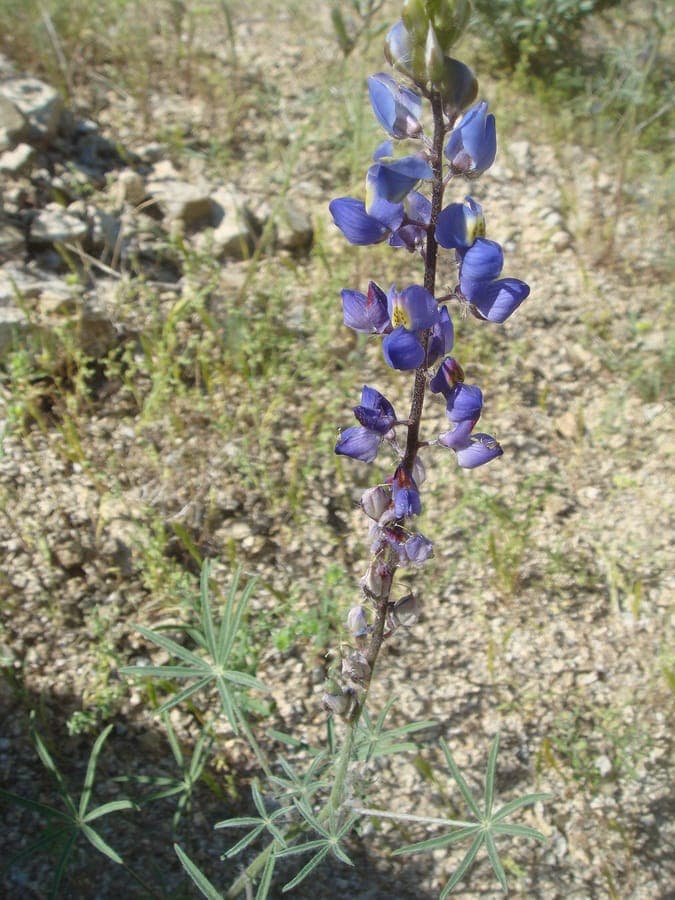
Miwasatoshi / CC BY-SA 4.0, via Wikimedia Commons
Lupinus sparsiflorus: complete guide
Lupinus sparsiflorus
Want to see Lupinus sparsiflorus: complete guide in your garden?
Full design in HD: €7.99
Look after your Lupinus sparsiflorus with the GardenWorld app
Identify plants with your camera and get a care calendar with reminders for this plant.


Overview
Lupinus sparsiflorus, commonly known as Coulter's lupine or Mojave lupine, is a remarkable annual wildflower native to the dry, warm regions of California, Arizona, Nevada, Utah, and northwestern Mexico. This fast-growing plant belongs to the Fabaceae family and is renowned for its striking blue flowers and adaptations to desert conditions.
This lupine is perfect for gardens in warm, dry climates where other flowers struggle. It blooms briefly but spectacularly, making it ideal for those wishing to create dramatic wild flower meadows.
Appearance and Bloom
Coulter's lupine grows rapidly to heights of 30 to 60 centimeters, depending on growing conditions and water availability. The plant forms upright stems with divided, grey-green foliage that spreads elegantly.
The flowers are spectacular: deep blue to violet-blue colors arranged in loosely packed spikes much less compact than other lupine types. This "open" flower structure gives the plant its botanical name "sparsiflorus," meaning "sparsely flowering."
The bloom period is brief but intense, usually May through June. Following bloom, small seed pods develop, ripening and splitting in the heat, dispersing seeds across the landscape.
Ideal Location
Coulter's lupine thrives only in very sunny locations receiving at least eight hours of direct sunlight daily. The plant cannot survive in shade or partial shade. Warm, dry positions are absolutely essential.
This lupine is perfect for deserts, dry grasslands, rocky slopes, and other open terrain. The plant works well as part of a desert flower meadow mix.
Free preview
Want to see Lupinus sparsiflorus: complete guide in your garden? Make a free preview of your design.
Soil
Sandy, gravelly soils with poor fertility are ideal. Mojave lupine thrives even on saline soils with very low nutrient content. This is not a plant for rich, amended garden soil.
Drainage is essential. Heavy clay and wet soils will certainly cause failure. pH can be variable, though slightly acidic to neutral is preferred.
Watering
This lupine is a true desert plant and should not be treated as a normal garden plant. In nature, it grows on minimal rainfall. Too much water causes immediate failure, especially in heavy soils.
Sow seed in early spring, provide light water until seedling is established, then let it mostly fend for itself. Excessive feeding promotes foliage at the expense of blooms.
Pruning
Pruning is unnecessary. This annual plant completes its life cycle (growth, bloom, seed set) in a single season, so there is no need for shaping or maintenance.
Maintenance Calendar
Spring: Sow seed directly in prepared garden soil.
Summer: Let the plant manage itself. No water needed except in extreme heat.
Autumn: Allow seed pods to ripen and split. Let seeds naturally fall for next year.
Winter: No plant present after seed dispersal.
Winter Hardiness
Winter hardiness does not apply as this is an annual that does not overwinter. It dies after seed production. In cold climates, seed will not germinate because it requires warm winters.
Companion Plants
Coulter's lupine combines excellently with other desert flowers:
- Red poppy
- Yellow anthemis
- Blue lupines (other species)
- Orange poppies
- Brown sunflowers
Closing
Lupinus sparsiflorus offers spectacular yet brief blooming for dry, warm gardens. This annual plant is ideal for those wishing to create dramatic wild flower meadows in desert or Mediterranean climates. Resow each spring and enjoy the blue flower display! This is why desert gardeners adore this lupine. Build your dry flower garden on gardenworld.app.
Frequently asked questions about Lupinus sparsiflorus
Is Lupinus sparsiflorus winter hardy?
Winter hardiness does not apply as this is an annual that does not overwinter. It dies after seed production.
When and how do you prune Lupinus sparsiflorus?
Pruning is unnecessary. This annual plant completes its life cycle (growth, bloom, seed set) in a single season, so there is no need for shaping or maintenance.
How much water does Lupinus sparsiflorus need?
This lupine is a true desert plant and should not be treated as a normal garden plant. In nature, it grows on minimal rainfall.
Where does Lupinus sparsiflorus grow best?
Coulter's lupine thrives only in very sunny locations receiving at least eight hours of direct sunlight daily. The plant cannot survive in shade or partial shade.
What soil does Lupinus sparsiflorus need?
Sandy, gravelly soils with poor fertility are ideal. Mojave lupine thrives even on saline soils with very low nutrient content.

See it in your garden
See Lupinus sparsiflorus in your garden
One photo of your garden and a few questions. You see the result in about a minute.
Try it with a photoIdentify this plant in your own garden. Identify a plant
Similar plants
Pineapple broom (Argyrocytisus battandieri): complete guide
Argyrocytisus battandieri
Everything about pineapple broom (Argyrocytisus battandieri), the Moroccan wall shrub with silver leaves and pineapple-scented flowers: site, pruning and hardiness.
Blue false indigo: complete guide
Baptisia australis
Everything about blue false indigo (Baptisia australis): position, soil, watering, cutting back, hardiness and toxicity. A long-lived prairie perennial with indigo flowers.
Warminster broom (Cytisus × praecox): complete guide
Cytisus × praecox
Everything about Warminster broom (Cytisus × praecox): position, poor soil, pruning after flowering, hardiness and what you need to know about its toxicity.
