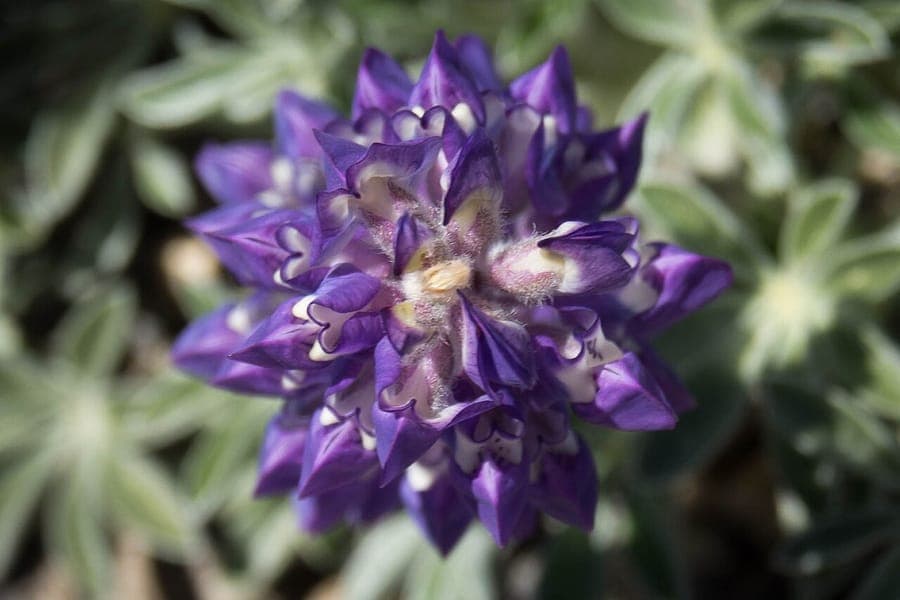
Elaine with Grey Cats from California, USA / CC BY-SA 2.0, via Wikimedia Commons
Lupinus duranii: complete guide to Mono Lake lupine
Lupinus duranii
Want to see Lupinus duranii: complete guide to Mono Lake lupine in your garden?
Full design in HD: €7.99
Look after your Lupinus duranii with the GardenWorld app
Identify plants with your camera and get a care calendar with reminders for this plant.


Overview
Lupinus duranii, known as Mono Lake lupine, is an exceptionally special and rare annual plant endemic to the Mono Basin in California. This lupine belongs to the legume family (Fabaceae) and holds immense significance for conservation. The plant naturally grows in highly specific, alkaline habitats surrounding Mono Lake, one of the world's most unique ecological regions.
This species is not only botanically interesting but also ecologically invaluable. It is listed as an endangered species, and gardeners growing this plant contribute to conservation efforts. The plant is difficult to obtain, but for conservation-minded gardeners, it represents an absolute treasure.
Appearance & Bloom
The Mono Lake lupine grows to approximately 30-40 centimeters height, making it a compact plant. The foliage is very characteristic of lupines: feathery, soft to touch, with many small fingered leaflets.
Flowers grow in compact spikes rising above the foliage. Blooms display warm blue to purple-blue tones, sometimes with subtle white or light pink accents. This provides the plant considerable visual appeal.
Individual flowers follow the papilionaceous form of legumes. The blooming period extends from late spring through early summer. Following flowering, hairy pods develop containing seeds.
The plant is annual, so it will naturally die at season's end.
Ideal Location
This lupine thrives in full sun, meaning at least 6-8 hours of direct sunlight daily. In shade, flowering becomes noticeably reduced.
The plant tolerates wind exposure well.
Drainage is extremely important. The plant grows naturally in highly well-drained, alkaline soils. This is essential for success with this species.
Free preview
Want to see Lupinus duranii: complete guide to Mono Lake lupine in your garden? Make a free preview of your design.
Soil Requirements
This is where the Mono Lake lupine differs from most lupines. This plant naturally grows on alkaline soils, whereas most lupines prefer acidic to neutral conditions.
For successful home cultivation, attempt to create a soil mixture with calcareous sand, gravel, and excellent drainage. Add limestone or calcium carbonate to raise pH to 7.5-8.5. This is essential!
The plant also naturally grows on extremely nutrient-poor soils, so heavy fertilization is unnecessary.
Watering
Once seedlings emerge, they require minimal water. The plant naturally grows in an extremely dry climate surrounding Mono Lake.
Provide water only occasionally when soil begins to dry. This plant dislikes waterlogging. In fact, the risk of overwatering is far greater than underwatering.
Ensure drainage is perfect.
Pruning
Pruning is unnecessary for this annual plant. However, removing spent flowers (deadheading) can extend the flowering period.
If you wish to harvest seeds for next season, allow some pods to mature.
Maintenance Calendar
Spring: This is the season for sowing. Sow directly in well-drained, alkaline soil. Ensure drainage is perfect.
Summer: Plant grows and flowers. Provide minimal water. It can be extremely dry without problems. Removal of spent flowers can extend blooming.
Fall: Plant naturally dies back. Leave some pods standing for seeds.
Winter: Seeds can survive winter.
Winter Hardiness
Winter hardiness is not relevant since this is an annual. The plant will naturally die at season's end. However, seeds can be stored cool and resown the following spring.
Companion Plants
Other rare Californian lupines are difficult to find. Lupinus croceus also offers compact form. For rare plants of conservation value, botanical gardens can be a source.
Conclusion
Lupinus duranii is a special plant for conservation-minded gardeners. Growing this rare species helps conserve this threatened population. Seeds may occasionally be available through specialized seed suppliers. For more information, consult California's Endangered Plant Program. Visit gardenworld.app for more inspiration.
Frequently asked questions about Lupinus duranii
Is Lupinus duranii winter hardy?
Winter hardiness is not relevant since this is an annual. The plant will naturally die at season's end.
When and how do you prune Lupinus duranii?
Pruning is unnecessary for this annual plant. However, removing spent flowers (deadheading) can extend the flowering period.
How much water does Lupinus duranii need?
Once seedlings emerge, they require minimal water. The plant naturally grows in an extremely dry climate surrounding Mono Lake.
Where does Lupinus duranii grow best?
This lupine thrives in full sun, meaning at least 6-8 hours of direct sunlight daily. In shade, flowering becomes noticeably reduced.
What soil does Lupinus duranii need?
This is where the Mono Lake lupine differs from most lupines. This plant naturally grows on alkaline soils, whereas most lupines prefer acidic to neutral conditions.

See it in your garden
See Lupinus duranii in your garden
One photo of your garden and a few questions. You see the result in about a minute.
Try it with a photoIdentify this plant in your own garden. Identify a plant
Similar plants
Pineapple broom (Argyrocytisus battandieri): complete guide
Argyrocytisus battandieri
Everything about pineapple broom (Argyrocytisus battandieri), the Moroccan wall shrub with silver leaves and pineapple-scented flowers: site, pruning and hardiness.
Blue false indigo: complete guide
Baptisia australis
Everything about blue false indigo (Baptisia australis): position, soil, watering, cutting back, hardiness and toxicity. A long-lived prairie perennial with indigo flowers.
Warminster broom (Cytisus × praecox): complete guide
Cytisus × praecox
Everything about Warminster broom (Cytisus × praecox): position, poor soil, pruning after flowering, hardiness and what you need to know about its toxicity.
