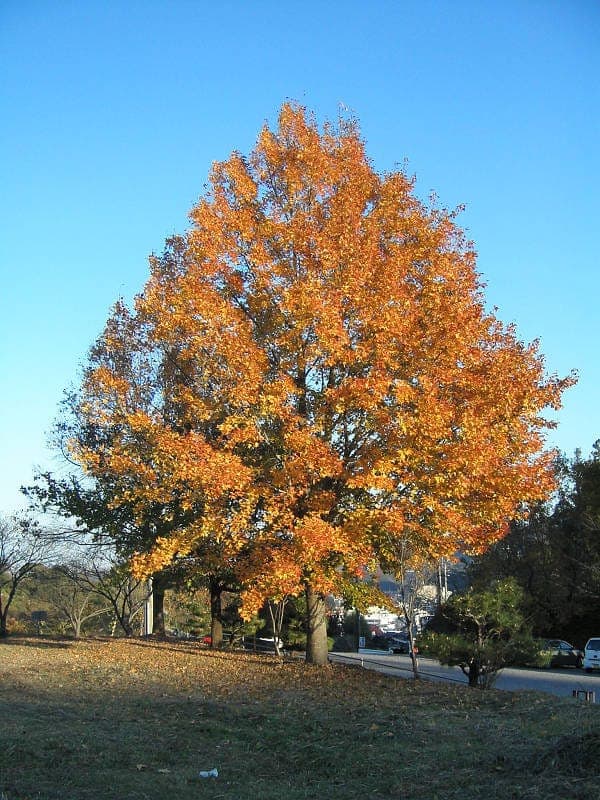
Yoiyoi_kancho / Public domain, via Wikimedia Commons
Liquidambar formosana: complete guide
Liquidambar formosana
Want to see Liquidambar formosana: complete guide in your garden?
Full design in HD: €7.99
Look after your Liquidambar formosana with the GardenWorld app
Identify plants with your camera and get a care calendar with reminders for this plant.


Overview
Liquidambar formosana, known as Formosan sweet-gum or Chinese sweetgum, is a beautiful deciduous tree from the Altingiaceae family. This tree originates from Taiwan, China, and Vietnam, offering spectacular autumn color displays.
Appearance and Bloom
This fast-growing tree reaches 20-30 meters tall with palmate foliage. Leaves are deeply divided and finely branched. The most spectacular feature is autumn coloration, when foliage transforms into brilliant reds, oranges, and purples. The fragrant resin from this tree is used in traditional medicine.
Ideal Location
Plant Liquidambar formosana in full sun for optimal autumn color. This tree tolerates partial shade but colors much better in full sun. Wind protection helps maintain elegant form.
Soil Requirements
This tree thrives best in moist, well-drained soils. Slightly acidic soils are ideal. Add compost when planting for better water retention.
Free preview
Want to see Liquidambar formosana: complete guide in your garden? Make a free preview of your design.
Watering
Water regularly during the first growing year. Once established, this tree is reasonably drought-tolerant. Provide extra water during very dry spells.
Pruning
Minimal pruning needed. Remove only low-hanging branches or damaged parts. Prune in winter when the tree is dormant.
Maintenance Calendar
Spring: Explosive growth, regular watering. Summer: Feeding and water management. Fall: Enjoy spectacular color. Winter: Preparation for next season.
Winter Hardiness
Liquidambar formosana is hardy to approximately -10C. In very cold regions, young tree protection may be necessary.
Companion Plants
Pair with supporting trees like Acer, Cornus, and Ilex for an autumn-oriented garden scheme. Underplanting with shade-tolerant groundcovers completes the design.
Closing Thoughts
Liquidambar formosana transforms gardens into autumn-color festivals with spectacular foliage changes. For those wanting to enjoy Asian tree beauty, this is a must-have. Find Chinese sweetgum at specialized tree nurseries.
Discover more ornamentals for autumn color at gardenworld.app/en!
Frequently asked questions about Liquidambar formosana
Is Liquidambar formosana winter hardy?
Liquidambar formosana is hardy to approximately -10C. In very cold regions, young tree protection may be necessary.
When and how do you prune Liquidambar formosana?
Minimal pruning needed. Remove only low-hanging branches or damaged parts.
How much water does Liquidambar formosana need?
Water regularly during the first growing year. Once established, this tree is reasonably drought-tolerant.
Where does Liquidambar formosana grow best?
Plant Liquidambar formosana in full sun for optimal autumn color. This tree tolerates partial shade but colors much better in full sun.
What soil does Liquidambar formosana need?
This tree thrives best in moist, well-drained soils. Slightly acidic soils are ideal.

See it in your garden
See Liquidambar formosana in your garden
One photo of your garden and a few questions. You see the result in about a minute.
Try it with a photoIdentify this plant in your own garden. Identify a plant
Similar plants
Glossy abelia: complete guide
Abelia × grandiflora
Everything about glossy abelia (Abelia × grandiflora): position, soil, pruning and hardiness of a shrub that flowers from July to October with scented white bells.
Trailing abutilon (Abutilon megapotamicum): care guide
Abutilon megapotamicum
Grow trailing abutilon (Abutilon megapotamicum) in a basket or against a wall: watering, feeding, pruning and overwintering for red and yellow lantern flowers.
Flowering maple (Abutilon): container shrub guide
Abutilon × hybridum
How to grow flowering maple (Abutilon × hybridum) in a pot: position, watering, feeding, March pruning and overwintering indoors for flowers from May to October.
