ChriKo / CC BY-SA 3.0, via Wikimedia Commons
Lentils: sowing, harvesting and use
Lens culinaris
Want to see Lentils: sowing, harvesting and use in your garden?
Full design in HD: €7.99
Look after your Lentils with the GardenWorld app
Identify plants with your camera and get a care calendar with reminders for this plant.


Overview
The lentil (Lens culinaris) is one of the oldest crops in the world. Around ten thousand years ago, lentils were already being grown in the Fertile Crescent alongside wheat, barley and peas. Today most of us know them as a bag of dried pulses from the shop, but more and more vegetable growers are finding that they are perfectly possible to raise at home. The plant is undemanding, enriches the soil with nitrogen and, after the summer, rewards you with a store of seeds that keeps for months.
Lens culinaris belongs to the pea and bean family (Fabaceae), together with peas, beans and chickpeas. It is a fine-textured annual sown in spring that ripens in midsummer. The photo shows what you end up harvesting: three small heaps of dried lentils in different colours. The dark and green lentils are whole seeds with their seed coat; the orange-red ones are hulled and split, with the coat removed. Your own crop will usually look like the green or brown lentils.
If you want to set up a vegetable garden with a sound rotation, you can have a garden design made on gardenworld.app in which pulses such as lentils get a permanent place. Familiar types include the small, dark green marbled Puy lentil (variety 'Anicia'), larger green and brown lentils, black beluga lentils and red-seeded varieties that are sold hulled as red lentils.
One important caution: raw, dried lentils contain lectins and other compounds that can upset the stomach and gut. Always cook lentils thoroughly, including any you share with a dog. The plant itself is not known to be toxic to pets.
Appearance and flowering
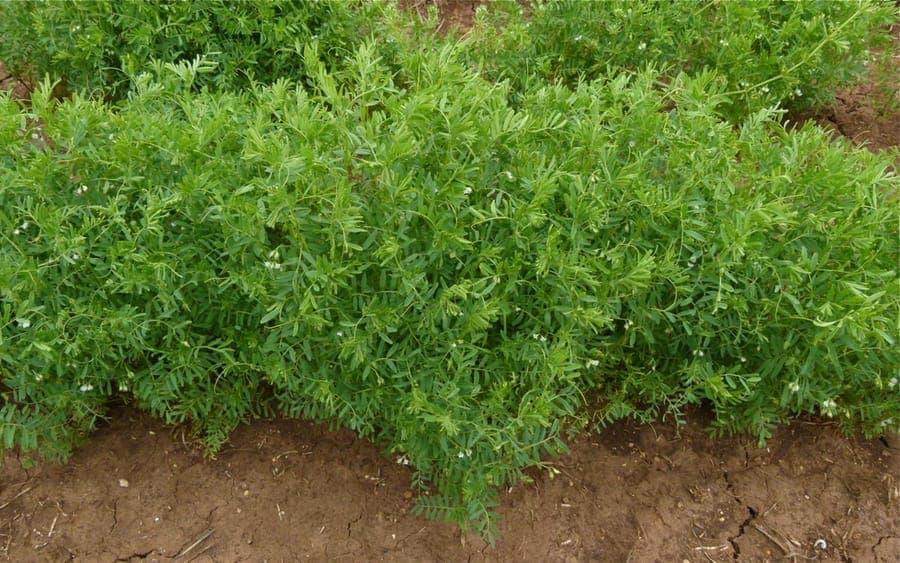
The lentil plant grows 20 to 50 cm tall and is finely branched, with slender, rather floppy stems. The leaves are pinnate with four to seven pairs of small, oblong leaflets 1 to 2 cm long, often ending in a short tendril. It does not really climb; it leans on its neighbours or on a support crop.
Flowers appear in June: small pea-like blooms 5 to 8 mm long, white to pale blue or lilac, borne singly or in twos and threes in the leaf axils. They are self-pollinating. They are followed by flat, oval pods 1.5 to 2 cm long containing one or two lens-shaped seeds. That shape, incidentally, gave the optical lens its name. Ripe pods turn straw-yellow to brown and rattle when you shake the plant.
Position
Lentils want a sunny, open site. They like warm, fairly dry summers, and you notice that at harvest time: in a wet summer they ripen unevenly and are more prone to mould. An airy spot where the crop dries quickly after rain is ideal. Avoid shade and damp corners.
Grow lentils on a bed that did not carry peas or beans the year before. A rotation of at least three to four years keeps soil-borne diseases down. Because the plant is low and fine, a bed of a few square metres is needed for a worthwhile harvest. A container on the patio will give you a handful of seeds at most, though it makes a fun experiment with children.
Soil requirements
The lentil is a plant for poor to moderately fertile ground. A well-drained sandy loam or light clay with a pH of 6 to 8 is ideal, and it copes well with chalky soil. On heavy, wet clay the roots struggle and root rot becomes likely.
Feeding is unnecessary and even counterproductive. Like other legumes, the lentil works with root-nodule bacteria (Rhizobium) that fix nitrogen from the air. Extra nitrogen only produces lots of leaf, a weak crop and later ripening. A bed that grew brassicas or potatoes the previous year usually has just the right level of fertility.
Sowing
Sow lentils directly outdoors from late March to the end of April, as soon as the soil is workable and at least 5 °C. There is no need to start them indoors. Ideally use seed of a variety suited to a temperate climate; shop-bought lentils sometimes germinate, but they are often treated or bred for very different conditions.
Sow 3 to 4 cm deep in rows 20 to 25 cm apart, with 3 to 5 cm between seeds. A dense stand supports itself better. You can also sow lentils together with a support crop such as oats or barley, in a ratio of about five parts lentils to one part cereal. The cereal holds the lentils upright so the pods do not lie on wet soil. Germination usually takes seven to fourteen days.
Free preview
Want to see Lentils: sowing, harvesting and use in your garden? Make a free preview of your design.
Watering and care
Lentils are drought-tolerant. Water at sowing if the soil is dry and during a long dry spell while the plants are flowering, as that is when the pods form. Beyond that, the plant needs little. Once the pods start to ripen, stop watering altogether: dry weather helps the seeds mature.
Keep the rows weeded while the crop is young; lentils compete poorly with weeds. Aphids may appear in June but rarely do much harm. In wet summers grey mould and other leaf-spot diseases can take hold. The lentil seed beetle (Bruchus lentis) lays its eggs on young pods, and the larvae later eat the seeds from the inside.
Harvesting and use
Lentils ripen in July or August, about 100 to 120 days after sowing. Wait until the lower pods are brown and rattle and most of the plant has turned yellow. Do not wait until everything is bone dry, as ripe pods split open easily. Pull or cut the plants, tie them in bunches and let them finish drying for one to two weeks under cover or in a shed.
Threshing is straightforward: put the dry plants on a sheet or in a large sack and beat or tread on them. Winnow away the chaff with a fan or a breeze and sieve the seeds. In a kitchen garden, expect roughly 100 to 200 g of dried lentils per square metre. To kill any seed beetles, put the clean seeds in the freezer for two days before storing them in a sealed jar. They will then keep for years.
In the kitchen, use your own lentils for soup, dhal, salads with roasted vegetables or a slow stew. Small green lentils hold their shape, brown ones turn softer. Rinsing is enough; soaking is not needed, but always cook them until tender. You can also sprout the seeds into short shoots and blanch them briefly before eating.
Growing calendar
March: Prepare the bed: loosen the soil, remove weeds, do not feed. Get your seed ready.
April: Sow, optionally with oats or barley. Hoe between the rows after emergence.
May: Keep on top of weeds. The plants grow quickly and close the rows.
June: Flowering. Water during prolonged drought. Check for aphids.
July to August: Ripening. Harvest when the lower pods are brown. Dry, thresh and winnow.
September: Freeze and store the seeds. Dig in or compost the plant remains; the roots leave nitrogen behind for the next crop.
If you want to plan sowing, harvesting and the following crops properly, the planting calendar on gardenworld.app helps you give lentils a good place in your rotation.
Winter hardiness
Lens culinaris is an annual, so it does not overwinter in our gardens. The seedlings are surprisingly tough, though: they shrug off light night frosts of a few degrees below zero in April, which lets you sow early. In southern France and Spain there are winter types sown in autumn, but in north-western Europe spring sowing is the safe choice. More important than spring cold is a dry spell while the crop ripens in summer.
Companion plants
The classic partner for lentils is a cereal acting as a support crop: oats (Avena sativa) or spring barley. After harvest the bed is left rich in nitrogen, ideal for a following crop of leafy greens or brassicas. Lentils sit well next to carrots (Daucus carota) and pot marigold (Calendula officinalis), which draws in beneficial insects. Phacelia (Phacelia tanacetifolia) makes a fine green manure to sow after harvest. Grow relatives such as chickpeas (Cicer arietinum) in a different bed so that diseases do not build up. Many gardeners also keep legumes away from onions and garlic, which are said to hold them back.
Final thoughts
Growing your own lentils will not cover your needs for the whole year, but it is a rewarding thing to do. The plant is modest, needs no fertiliser, improves your soil and leaves you, after the summer, with a jar of seeds you have sown, harvested and threshed yourself. Sow in April on a sunny, lean bed, let summer do the work and harvest when the pods rattle. A soup made from home-grown lentils tastes twice as good.
Frequently asked questions about Lentils
Is Lentils winter hardy?
Lens culinaris is an annual, so it does not overwinter in our gardens. The seedlings are surprisingly tough, though: they shrug off light night frosts of a few degrees below zero in April, which lets you sow early.
How much water does Lentils need?
Lentils are drought-tolerant. Water at sowing if the soil is dry and during a long dry spell while the plants are flowering, as that is when the pods form.
What soil does Lentils need?
The lentil is a plant for poor to moderately fertile ground. A well-drained sandy loam or light clay with a pH of 6 to 8 is ideal, and it copes well with chalky soil.

See it in your garden
See Lentils in your garden
One photo of your garden and a few questions. You see the result in about a minute.
Try it with a photoIdentify this plant in your own garden. Identify a plant
Similar plants
Red oat: complete guide
Avena sativa
Grow Avena sativa with confidence: learn about planting, care, soil needs, companion plants and how red oat improves garden health naturally.
Phacelia: complete guide
Phacelia tanacetifolia
Phacelia tanacetifolia is a stunning bee plant that fills gardens with blue flowers from June to October. Learn how to grow and care for this pollinator magnet.
Calendula: complete guide
Calendula officinalis
Everything you need to know about growing and caring for Calendula: from sowing to blooming, ideal conditions, and companion planting.
