
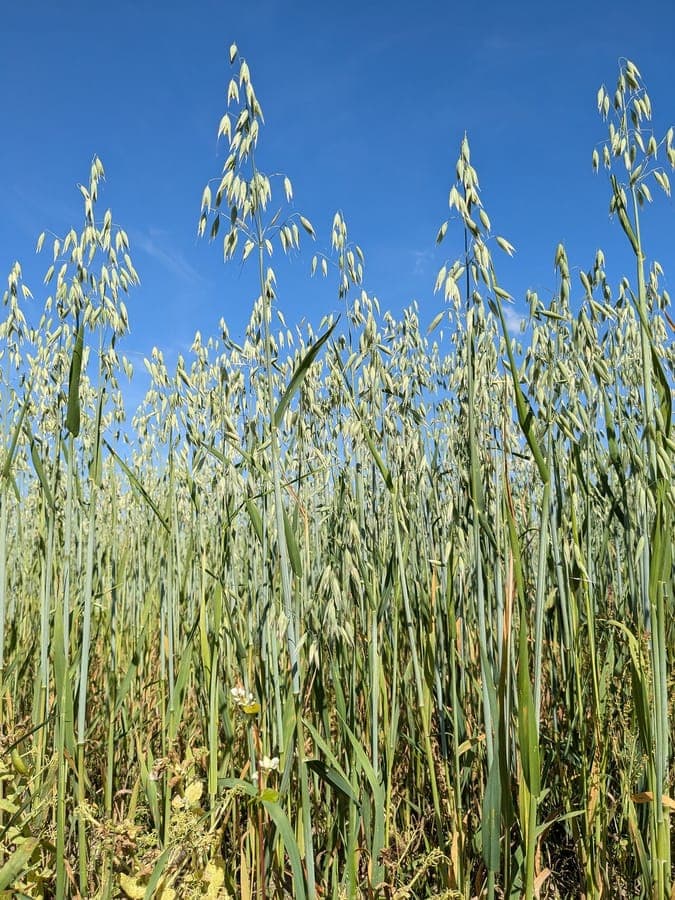
Christian Fischer / CC BY-SA 4.0, via Wikimedia Commons
Red oat: complete guide
Avena sativa
Want to see Red oat: complete guide in your garden?
1 minute, no credit card
Overview
Red oat (Avena sativa) isn't just a cereal crop – it's a powerhouse in the home garden. Originally from Iran and Iraq, this cool-season annual grass has found its way into sustainable garden systems across temperate climates. Grown as a cover crop, green manure, or ornamental grass, red oat delivers on function and form. It suppresses weeds, prevents soil erosion, and breaks down into nutrient-rich mulch. For gardeners aiming for regenerative practices, Avena sativa is a no-brainer. Whether you're prepping a vegetable bed or adding movement to a border, this plant earns its place. On gardenworld.app, you can design a seasonal rotation plan that integrates red oat between tomato rows or after early greens.
Appearance & bloom cycle
Red oat typically reaches 70–120 cm in height, with slender, upright stems and narrow blue-green leaves. From late June through July, airy panicles emerge – loose, drooping flower heads that ripen into golden-brown seed clusters by August. The bloom cycle is graceful, with each stem catching the wind and light. Seeds mature in 90–110 days from sowing, depending on temperature and moisture. Once mature, they can be harvested by hand or left to reseed naturally. The plant dies back after setting seed, making it ideal for summer-to-autumn transitions.
Ideal location
Full sun is essential – aim for 6 to 8 hours of direct sunlight daily. While red oat tolerates partial shade, it grows leggy and prone to lodging (falling over). Choose open areas with good air circulation to reduce fungal risks. It thrives in USDA zones 3–9, making it suitable for most of the UK, Europe, and North America. Avoid low-lying, damp spots where water pools. In small gardens, plant it along fence lines or between raised beds for a soft, natural screen. Garden centres often stock seed in spring, or you can order online for early sowing.
Soil requirements
Red oat isn't fussy about soil but prefers well-drained loam or sandy loam. It tolerates pH from 5.5 to 7.5 and grows even in moderately poor soils. Avoid heavy nitrogen fertilisation – excess nitrogen leads to lush growth that collapses under its own weight. For best results, lightly rake the soil before sowing and ensure good seed-to-soil contact. No need for rich compost; red oat actually performs better on leaner soils, making it perfect for land regeneration.
Free design
Want to see Red oat: complete guide in your garden? Make a free design now.
Watering
Once established, red oat is drought-tolerant. During germination (first 2–3 weeks), keep the topsoil evenly moist but not soggy. After that, rainfall usually suffices. In prolonged dry spells, especially during panicle formation in July, a deep watering every 10–14 days helps seed development. Water early in the morning to avoid prolonged leaf wetness, which can encourage rust or mildew.
Pruning
No pruning needed. However, you can cut seed heads in late summer if saving seed. Harvest when 75% of the grains have turned golden – cut stems 15 cm above ground and dry in a well-ventilated area. Leave lower stalks as mulch to protect soil over winter. If grown ornamentally, avoid cutting until after seed dispersal to enjoy the visual texture through autumn.
Maintenance calendar
- March: Sow indoors or under cover in colder zones
- April: Direct sow outdoors once soil reaches 7°C
- May: Thin if overcrowded; monitor for slugs on young shoots
- June: Panicles appear; ensure airflow to prevent disease
- July: Peak bloom; watch for dry spells
- August: Harvest seeds or let them drop for self-sowing
- September: Cut down or till into soil as green manure
- October–February: Dormant period; plan next season's cover crop rotation
Winter hardiness
Red oat is not winter-hardy. It's a summer annual that dies after seed set, usually by late autumn. In USDA zones 7 and below, it won't survive hard frosts. However, the dead biomass acts as a protective mulch layer. If tilled in, it adds organic matter and improves soil structure. For winter cover, consider rye or vetch instead, but red oat shines in the warm half of the year.
Companion plants
Pair red oat with nitrogen-fixing plants like crimson clover or field peas to boost soil fertility. It works well as a nurse crop for slower-growing vegetables, shading the soil and reducing evaporation. Avoid planting near shallow-rooted herbs that might compete for moisture. Good companions include squash, potatoes, and brassicas. In polyculture systems, red oat buffers wind and creates microclimates for tender seedlings.
Closing
Red oat is low-effort, high-reward. It asks for little but gives back in soil health, weed control, and rustic beauty. Whether you're revitalising tired beds or designing a wildlife-friendly garden, this grain earns its keep. Buy seed from reputable suppliers at garden centres or online. And remember, gardenworld.app offers smart layout tools to visualise how red oat fits into your crop rotation and seasonal design.
Want to see Red oat: complete guide in your garden? Make a free design now.
Upload a photo, pick a style, and get a photorealistic design with plant list in under a minute.
No credit card required


Similar plants
Sporobolus pungens: complete guide
Sporobolus pungens
Sporobolus pungens is a stoloniferous Mediterranean coastal grass with outstanding salt and drought tolerance, perfect for seaside and dry gardens.
Mediterranean aegilops: complete guide
Aegilops biuncialis
Everything about Aegilops biuncialis, a Mediterranean annual grass with ornamental spikes and outstanding drought tolerance for dry gardens.
Silver bluestem: complete guide
Bothriochloa saccharoides
Full guide to Bothriochloa saccharoides (silver bluestem): site, soil, watering, winter hardiness, pruning, and garden companions.