J.M.Garg / CC BY-SA 3.0, via Wikimedia Commons
Kleinhovia hospita: complete guide
Kleinhovia hospita
Want to see Kleinhovia hospita: complete guide in your garden?
Full design in HD: €7.99
Look after your Kleinhovia hospita with the GardenWorld app
Identify plants with your camera and get a care calendar with reminders for this plant.


Kleinhovia hospita, commonly called guest-tree or welcome-tree, is a fascinating tropical tree native to Southeast Asia and the Pacific region. Belonging to the Malvaceae family, which also includes cotton and hibiscus, this tree is valued for its distinctive architecture and remarkable ornamental fruits.
Overview
Kleinhovia hospita is a medium-sized tree reaching 8 to 12 meters height in warm climates. In garden situations, it can remain considerably smaller, especially with regular pruning. This tree is particularly popular in tropical and subtropical gardens because of its attractive growth pattern and extremely unique, papery fruits.
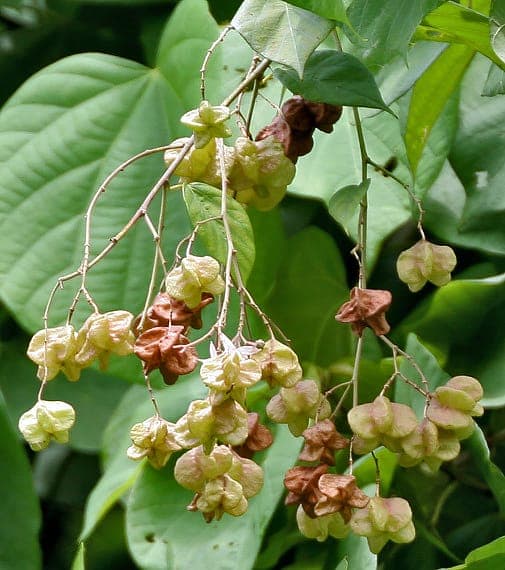
The tree produces small, inconspicuous flowers that later transform into striking papery seed capsules. These fruits are often purple to red-colored and form a significant ornamental feature of this tree. The distinctive appearance makes it a conversation starter in any tropical garden.
Appearance and blooming
The leaves of Kleinhovia hospita are large and heart-shaped, with a coarse texture that contributes character to the tree's canopy. They grow alternately along branches, creating an attractive, spreading silhouette.
Flowers appear in spring and summer, small, pink to white, and relatively inconspicuous. The real spectacle comes when the papery fruits develop. These unique, inflated seed capsules are purple to red-colored and possess a highly distinctive appearance that attracts considerable attention.
The fruits persist on the tree for extended periods, providing continuous seasonal interest. Over time, they darken and may even dry while remaining attached to branches.
Ideal location
Kleinhovia hospita thrives in warm, sunny locations receiving at least 6 to 8 hours of direct sunlight daily. In very hot climates, some afternoon shade can be beneficial, especially in the first years after planting.
This tree appreciates protection from strong winds, particularly when young. Choose a location with good air quality and ventilation to prevent fungal diseases.
Soil requirements
Kleinhovia hospita is not particularly fussy about soil conditions but performs best in well-draining, fertile soil. A pH between 6.0 and 7.5 is ideal. The tree tolerates various soil types, from sandy to clay soils, as long as they drain well.
Incorporate organic matter when planting to improve soil fertility. Mulching around the tree helps retain moisture and keeps roots cool in warm climates.
Free preview
Want to see Kleinhovia hospita: complete guide in your garden? Make a free preview of your design.
Watering
During the first year after planting, Kleinhovia hospita requires regular watering to establish a strong root system. Water deeply but less frequently, rather than shallow and often.
Once established, the tree tolerates drought better, though regular watering promotes larger specimens and better form development. In warm, dry climates, supplemental water may be needed, especially in the first season.
Pruning
Kleinhovia hospita can be pruned to shape and direct growth. The best time for pruning is after flowering, in early summer. Remove dead branches and thin the canopy to promote better light penetration.
In young years, pinching the main leader encourages branching. This tree responds well to pruning and recovers quickly.
Maintenance calendar
Spring (March-May): Begin regular watering. Apply fertilizer. Monitor growth and form.
Summer (June-August): Water regularly. Enjoy the blooms and fruit development. Prune to shape as needed.
Autumn (September-October): Gradually reduce fertilizer. Collect dried fruits if desired.
Winter (November-February): Minimal watering. Protect young trees from frost.
Winter hardiness
Kleinhovia hospita is frost-sensitive and cannot grow in cold climates. The tree cannot tolerate temperatures below 10 to 15 degrees Celsius. This is truly a warm-climate plant suitable only for warmer regions.
Companion plants
Kleinhovia hospita grows well alongside other tropical and subtropical trees. Suitable companions include:
- Other Malvaceae family members
- Palm species
- Tropical fruit trees
- Screening plants for young specimens
- Climbing plants for boundaries
Closing
Kleinhovia hospita is an exceptional choice for gardeners in tropical and subtropical regions seeking a unique, architectural tree. The combination of attractive foliage and spectacular papery fruits makes this a true garden jewel. At gardenworld.app, we help you integrate this tropical beauty into your garden design. In warm climates, Kleinhovia hospita will provide years of value and visual interest in your front yard setting.
Frequently asked questions about Kleinhovia hospita
Is Kleinhovia hospita winter hardy?
Kleinhovia hospita is frost-sensitive and cannot grow in cold climates. The tree cannot tolerate temperatures below 10 to 15 degrees Celsius.
When and how do you prune Kleinhovia hospita?
Kleinhovia hospita can be pruned to shape and direct growth. The best time for pruning is after flowering, in early summer.
How much water does Kleinhovia hospita need?
During the first year after planting, Kleinhovia hospita requires regular watering to establish a strong root system. Water deeply but less frequently, rather than shallow and often.
Where does Kleinhovia hospita grow best?
Kleinhovia hospita thrives in warm, sunny locations receiving at least 6 to 8 hours of direct sunlight daily. In very hot climates, some afternoon shade can be beneficial, especially in the first years after planting.
What soil does Kleinhovia hospita need?
Kleinhovia hospita is not particularly fussy about soil conditions but performs best in well-draining, fertile soil. A pH between 6.0 and 7.5 is ideal.

See it in your garden
See Kleinhovia hospita in your garden
One photo of your garden and a few questions. You see the result in about a minute.
Try it with a photoIdentify this plant in your own garden. Identify a plant
Similar plants
Trailing abutilon (Abutilon megapotamicum): care guide
Abutilon megapotamicum
Grow trailing abutilon (Abutilon megapotamicum) in a basket or against a wall: watering, feeding, pruning and overwintering for red and yellow lantern flowers.
Flowering maple (Abutilon): container shrub guide
Abutilon × hybridum
How to grow flowering maple (Abutilon × hybridum) in a pot: position, watering, feeding, March pruning and overwintering indoors for flowers from May to October.
Checkerbloom (Sidalcea malviflora): complete guide
Sidalcea malviflora
Everything about checkerbloom or prairie mallow (Sidalcea malviflora): satin-pink summer spires, position, soil, cutting back for a second flush and hardiness.
