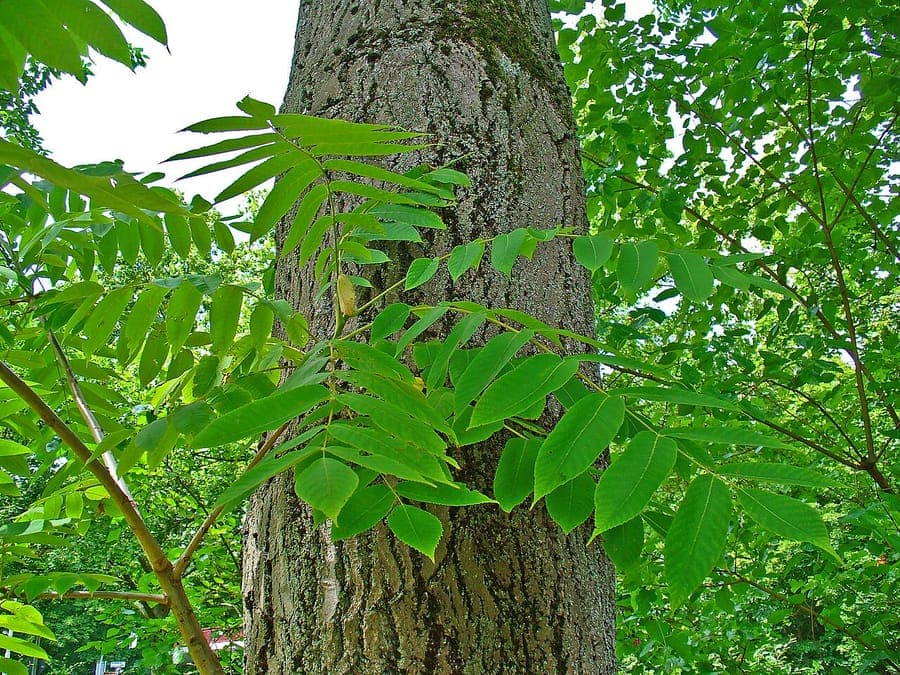
H. Zell / CC BY-SA 3.0, via Wikimedia Commons
Juglans cinerea: complete guide
Juglans cinerea
Want to see Juglans cinerea: complete guide in your garden?
Full design in HD: €7.99
Look after your Juglans cinerea with the GardenWorld app
Identify plants with your camera and get a care calendar with reminders for this plant.


Overview
Juglans cinerea, known as butternut or gray walnut, is an impressive nut tree from North America (Canada to Carolina). This stately tree is valued for its nutritious nuts and decorative value. With a broad, pleasantly spreading silhouette, it grows to 15-20 meters tall. Juglans cinerea thrives on well-draining soils and is winter hardy in temperate to cold climates.
On gardenworld.app, we help you integrate this fruitful tree into your front garden design.
Appearance and Bloom Time
Juglans cinerea grows as a rounded, slowly growing tree with coarse, pinnate leaves 40-60 cm long. The bark is dark gray and smooth, becoming furrowed with age. In April through May, green, inconspicuous male (staminate) catkins and female flowers appear on separate branches of the same tree (monoecious).
The nuts ripen from August through October. They are elongated, approximately 5-8 cm long, and contain abundant oil.
Ideal Location
Juglans cinerea grows best in full sun to light half-shade locations. Ensure at least 6 hours of direct sunlight daily for optimal growth. Plant in a location where it has enough space to grow - allow at least 10-15 meters distance from other trees or buildings.
Protection from strong winds helps stabilize young plantings.
Soil
This nut tree grows best in deep, well-draining soils with a pH between 6.0 and 7.0. Add organic matter when planting for moisture retention. Juglans cinerea is not very particular but grows better in nutrient-rich soils. Avoid clay, waterlogged grounds.
An annual application of compost aids growth and fruit production.
Free preview
Want to see Juglans cinerea: complete guide in your garden? Make a free preview of your design.
Watering
Juglans cinerea has moderate water requirements during the growing season. Provide regular watering in the first growing year; later it becomes drought-tolerant. Deep, infrequent watering encourages deep roots. Mature trees are very drought-tolerant.
Mulch helps retain moisture and protect roots.
Pruning
Juglans cinerea requires minimal pruning. Shape young wood in the first years. Remove dead, damaged, or diseased branches. Prune in late winter to prevent bleeding. Strong lateral branches can be shortened for better form.
Excessive pruning can slow growth.
Maintenance Calendar
Spring (March-April): Check growth, remove pruning debris, prepare fertilizing Early Summer (May-June): Regular watering, flowering Summer (July-August): Moisture retention, nuts ripen Fall (September-October): Harvest nuts, clean up leaves Winter (November-February): Minimal maintenance, winter dormancy
Winter Hardiness
Juglans cinerea is fully winter hardy to -25 C and many cold North American regions. The tree overwinters without protection in most European climates. In very cold regions, protection of young wood with burlap helps.
Shading in very hot zones can help.
Companion Plants
Combine Juglans cinerea with other North American trees and shrubs such as Quercus, Carya, and native Ilex. Under this large tree, shade-loving plants such as Helleborus, Hosta, and Sarcococca thrive. For landscape effects, plant together with other tall trees in groups of 3-5.
Note: the tree secretes juglone, which inhibits the growth of some plants.
Closing
Juglans cinerea brings nature, fruit, and structure to large gardens. With good drainage, space, and patience, this North American nut tree grows into an impressive specimen. Discover more plant combinations on gardenworld.app/en.
Frequently asked questions about Juglans cinerea
Is Juglans cinerea winter hardy?
Juglans cinerea is fully winter hardy to -25 C and many cold North American regions. The tree overwinters without protection in most European climates.
When and how do you prune Juglans cinerea?
Juglans cinerea requires minimal pruning. Shape young wood in the first years.
How much water does Juglans cinerea need?
Juglans cinerea has moderate water requirements during the growing season. Provide regular watering in the first growing year; later it becomes drought-tolerant.
Where does Juglans cinerea grow best?
Juglans cinerea grows best in full sun to light half-shade locations. Ensure at least 6 hours of direct sunlight daily for optimal growth.
What soil does Juglans cinerea need?
This nut tree grows best in deep, well-draining soils with a pH between 6.0 and 7.0. Add organic matter when planting for moisture retention.

See it in your garden
See Juglans cinerea in your garden
One photo of your garden and a few questions. You see the result in about a minute.
Try it with a photoIdentify this plant in your own garden. Identify a plant
Similar plants
Texas walnut: complete guide
Juglans microcarpa
Complete guide to Texas walnut (Juglans microcarpa): a small, drought-tolerant walnut tree for gardens. Location, soil, watering, and care advice.
Mockernut hickory: complete guide
Carya alba
Mockernut hickory is a majestic North American tree with ornamental and nut value. Learn everything about care, cultivation and ideal location.
Pecan Tree: complete guide
Carya illinoinensis
Majestic pecan tree producing delicious nuts. Explore this American native for shade-free growth and abundant harvests worldwide.
