
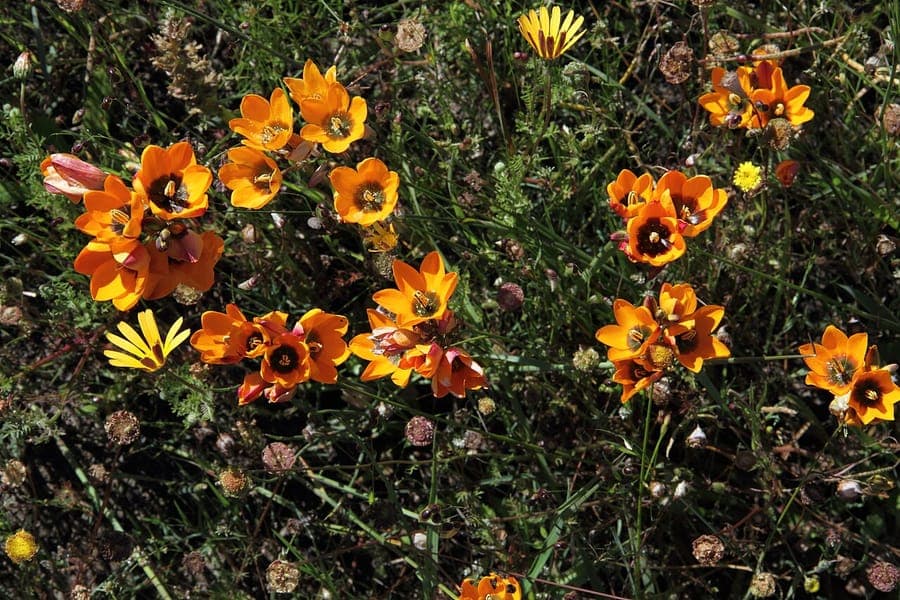
Wilferd Duckitt from Darling, South Africa / CC BY 2.0, via Wikimedia Commons
Ixia maculata: complete guide
Ixia maculata
Want to see Ixia maculata: complete guide in your garden?
1 minute, no credit card
Overview
Ixia maculata, commonly known as Yellow ixia or Spotted African cornlily, is a captivating flowering plant from South Africa. This elegant species from the Iridaceae family bears bright yellow flowers with characteristic red spots or dark eyes in the center. The plant is native to the Cape Peninsula and thrives in full sun and warm, well-drained soils.
The Yellow ixia is particularly suited for gardeners loving South African plants. It grows especially well in Mediterranean gardens, coastal gardens, and warm, sheltered corners. Though originally from Africa, it can be cultivated in Dutch, Belgian, and many German gardens, though it requires careful handling in severe winters.
Appearance & Bloom
Ixia maculata is an elegant plant with stiff, upright stems reaching 40 to 60 centimeters high. The leaves are linear and grass-like. The flowers are sunny yellow with dark red or purple spots in the center. Each floret has six petals and grows in loose, silky sprays at stem ends.
Flowers open in the morning and close in the evening, so you see them best in full daylight. The entire blooming period runs from May to July. Each stem can bear 15-20 flowers, giving you a rich, long-lasting floral display. The plant forms seedpods that ripen in August-September.
Ideal Location
Ixia maculata thrives best in locations with full sun, at least six to eight hours daily. It prefers warm, sheltered spots protected from cold winds and night frost. In cool climates, southwest or south exposure is ideal. The plant can grow in partial shade but blooms less abundantly.
Ensure the plant sits on elevated ground where water doesn't stagnate. Good surface drainage is essential as this plant doesn't tolerate excess moisture.
Soil
Ixia maculata requires well-drained, sandy to sandy loam soils with slightly acidic to neutral pH (6.0-7.0). Heavy clay soils must be improved with sand and organic matter. For container culture, use a mixture of garden soil, sand, and perlite (1:1:1).
Improve soil yearly with a layer of sand and compost to enhance structure. High organic matter content is important for water buffering, yet water drainage must work well.
Free design
Want to see Ixia maculata: complete guide in your garden? Make a free design now.
Watering
During growth and bloom periods (April to August), water regularly so soil stays moist but not wet. Check daily in warm periods. Once the plant blooms, be extra careful with watering as excess moisture can damage flowers.
During winter dormancy (September to March), reduce watering significantly. For potted plants, place the pot in a dry, cool location (5-10°C) where you give minimal water. This stimulates blooming in the next season.
Pruning
Remove spent flowers regularly by cutting them off. This stimulates further flower formation. Once all flowers pass, you can cut the stem back to about 5 centimeters above ground. The plant produces new shoots.
Maintenance Calendar
February to March: Take plant from dormancy; start cautious watering. April to May: Regular watering and feeding. June to July: Full care; deadheading. August: Blooming ends; reduce water. September to January: Dormancy; minimal water.
Winter Hardiness
Ixia maculata is not winter-hardy in harsh northern European climates. In the Netherlands and Belgium, treat this plant as an annual or frost-sensitive perennial. In coastal gardens (where temperatures remain mild) it may overwinter outdoors with mulch protection. Otherwise, dig up the bulbs in August-September and store them dry and cool until replanting in March/April.
In Germany, digging up and storage is necessary outside coastal zones.
Companion Plants
Ixia maculata combines beautifully with other South African flowering plants like Freesia and Sparaxis. Also good combinations with Mediterranean plants like lavender, rosemary, and sage. For contrast use silver-leaved grasses like Artemisia or Santolina.
Closing
Ixia maculata is a stunning addition to warm, sunny gardens. With its yellow flowers and red spots, it brings South African exoticism to your garden. The plant grows well in containers, a bonus for gardeners in less ideal climates. Plant the bulbs in spring, ensure sunny location and well-drained soil, and enjoy the tropical bloom.
For this plant and other exotic flowering plants, design your own front garden using gardenworld.app - a free online garden designer where you can select heat-loving plants. With gardenworld.app, you create a sunny southern garden in your front yard.
Want to see Ixia maculata: complete guide in your garden? Make a free design now.
Upload a photo, pick a style, and get a photorealistic design with plant list in under a minute.
No credit card required


Similar plants
Ixora coccinea: complete guide
Ixora coccinea
Flame-of-the-woods brings tropical scarlet blooms to gardens. A stunning evergreen shrub for warm climates.
Iris lacustris: complete guide
Iris lacustris
The Dwarf lake iris is a miniature treasure for gardens. Discover this tiny American native with blue blooms.
Freesia refracta: complete guide
Freesia refracta
Freesia is a graceful cut flower with sweet fragrance. Suitable for borders, containers and cutting gardens in temperate climates with protection.