
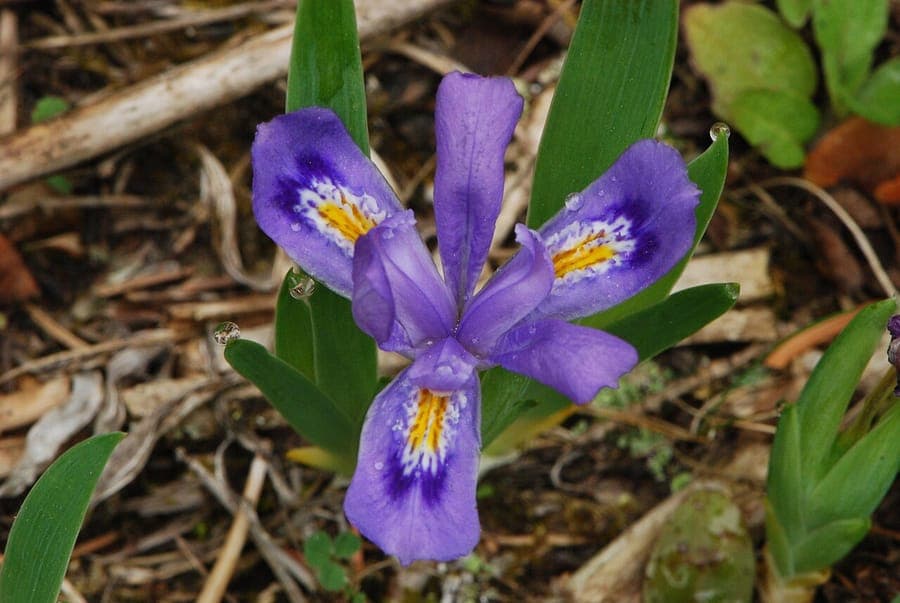
J M / CC BY-SA 2.0, via Wikimedia Commons
Iris lacustris: complete guide
Iris lacustris
Want to see Iris lacustris: complete guide in your garden?
1 minute, no credit card
Overview
Iris lacustris, commonly known as Dwarf lake iris, is a remarkably small iris native to the Great Lakes region of North America. This compact species from the Iridaceae family produces beautiful bright blue flowers and reaches only 15 to 25 centimeters in height. It originates from Ontario, Michigan, and Wisconsin, where it naturally occurs in wet marshes and along lake and river shores. This tiny iris is perfect for small gardens, waterside features, and even container culture.
The Dwarf lake iris is an excellent choice for gardeners with limited space or those seeking to create small, intimate garden schemes. Unlike many other irises, this species doesn't require thick, fleshy rhizomes; its underground parts are finer and moisture-demanding. The plant thrives in wet conditions where many other garden plants would fail.
Appearance & Bloom
The Dwarf lake iris is strikingly small and delicate in appearance. The plant reaches only 15 to 25 centimeters tall with narrow, grass-like leaves that are dark green. The flowers are intense blue to violet-blue and appear in May. Despite being smaller than many other irises, the blooms are perfectly formed with three upright standards and three drooping falls. The bloom effect is rich given the plant's compact height.
Each flower lasts about two to three days, but because the plant produces many flowers, you enjoy a flowering period lasting two to three weeks. The plant doesn't create impressive foliage mass because everything is miniature in scale. After blooming, the plant forms small seed capsules.
Ideal Location
Iris lacustris grows best in wet to marshy conditions with full sun to light shade. It prefers pond edges, marshes, and wet garden corners where water can remain present for extended periods. This completely distinguishes it from most other irises tolerating dryness.
The plant functions well on slopes where water drains slowly but doesn't disappear quickly. Ensure the location receives at least four to six hours of sunlight. Wind protection helps, though the tiny plant doesn't suffer as much from wind as larger irises.
Soil
The Dwarf lake iris prefers acidic, moisture-rich soils containing abundant organic material. A soil mixture of peat moss, sand, and garden soil in equal proportions works well. The plant can even grow in pure peat soil if waterlogging is prevented.
The soil pH should be acidic, ideally between 5.5 and 6.5. If your garden is neutral to alkaline, add plenty of peat moss or grow the iris in containers with acidic soil mix. For potted culture, use pure acidic potting soil.
Free design
Want to see Iris lacustris: complete guide in your garden? Make a free design now.
Watering
The Dwarf lake iris is a true moisture-lover and cannot survive under very dry conditions. Ensure the soil remains moist, neither waterlogged nor dry. Ideal is a situation where water is permanently present around roots but not stagnant. In a wet garden, maintain this artificially if necessary.
During dry periods, apply extra water. For containers, plant the iris in pots with drainage holes and place them in a saucer with water. This provides capillary action and constant moisture supply. Check daily in summer that water supply doesn't run out.
Pruning
The Dwarf lake iris requires very minimal pruning given its tiny size. Remove spent flowers for a neater appearance, but this isn't necessary. Dead leaves can be removed in autumn. The plant focuses on minimal maintenance.
Maintenance Calendar
March to April: Check moisture conditions and add water if needed. May: Plant blooms; monitor water regularly. June to September: Maintain constant moisture; growth and rest periods are flexible. October to February: Minimal maintenance during rest period.
Winter Hardiness
The Dwarf lake iris is extremely hardy down to -30 degrees Celsius, making it suitable for all Dutch and Belgian gardens and most German gardens. The plant grows even under ice. In very cold winters, protecting roots with thick mulch helps, especially in potted culture.
Companion Plants
The Dwarf lake iris pairs well with other marsh culture plants like small Carex species, Juncus, and other moisture-loving grasses. Primrose (Primula japonica) makes a nice neighbor. Acid-loving plants like small Drosera's and wetland flora also fit well.
Closing
Iris lacustris represents delicate miniature charm in the iris world. For gardeners with wet corners, pond edges, or those simply loving tiny miniature plants, this American marsh iris is ideal. It naturally thrives in marshy conditions where many other plants struggle. Plant some rhizomes in your marsh area and enjoy its blue blooms in May.
For this plant and other water-lovers, design your own front garden using gardenworld.app - a free online garden designer where you add water features and receive plant recommendations. With gardenworld.app, you create aquatic habitats and plant life in your front garden.
Want to see Iris lacustris: complete guide in your garden? Make a free design now.
Upload a photo, pick a style, and get a photorealistic design with plant list in under a minute.
No credit card required


Similar plants
Iris douglasiana: complete guide
Iris douglasiana
Douglas iris is a stunning native perennial with purple flowers ideal for dry gardens and borders. Discover growing tips, care, companion planting and design ideas.
Iris cristata: complete guide
Iris cristata
Crested iris with blue-purple flowers and compact growth. Perfect dwarf plant for shady front garden areas with natural beauty.