
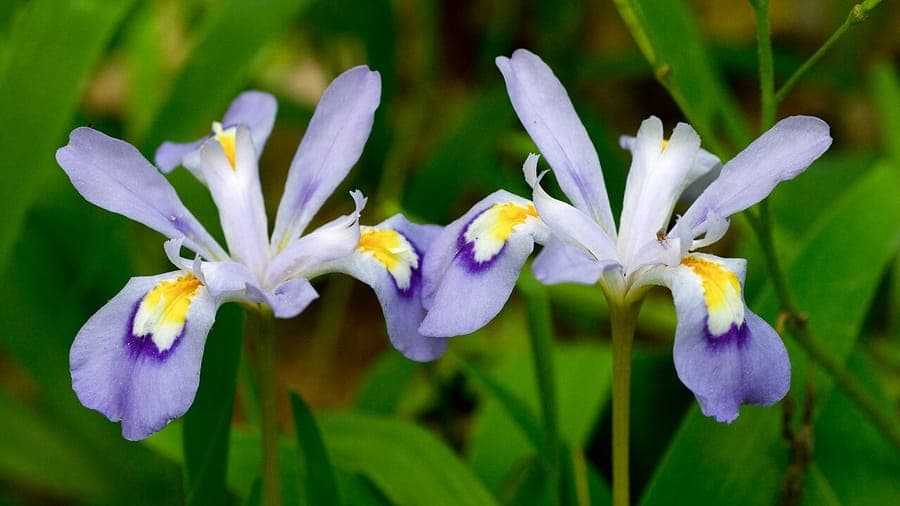
Eric Hunt / CC BY-SA 4.0, via Wikimedia Commons
Iris cristata: complete guide
Iris cristata
Want to see Iris cristata: complete guide in your garden?
1 minute, no credit card
Overview
Iris cristata, commonly known as Crested Iris or Dwarf Crested Iris, is a beautiful, low-growing iris species native to the shaded forests of the eastern United States. This miniature iris is perfect for front garden designs where you want gentle color without intrusiveness.
It is an extremely low-maintenance plant thoroughly at home in partial shade and even full shade. The flowers are small but elegant, and the plant spreads slowly via rhizomes for natural grouping.
Appearance and bloom
Crested Iris grows as an extremely low, densely growing plant reaching only 10-20 centimeters tall. The leaves are narrow, stiff, gray-green and remain attractive throughout the season.
The flowers are the highlight: approximately 3-5 centimeters wide, blue to purple color (sometimes white or white with blue streaks) with fine, refined structure. Each plant produces several flowers at once in early spring (April-May).
The flowers create a minimal, very refined impression that perfectly complements shady corners.
Ideal location
Crested Iris thrives best in partial shade to full shade. This is actually the ideal spot - more sun causes drying and fewer flowers, partial shade is perfect, full shade acceptable.
Plant this iris under trees, in shaded front gardens, or along the shaded side of houses. Early morning sun and afternoon shade is ideal.
Soil
Humus-rich, well-draining soil. Add compost or peat to heavy soils. This plant enjoys somewhat moister conditions than some other irises, especially because shade helps retain moisture.
PH: neutral to slightly acidic (6.0-7.0). Too heavy, wet soil can cause problems, so ensure drainage.
Free design
Want to see Iris cristata: complete guide in your garden? Make a free design now.
Watering
Regular watering during growing season, especially after initial planting. Once established, the plant tolerates dry periods better, but regular water during dry summers helps.
Allow soil to dry somewhat between waterings - don't keep permanently wet.
Pruning
After flowering you can remove spent blooms, but this is not necessary. Yellow foliage dies back in autumn - let this feed the plant.
Remove dead leaves in spring and autumn. Otherwise pruning is unnecessary.
Maintenance calendar
April-May: Flowering, no interventions. June-August: Growth, regular water. September-October: Plant stores reserves. November-March: Winter dormancy, plant sleeps below ground.
Winter hardiness
Extremely winter-hardy to -30 degrees Celsius. This plant is thoroughly suitable for Dutch winters outdoors. The rhizomes sleep deep in the ground and require no frost protection.
Actually one of the hardiest irises - you can grow it in sensitive locations.
Companion plants
Combine with other shade-loving ground covers: Ajuga, Buggloss, ivy. Crested Iris creates beautiful combinations with light woodland plants like Pulmonaria and Helleborus.
Note: don't plant vigorous growers nearby - Crested Iris is delicate and can be overwhelmed.
Final thoughts
Iris cristata is for gardeners appreciating subtle beauty in shady spots. Plant it in groups, forget it afterward, and enjoy year after year delicate purple flowers in spring.
Available at most garden centers. Use gardenworld.app to determine where this dwarf iris looks most beautiful among other shade plants in your front garden.
Want to see Iris cristata: complete guide in your garden? Make a free design now.
Upload a photo, pick a style, and get a photorealistic design with plant list in under a minute.
No credit card required


Similar plants
Iris tingitana: complete guide
Iris tingitana
Iris tingitana, the Morocco iris, is the bulb species behind the Dutch iris: early blue-violet blooms that need a sunny, well-drained position.
Iris hookeri: complete guide
Iris hookeri
Hooker's Iris is a compact North American native plant with blue flowers. Low-growing and moisture-loving water plant.
Siskiyou iris: complete guide
Iris bracteata
Complete guide to Iris bracteata, the Siskiyou iris: location, soil, bloom cycle, watering, pruning and companion plants for this rare Pacific Coast iris.