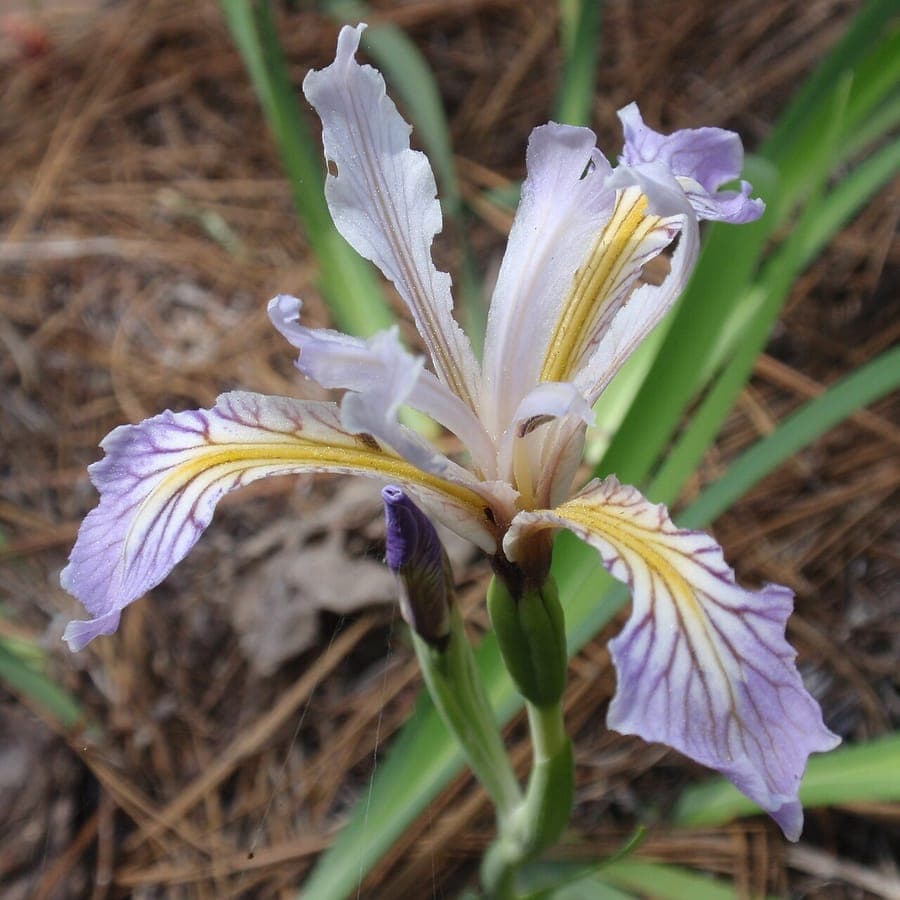
Tom Hilton / CC BY 2.0, via Wikimedia Commons
Iris hartwegii: complete guide
Iris hartwegii
Want to see Iris hartwegii: complete guide in your garden?
Full design in HD: €7.99
Look after your Iris hartwegii with the GardenWorld app
Identify plants with your camera and get a care calendar with reminders for this plant.


Overview
Iris hartwegii, named after the Sierra Nevada mountain range, is a rare and precious iris from California. This hardy perennial grows underground via rhizomes and reaches 30-60 cm tall. The plant is endemic to the Sierra Nevada region and is described as a "rainbow iris" because of its variable flower colors. Discovered in 1876, it is a true gem for gardeners seeking unusual alpine flora.
Appearance and bloom
Sierra iris grows as a low perennial herb with linear, blue-gray leaves reaching 30-60 cm tall. The flower consists of six perianth segments in shades from blue to deep purple with yellow or white marks on the hanging sepals. Bloom occurs from March to May depending on location. Each flower lasts only one day, but the plant produces multiple flowers sequentially over several weeks.
Ideal location
Hartwegii iris prefers full sun to light shade, at least 5 hours of direct sunlight. Plant on rock walls, alpine gardens, rock gardens or well-drained mountain areas. Ideal for Californian gardens with dry summers, but also grows well in other temperate climates if well-drained.
Soil
Mountain origin requires excellent drainage. Plant in slightly acidic soil (pH 6.0-7.0) mixed with sand, gravel and organic matter. A rocky, gritty soil mimics native mountain habitat. Add 2-3 cm coarse sand or small stones to planting hole. In wet areas, create raised beds 20-30 cm high.
Free preview
Want to see Iris hartwegii: complete guide in your garden? Make a free preview of your design.
Watering
Once established, this iris has moderate water requirements. Water moderately during growing period (March-May), but keep dry during summer dormancy. In Mediterranean climates, natural rainfall is usually sufficient. In dry summers, sparse water may be needed. Ensure water drains well; standing water causes immediate root rot.
Pruning
Pruning remains minimal. After blooming, remove only wilted flower stalks below the flower head. Keep leaves intact until they yellow - this feeds the underground rhizomes. Wilted leaves can be carefully removed in June-July. Remove dead or damaged parts immediately.
Maintenance calendar
March-April: Full bloom; water lightly; enjoy flowers; remove spent flowers. May-June: Leaves yellow; stop watering; plant transitions to dormancy. August-October: Rest period; no water; keep dry. November-March: Deep dormancy; no water; plant overwinters; protect from extreme frost.
Winter hardiness
Sierra iris is hardy to USDA zone 5 (-29 to -20 degrees C). The plant can handle heavy snow well because it is a true mountain plant. Ensure good drainage during thaw periods; rapid water accumulation can be problematic.
Companion plants
Combine Sierra iris with other alpine plant communities: alpine phlox, silene, helva, sedum. For color contrast, soft yellow or white alpine flowers are ideal. In container gardens, this works well with other rare Californian endemics.
Closing
Iris hartwegii offers gardeners something special: a rare, mountainous flower of unequaled elegance. Its moderate maintenance requirements and winter hardiness make it a smart choice. Available from specialist nurseries. Find more garden inspiration on gardenworld.app!
Frequently asked questions about Iris hartwegii
Is Iris hartwegii winter hardy?
Sierra iris is hardy to USDA zone 5 (-29 to -20 degrees C). The plant can handle heavy snow well because it is a true mountain plant.
When and how do you prune Iris hartwegii?
Pruning remains minimal. After blooming, remove only wilted flower stalks below the flower head.
How much water does Iris hartwegii need?
Once established, this iris has moderate water requirements. Water moderately during growing period (March-May), but keep dry during summer dormancy.
Where does Iris hartwegii grow best?
Hartwegii iris prefers full sun to light shade, at least 5 hours of direct sunlight. Plant on rock walls, alpine gardens, rock gardens or well-drained mountain areas.
What soil does Iris hartwegii need?
Mountain origin requires excellent drainage. Plant in slightly acidic soil (pH 6.0-7.0) mixed with sand, gravel and organic matter.

See it in your garden
See Iris hartwegii in your garden
One photo of your garden and a few questions. You see the result in about a minute.
Try it with a photoIdentify this plant in your own garden. Identify a plant
Similar plants
Giant montbretia (Crocosmia masoniorum): growing guide
Crocosmia masoniorum
Everything about giant montbretia (Crocosmia masoniorum): position, soil, planting, winter protection and companions for its fiery orange summer flowers.
Dierama pulcherrimum: growing angel's fishing rod
Dierama pulcherrimum
Everything about angel's fishing rod (Dierama pulcherrimum): full sun, moist but free-draining soil, spring planting and winter care for this graceful summer perennial.
Hesperantha coccinea (Schizostylis): autumn stars for your border
Hesperantha coccinea
A complete guide to Hesperantha coccinea, formerly Schizostylis coccinea: site, moist soil, dividing and overwintering this late-flowering crimson flag lily.
