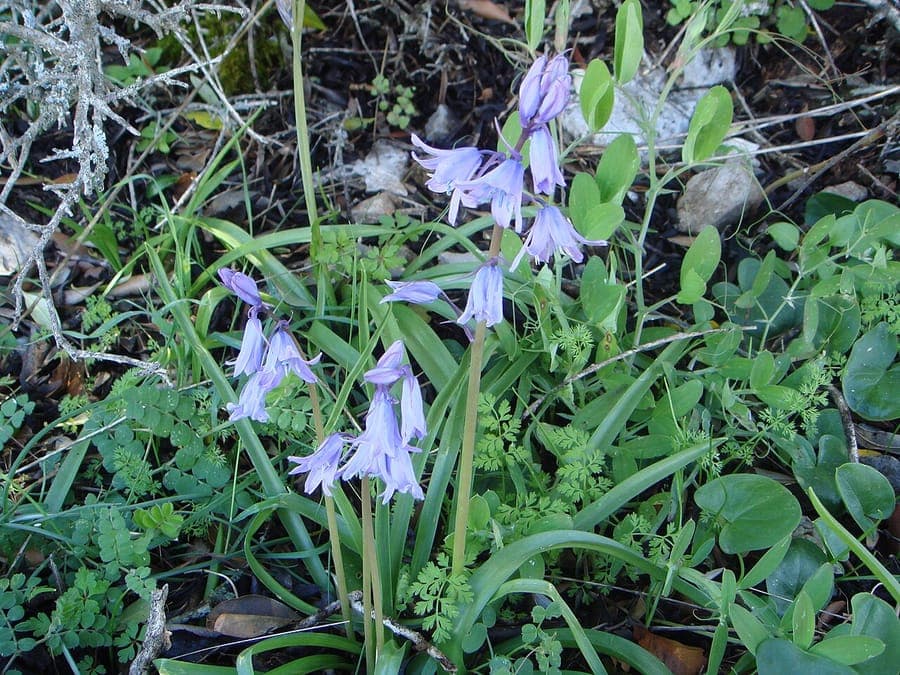
User:Xemenendura / CC BY-SA 3.0, via Wikimedia Commons
Hyacinthoides hispanica: complete guide
Hyacinthoides hispanica
Want to see Hyacinthoides hispanica: complete guide in your garden?
Full design in HD: €7.99
Look after your Hyacinthoides hispanica with the GardenWorld app
Identify plants with your camera and get a care calendar with reminders for this plant.


Overview
Hyacinthoides hispanica, commonly known as Spanish Bluebell or Spanish Hyacinth, is a spectacular spring-blooming bulb originating from Portugal and Spain, where it grows in woodlands and rocky mountain slopes. This robust bulb plant offers an unending display of sky-blue to dark blue flowers from April through May, with white forms available for those preferring softer color. The plant proves extremely hardy and frost-resistant, easily adapted, and despite its Spanish origin thrives superbly in cool to temperate climates of northern Europe.
For garden designers, Hyacinthoides hispanica represents an invaluable choice: it provides massive visual impact, naturalizes easily in grass and beneath trees, and self-multiplies when climate conditions prove favorable. Through gardenworld.app, we can help you design a spring planting scheme featuring diverse bulbs, with Spanish bluebells supplying the strong blue tone, combined with yellow daffodils and pink tulips for picturesque spring abundance.
Appearance and Blooming
Hyacinthoides hispanica is a bulb plant reaching 20 to 35 centimeters tall, depending on conditions and climate. Plants form rosettes of three to five broad, linear-lanceolate leaves reaching approximately 30 centimeters long and 1-1.5 centimeters wide. The leaves display glossy dark green coloration with soft texture. Late spring (April through May) sees flower stems emerging bearing dense, rounded inflorescences with 8 to 20 flowers per stem.
The flowers are distinctly blue to dark lavender-blue, approximately 1 to 1.5 centimeters in diameter, with six tepal spreading into open star shapes. Each small flower features yellow stamens in the center. The fragrance is pleasantly sweet, less intense than common hyacinths, but distinctly present. Many insects, especially bees, are attracted to these blooms, making them valuable plant locations for pollinating insects.
The sky-blue form proves most common, though reddish-purple and white-pink cultivars exist, along with pure white forms. The plant blooms consistently each year, provided it has experienced adequate cold overwintering periods.
Ideal Location
Hyacinthoides hispanica performs optimally in locations featuring full sun to partial shade. For maximum bloom, four to six hours of direct sunlight proves ideal, though the plant also grows admirably under deciduous trees where diffuse light dominates. This flexibility renders it exceptionally suited to woodland-style gardens and underplanting of shrubs. The plant tolerates full shade poorly, so avoid placing directly beneath dense evergreen trees.
The more open the location, the more flowers you can expect. That said, the plant grows contentedly in partial shade, making it easier for mixed border planting.
Avoid very wet, waterlogged locations in winter; otherwise in high-rainfall areas, position in well-drained terrain.
Soil Requirements
Hyacinthoides hispanica grows best in well-drained, moderately fertile soil with pH between 6.0 and 7.5. The plant accepts varied soil types, from clay to sand, provided drainage remains reasonably good. Clay soils improve considerably through sand and organic material addition. Sandy soils benefit from compost or leafmould incorporation.
When planting, add some organic material, but not excessively; excessive nutrition promotes rank leaf growth and fewer flowers. Standard compost composition suffices. Ensure soil doesn't become waterlogged in winter; this ranks as the primary bulb-failure cause.
Once established, the plant requires no feeding; it grows happily in poorer soils provided drainage remains good.
Planting and Preparation
Hyacinthoides hispanica bulbs plant best from October through November, before first frost. Plant them 10 to 15 centimeters deep and approximately 15 centimeters apart for optimal cluster formation. Larger clusters create more impactful visual display.
Prepare the planting hole by incorporating some organic material and ensuring good drainage. Position the bulb with pointed end upward and press gently. Water thoroughly after planting. Bulbs can also be planted in groups of five to ten for naturalized appearance.
In containers, bulbs can be planted closely together for full pots overflowing with flowers in spring. Ensure well-drained potting mix.
Free preview
Want to see Hyacinthoides hispanica: complete guide in your garden? Make a free preview of your design.
Watering and Maintenance
Hyacinthoides hispanica requires thorough watering after planting, saturating the soil. Winter rains typically suffice throughout dormancy. During dry periods, additional watering helps, especially if residing in very dry regions.
Once flowering, the plant requires no additional water unless extremely dry weather occurs. After bloom, leaves must not be cut until completely withered (usually June). Green leaves pump energy back into the bulb for next year's growth.
During the growing season, light organic feeding can be applied, though not strictly necessary. Bulbs returning yearly can grow for years without feeding.
Naturalization and Spreading
A major Hyacinthoides hispanica advantage is its easy naturalization in grass and beneath trees. Once established, the plant produces seeds enabling spread, and also forms daughter bulbs separating around mother bulbs and growing independently. To encourage grass naturalization, leave grass unmown until at least June, allowing leaf material to channel energy back into bulbs.
Under suitable conditions, Spanish bluebell colonies can expand into spectacular carpets of blue flowers, especially in woodland environments. This requires patience, however; three to five years may pass before noticeable self-seeding spread occurs.
Maintenance and Care
Hyacinthoides hispanica proves virtually maintenance-free once established. During the growing season, you can remove spent flower heads if preferred, though not obligatory. This will reduce seed production, sometimes convenient in certain gardens. However, leave stems and leaves intact until naturally dying back.
Monitor colonies for overcrowded conditions. If bulbs stand too closely together, they may shrink and bloom less profusely. In this case, you can skip years allowing them to rest, or remove bulbs and space them again.
The plant proves very resistant to pest problems. Occasionally weevil larvae damage bulbs, but this remains rare.
Maintenance Calendar
August to October: Bulb sourcing and preparation. Planting-site preparation.
October to November: Bulb planting. Water after planting.
December to March: Winter dormancy. No maintenance needed. Bulbs chill underground.
April to May: Blooming period. Enjoy the flowers. Optional spent-flower head removal.
June to July: Foliage fades. Don't cut until completely withered.
August to September: Bulbs become dormant. Preparation for next planting season.
Winter Hardiness
Hyacinthoides hispanica proves very hardy, winter hardy to zone 5 (-20 to -25 degrees Celsius). This means it can grow in all Dutch, Belgian, and German gardens without any winter protection. The bulbs actually require cold periods (vernalization) to initiate bloom, so cold winters prove beneficial.
In very mild climates (southern France, southeast England), the plant sometimes fails to receive sufficient cold and blooms weakly. In such cases, refrigeration chilling of bulbs can help.
Companion Planting
Hyacinthoides hispanica pairs beautifully with other spring bloomers. Combine with yellow Narcissus pseudo-narcissus (Wild Daffodils) or pink Tulipa clusiana (Damask Tulips) for colorful spring display. It also works well with white-flowering Ornithogalum nutans (Drooping Star-of-Bethlehem) and white-blooming Leucojum vernum (Snowflake).
Beneath trees, Hyacinthoides hispanica combines beautifully with Anemone blanda (Blue Anemone) and small Helleborus niger (Christmas Rose) for textural variation. In grassy areas, they pair perfectly with yellow English primrose (Primula veris) or purple Grape Hyacinth (Muscari neglectum).
These combinations create intricate spring displays bursting with color and variation.
Propagation and Multiplication
Hyacinthoides hispanica multiplies via seed and bulblets. This occurs naturally once bulbs establish well. For faster multiplication, excavate bulbs in summer, remove daughter bulblets, and plant them separately. This requires patience, however; at least two seasons must pass before they reach flowering size.
Seed can also be collected and sown, though seed-grown plants require much longer (three to four years to bloom). Seed grows best when sown fresh in autumn.
Closing Thoughts
Hyacinthoides hispanica proves a true jewel for gardeners desiring spectacular spring displays with minimal effort. The combination of massive blue flowers, hardiness, self-naturalization, and maintenance-freedom makes it an essential choice for virtually all gardens. With correct planting measures and drainage, you'll enjoy this plant for years while it quietly spreads, creating increasingly impressive flower carpets. For expert guidance on spring garden planning with Spanish bluebells and complementary bloomers, contact gardenworld.app for personalized expertise.
Frequently asked questions about Hyacinthoides hispanica
Is Hyacinthoides hispanica winter hardy?
Hyacinthoides hispanica proves very hardy, winter hardy to zone 5 (-20 to -25 degrees Celsius). This means it can grow in all Dutch, Belgian, and German gardens without any winter protection.
How much water does Hyacinthoides hispanica need?
Hyacinthoides hispanica requires thorough watering after planting, saturating the soil. Winter rains typically suffice throughout dormancy.
Where does Hyacinthoides hispanica grow best?
Hyacinthoides hispanica performs optimally in locations featuring full sun to partial shade. For maximum bloom, four to six hours of direct sunlight proves ideal, though the plant also grows admirably under deciduous trees where diffuse light dominates.
What soil does Hyacinthoides hispanica need?
Hyacinthoides hispanica grows best in well-drained, moderately fertile soil with pH between 6.0 and 7.5. The plant accepts varied soil types, from clay to sand, provided drainage remains reasonably good.

See it in your garden
See Hyacinthoides hispanica in your garden
One photo of your garden and a few questions. You see the result in about a minute.
Try it with a photoIdentify this plant in your own garden. Identify a plant
Similar plants
Great camas (Camassia leichtlinii): planting and care
Camassia leichtlinii
Everything about great camas (Camassia leichtlinii): planting the bulbs, heavy wet soil, naturalising in grass, hardiness and the best partners for a flowering meadow.
Pineapple lily (Eucomis bicolor): planting, care and overwintering
Eucomis bicolor
Everything about the pineapple lily (Eucomis bicolor): planting the bulbs, watering and feeding, overwintering in pots or the ground, and the best border partners.
Pineapple lily (Eucomis comosa): growing and overwintering
Eucomis comosa
Eucomis comosa is the tallest and best-known pineapple lily, with creamy spikes topped by a leafy tuft in late summer. Planting, overwintering and leaf cuttings.
