
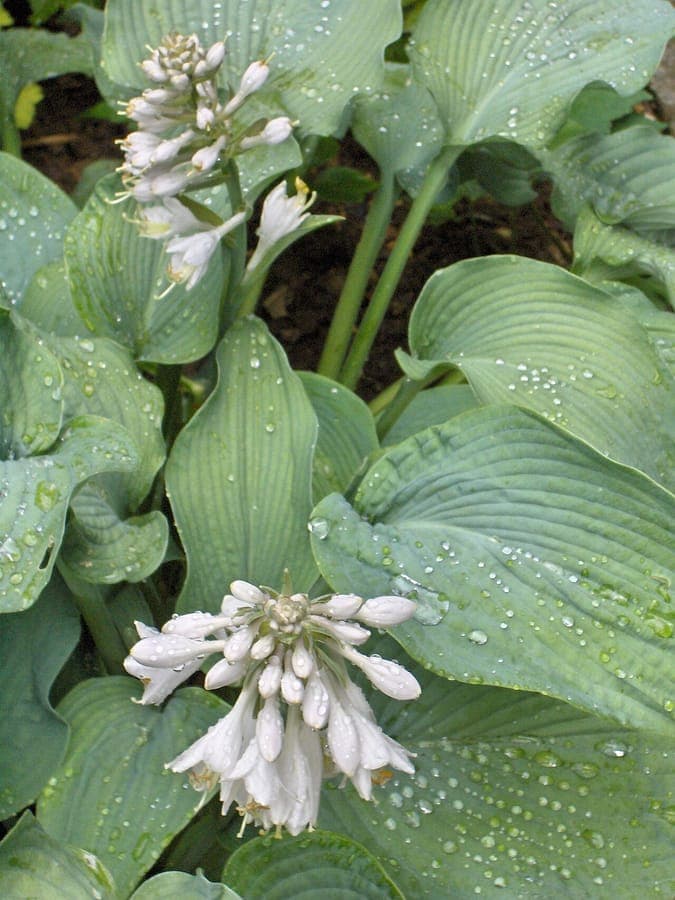
Wikimedia Commons / CC BY-SA 3.0, via Wikimedia Commons
Hosta: complete guide
Hosta
Want to see Hosta: complete guide in your garden?
1 minute, no credit card
Overview
The hosta - also known as the plantain lily - is the undisputed monarch of the shade garden. Where other plants falter in the shadow of trees and fences, the hosta thrives. This herbaceous perennial from East Asia (Japan, China, Korea) has transformed in barely a century from a botanical curiosity into one of the most collected garden plants on the planet. With over 6,000 registered cultivars, there is a hosta for every garden and every gardener.
The appeal is straightforward: the foliage, not the flower, is the main event. And what foliage it is - heart-shaped, lance-shaped, rounded or undulating, in shades from steely blue through emerald green to chartreuse gold, often edged in cream or butter-yellow. On gardenworld.app you can create a garden design that transforms the shaded corners of your plot with the right hosta combinations. Plants range from miniatures of 20 cm to towering specimens of 90 cm tall and over a metre across, such as the legendary 'Sum and Substance'. Popular cultivars include 'Frances Williams' (blue-green with gold margins), 'Halcyon' (steel-blue leaves), 'Blue Angel' (enormous blue foliage), and 'Patriot' (dark green with crisp white edges).
Appearance and bloom
Hosta foliage is extraordinarily varied. Leaf size ranges from 5 cm in the smallest cultivars to a full 45 cm in giants like 'Empress Wu'. Leaf texture varies from smooth and glossy to deeply ribbed and waxy. Blue hostas owe their colour to a waxy coating (pruinose bloom) on the leaf surface - this layer is thickest in spring and gradually thins under rain and sun exposure.
The flowers are often underestimated but well worth appreciating. From June to August, elegant racemes appear on stems that rise above the foliage mound. The bell- to trumpet-shaped flowers are white, lilac, or lavender-purple, sometimes lightly fragrant. The white flowers of 'Royal Standard' and 'Guacamole' are deliciously scented and attract hawk moths at dusk. Some gardeners remove the flower stems to preserve the foliage display, but that is a matter of personal preference. The blooms attract bees and bumblebees and develop into decorative seed pods after pollination.
Ideal location
Hostas are shade plants par excellence, but not every hosta needs the same amount of shade. The rule of thumb: the bluer or greener the leaf, the more shade the plant tolerates. Blue cultivars such as 'Halcyon' and 'Blue Angel' lose their waxy coating - and with it their blue hue - in too much sun. Gold and variegated cultivars like 'Sum and Substance' and 'Patriot' handle more sun and actually develop richer colour with a few hours of morning light.
The ideal position is partial shade: morning sun with shelter from fierce afternoon heat. Beneath deciduous trees, on the north side of a house, or in the shadow of a fence are perfect spots. Full shade works too, though flowering will be less abundant. Hostas prefer shelter from strong wind, which can shred the large leaves and draw moisture from them. In urban gardens across the UK, Australia, and the northern United States, hostas are the go-to solution for that tricky shaded corner where nothing else will grow.
Soil requirements
Hostas are not fussy about soil but perform best in humus-rich, moisture-retentive ground that still drains reasonably well. The ideal soil pH sits between 6.0 and 7.5. Before planting, work a generous quantity of garden compost or well-rotted leaf mould into the soil - this improves both the moisture-holding capacity of sandy soils and the structure of heavy clay.
On heavy clay, hostas grow surprisingly well provided you enrich the soil with organic matter. The clay retains the moisture hostas crave, and the nutrients encourage luxuriant foliage. Add extra compost and consider a 5–8 cm mulch of bark chips to improve soil structure over time. On poor sandy soils, regular mulching and feeding are essential. Raised beds filled with a mix of topsoil and compost work wonderfully for hostas in gardens with thin or chalky soil.
Watering
Moisture is the lifeblood of hostas. Unlike many other perennials, hostas need a consistently moist - but not waterlogged - soil. Drought stress shows quickly as brown leaf margins, wilting foliage, and stunted growth. During dry spells, water deeply two to three times per week - one thorough soaking beats daily light sprinkling.
Always water at the base and avoid wetting the foliage, especially in the evening. Damp leaves combined with cool nights promote fungal diseases. A drip irrigation line or a leaky hose along the hosta border is the most efficient method. A thick mulch layer (5–8 cm) of compost, cocoa shells, or bark chips helps lock moisture into the soil and significantly reduces watering frequency. Container-grown hostas dry out faster than those in the ground - check daily during warm spells, and use large pots (at least 30 cm diameter) to buffer temperature swings.
Free design
Want to see Hosta: complete guide in your garden? Make a free design now.
Pruning
Hostas require minimal pruning, but the little you do makes a difference. Remove spent flower stems unless you want to collect seed - this keeps the plant tidy and prevents energy going into seed production. Throughout the season, snip off any damaged or yellowing leaves for a neat appearance.
In autumn, the foliage dies back after the first hard frost. You have two options: leave the foliage as natural winter insulation and tidy up in early spring, or remove the brown leaves in November. The second option is better for slug management: old foliage shelters slugs and their eggs through winter. Cut the dead foliage just above ground level and compost it (unless it is heavily affected by fungal disease). In March, the new shoots emerge as tightly rolled spears - one of the most satisfying sights in the shade garden.
Maintenance calendar
March–April: The first shoots appear. Clear away old foliage if you did not do so in autumn. Begin slug prevention: apply slug pellets or set up copper rings around the plants before the leaves unfurl.
May: The leaves unfurl fully. Apply a thick mulch layer. Give the first feed with a slow-release granular fertiliser (NPK 10-10-10) or a shovelful of compost per plant.
June–July: Flowering begins. Keep the soil consistently moist. Check regularly for slug damage, particularly after rainy nights.
August: Second feed with a low-nitrogen formulation. Remove spent flower stems. Divide overcrowded clumps if vigour is declining - this is the best time to propagate hostas by division.
September–October: Leaf colour changes to gold and brown. Reduce watering. Order new cultivars from specialist nurseries for next spring.
November–February: Remove dead foliage. Optionally top-dress the soil around prized cultivars with an extra layer of compost as winter protection.
Winter hardiness
Hostas are outstandingly winter-hardy and survive the harshest winters across temperate regions without trouble. Most cultivars are rated for USDA zones 3 to 9, meaning they tolerate temperatures down to -40°C. The above-ground parts die back completely in autumn, but the root system and growing points (eyes) overwinter safely below ground.
In fact, hostas need a cold winter period: without sufficient chill hours (vernalisation), growth the following season is weaker. The real frost risk is not to the roots but to the new shoots in spring. A late frost in April or May can scorch the young, freshly unfurled leaves. Protect emerging shoots with horticultural fleece or an upturned bucket when frost is forecast. The damaged foliage usually recovers, but the plant loses weeks of growing time. Container hostas are more vulnerable: insulate the pot during severe cold with bubble wrap, or move it into an unheated garage or shed.
Companion plants
Hostas combine beautifully with other shade-loving perennials. The classic partnership is hosta with astilbe - the feathery plumes of astilbe create an airy contrast against the broad hosta leaves. Ferns (Dryopteris, Athyrium) are another natural partner, and together with hostas they build a lush, woodland-floor aesthetic.
For colour contrast, plant hostas alongside heuchera (coral bells), which shares similar growing conditions but offers a wholly different palette of red, orange, and purple foliage. Brunnera macrophylla ('Jack Frost') with its silvered leaves is a stunning companion. At the front of the border, shade-loving ground covers such as omphalodes, tiarella, and epimedium work well. For height behind the hostas, consider foxglove (Digitalis) or monkshood (Aconitum). Near a pond or water feature, pair hostas with Japanese iris (Iris ensata) and astilboides for a dramatic waterside planting.
Closing
The hosta is the ultimate problem-solver for shaded gardens. Where other plants struggle, the hosta builds a luxuriant canopy of foliage that gives the garden colour and texture from April through October. The one real drawback - susceptibility to slugs - is entirely manageable with targeted measures.
Start with two or three proven cultivars such as 'Frances Williams', 'Halcyon', or 'Patriot' and expand your collection gradually. Garden centres carry a decent range, and specialist hosta nurseries offer hundreds of rare varieties for the enthusiast. On gardenworld.app you can create a garden design that transforms the shaded corners of your plot with the perfect hosta combinations, matched to your soil type and light conditions. Give your shade border a makeover with hostas this season - the results will speak for themselves.
Want to see Hosta: complete guide in your garden? Make a free design now.
Upload a photo, pick a style, and get a photorealistic design with plant list in under a minute.
No credit card required


Similar plants
Bigleaf Hydrangea: complete guide
Hydrangea macrophylla
Everything about the Bigleaf Hydrangea (Hydrangea macrophylla): planting, pruning, flower colour control and winter protection. Practical tips for lush blooms.
English Lavender: complete guide
Lavandula angustifolia
Everything about English Lavender (Lavandula angustifolia): planting, pruning, care and overwintering. Practical tips for lush purple blooms.
Butterfly Bush: complete guide
Buddleja davidii
Everything about the Butterfly Bush (Buddleja davidii): planting, pruning, care and attracting butterflies. Practical tips for a blooming butterfly garden.