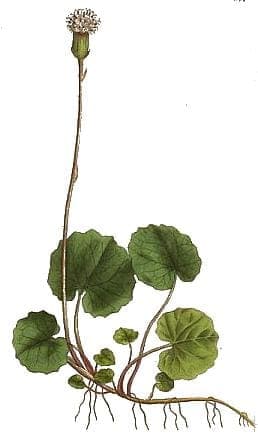
Wikimedia Commons / Public domain, via Wikimedia Commons
Alpine Coltsfoot: complete guide
Homogyne alpina
Want to see Alpine Coltsfoot: complete guide in your garden?
Full design in HD: €7.99
Look after your Alpine Coltsfoot with the GardenWorld app
Identify plants with your camera and get a care calendar with reminders for this plant.


Overview
Alpine Coltsfoot, scientifically known as Homogyne alpina, is a fascinating alpine specimen from the Asteraceae family. This compact shrub blooms from June to July with beautiful purple flowers and is endemic to European mountains, where it flourishes in shaded locations. With its distinctive rounded foliage and delicate flower buds, this plant is a gem for alpine flora enthusiasts.
Appearance and Bloom
Alpine Coltsfoot reaches heights of 15-25 cm and forms compact rosettes of kidney-shaped leaves that are glossy green. The foliage has a rough, lightly wrinkled surface and grows in attractive tiered layers. In June and July, purple daisy-like flowers emerge on thin stems above the leaf canopy. Each bloom measures approximately 2 cm in diameter and attracts bees and butterflies.
Ideal Location
This alpine plant thrives best in partial shade to full shade. In regions like the Netherlands, Germany, and Belgium, it grows well in locations receiving afternoon shade. Homogyne alpina is extremely cold-hardy and suitable for USDA zones 4-7. Plant it in rock gardens, alpine troughs, or at the edges of shaded borders.
Soil Composition
Alpine preferences of Alpine Coltsfoot require nutrient-poor, well-draining soil with a low pH (5.0-5.5). Sandy, loamy soils work best. Ensure good drainage by adding gravel or pumice. Avoid heavy clay soils and moisture accumulation. The plant tolerates nutrient-poor soils well and requires no additional feeding.
Watering
Homogyne alpina has moderate water needs. Keep soil consistently light moist but never waterlogged. In summer, extra water may be needed, particularly during dry spells. In winter, when the plant is dormant, reduce watering significantly. Avoid standing water that can cause root rot. Drip irrigation works well for this plant.
Free preview
Want to see Alpine Coltsfoot: complete guide in your garden? Make a free preview of your design.
Pruning and Maintenance
Alpine Coltsfoot requires minimal maintenance. Remove spent flowers regularly to encourage longer blooming. In spring, dead foliage can be removed. Thinning old leaves in the plant's center improves air circulation. Pruning is unnecessary as the plant naturally remains compact.
Maintenance Calendar
March: Initial inspection, removal of winter damage April-May: Growing season begins, water regularly June-July: Blooming time, perform deadheading August-September: Gradually reduce watering October-November: Winter preparation, no fertilizer December-February: Winter dormancy, minimal care
Winter Hardiness
Homogyne alpina is extremely cold-hardy and tolerates temperatures down to -25°C (USDA 4). Protection is not needed in standard winter conditions. In very wet winters, improved drainage helps. The plant has a deep root system that handles frost periods well.
Companion Plants
Alpine Coltsfoot combines beautifully with other alpine plants such as Sedum, Saxifraga, and Sempervivum. Also combine with low-growing grasses and other shade lovers. Plant spacing: 30 cm apart for group plantings. These combinations create a natural, rocky effect.
Closing
Alpine Coltsfoot is a wonderful addition to any alpine garden and rock garden. With minimal care and maximum charm, it offers years of beauty. Find more garden design inspiration on gardenworld.app, where you can design your dream garden. Combine this plant with other alpine specimens and create an authentic mountain-like atmosphere in your front yard via gardenworld.app.
Frequently asked questions about Alpine Coltsfoot
Is Alpine Coltsfoot winter hardy?
Homogyne alpina is extremely cold-hardy and tolerates temperatures down to -25°C (USDA 4). Protection is not needed in standard winter conditions.
When and how do you prune Alpine Coltsfoot?
Alpine Coltsfoot requires minimal maintenance. Remove spent flowers regularly to encourage longer blooming.
How much water does Alpine Coltsfoot need?
Homogyne alpina has moderate water needs. Keep soil consistently light moist but never waterlogged.
Where does Alpine Coltsfoot grow best?
This alpine plant thrives best in partial shade to full shade. In regions like the Netherlands, Germany, and Belgium, it grows well in locations receiving afternoon shade.
What soil does Alpine Coltsfoot need?
Alpine preferences of Alpine Coltsfoot require nutrient-poor, well-draining soil with a low pH (5.0-5.5). Sandy, loamy soils work best.

See it in your garden
See Alpine Coltsfoot in your garden
One photo of your garden and a few questions. You see the result in about a minute.
Try it with a photoIdentify this plant in your own garden. Identify a plant
Similar plants
Frikart's aster (Aster × frikartii): complete guide
Aster × frikartii
Everything about Frikart's aster (Aster × frikartii): position, soil, pruning and hardiness of the aster that flowers lavender-blue from July to October.
False aster (Boltonia asteroides): complete guide
Boltonia asteroides
False aster (Boltonia asteroides) covers itself in white daisies from late August to October. How to plant, cut back and combine this tough, tall perennial.
Daisy bush (Brachyglottis greyi): care guide
Brachyglottis greyi
Brachyglottis greyi, formerly Senecio greyi, pairs silver felted leaves with yellow summer daisies. Advice on position, soil, pruning, hardiness and companions.
