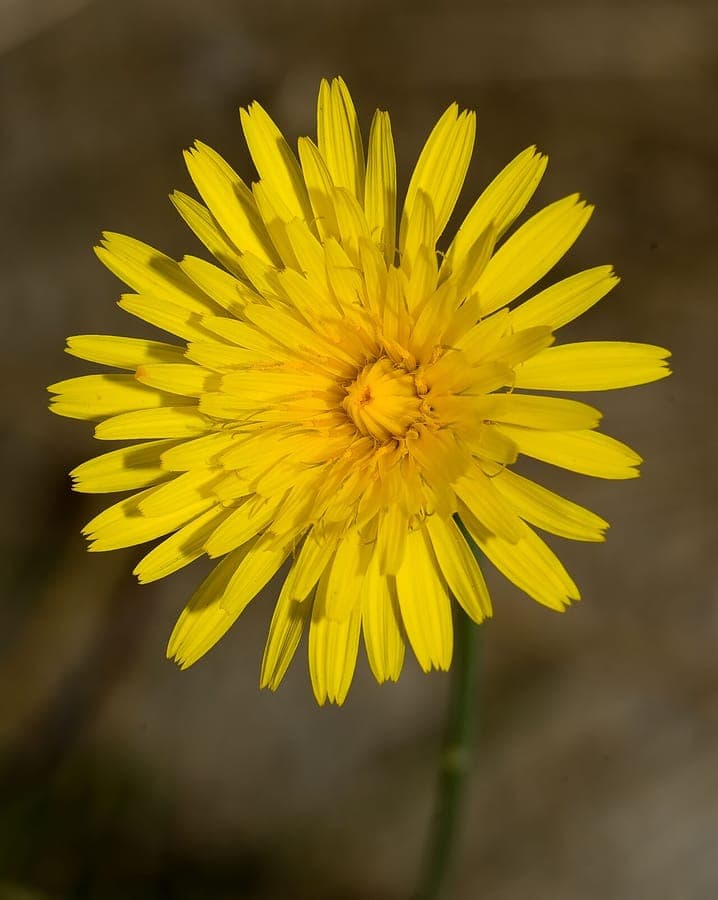
Alvesgaspar / CC BY-SA 3.0, via Wikimedia Commons
Common Hawkweed: complete guide
Hieracium lachenalii
Want to see Common Hawkweed: complete guide in your garden?
Full design in HD: €7.99
Look after your Common Hawkweed with the GardenWorld app
Identify plants with your camera and get a care calendar with reminders for this plant.


Overview
Common hawkweed (Hieracium lachenalii), also known as Lachenals hawkweed, is an elegant plant from the Asteraceae family. This versatile herb grows wild across central Europe and is renowned for its yellow flowers that provide an important food source for bees and other pollinators. The plant reaches heights of 30 to 60 centimetres and forms a neat, compact shrubby shape in the garden.
Appearance & bloom
Hierarcium lachenalii has a distinctive appearance with linear basal leaves. The flower heads appear in clusters at the top of stems with a lively yellow colour. Each flower is only a few centimetres in diameter, but they grow in groups that are visible from a distance. Blooming occurs from May to August, providing a long period of colour in your garden. The leaves have a rough texture and dark green colour that contrasts beautifully with the bright flowers.
Ideal location
Common hawkweed grows best in sunny locations receiving at least 6-8 hours of direct sunlight daily. The plant tolerates shade but blooms less prolifically in partial shade. Ensure adequate space around the plant for good air circulation. Plant the herb in groups of at least 3-5 plants for maximum garden effect. This plant thrives in warm, dry locations and is ideal for borders and rock gardens.
Soil
Hierarcium lachenalii is not fussy about soil conditions and grows well in lean to moderately nutrient-rich soil. Ensure excellent drainage to prevent root rot. Add sand or gravel to heavy clay soils to improve aeration. A pH value of 5.0 to 7.0 is ideal, but the plant tolerates slightly acidic soils. Weed regularly to reduce nutrient competition.
Watering
Once established, common hawkweed requires only moderate watering. Water only when the soil is completely dry, especially during dry periods. Avoid overwatering, particularly in winter. In wet, cold climates the plant can be susceptible to root rot. Mulching around the plant helps retain moisture and reduces watering frequency during the growing season.
Free preview
Want to see Common Hawkweed: complete guide in your garden? Make a free preview of your design.
Pruning
Pruning is optional for Hierarcium lachenalii. You can remove spent flower heads to encourage more blooms and keep the plant tidy. After flowering, stems can be cut back to 10 cm to encourage compact growth in the next season. Remove damaged or diseased stems immediately. Prune in early spring before new growth begins.
Maintenance calendar
In spring (March-April) prune to 10 cm height and fertilise. May-June: water regularly and remove spent flowers. July-August: maintain stable water levels. September-October: collect and sow new seeds. November-February: minimal maintenance required; water only during dry periods. Check regularly for pests and diseases.
Winter hardiness
Common hawkweed is extremely winter hardy and tolerates temperatures down to -25 degrees Celsius. The plant survives harsh winters without protection in most European regions. In very wet winters, mulch protection can prevent root rot. Young plants may benefit from winter protection in their first winter. The plant is suitable for gardens in zones 3-8.
Companion plants
Hierarcium lachenalii pairs excellently with other drought-tolerant plants. Combine with lavender, sage and thyme for a Mediterranean effect. Group with other Hieracium species for a natural look. The plant works well with rock garden plants such as stonecrop and sedum. Suitable as a specimen or in large groups.
Closing
Common hawkweed is a reliable, low-maintenance plant producing small yellow flowers throughout summer. Perfect for dry, sunny spots and lean soils where other plants struggle. Available at major garden centres in the UK. Visit gardenworld.app/en for more plant information and garden design inspiration. Discover how to integrate this herb into your front garden with our free design tool at gardenworld.app/en.
Frequently asked questions about Common Hawkweed
Is Common Hawkweed winter hardy?
Common hawkweed is extremely winter hardy and tolerates temperatures down to -25 degrees Celsius. The plant survives harsh winters without protection in most European regions.
When and how do you prune Common Hawkweed?
Pruning is optional for Hierarcium lachenalii. You can remove spent flower heads to encourage more blooms and keep the plant tidy.
How much water does Common Hawkweed need?
Once established, common hawkweed requires only moderate watering. Water only when the soil is completely dry, especially during dry periods.
Where does Common Hawkweed grow best?
Common hawkweed grows best in sunny locations receiving at least 6-8 hours of direct sunlight daily. The plant tolerates shade but blooms less prolifically in partial shade.
What soil does Common Hawkweed need?
Hierarcium lachenalii is not fussy about soil conditions and grows well in lean to moderately nutrient-rich soil. Ensure excellent drainage to prevent root rot.

See it in your garden
See Common Hawkweed in your garden
One photo of your garden and a few questions. You see the result in about a minute.
Try it with a photoIdentify this plant in your own garden. Identify a plant
Similar plants
Frikart's aster (Aster × frikartii): complete guide
Aster × frikartii
Everything about Frikart's aster (Aster × frikartii): position, soil, pruning and hardiness of the aster that flowers lavender-blue from July to October.
False aster (Boltonia asteroides): complete guide
Boltonia asteroides
False aster (Boltonia asteroides) covers itself in white daisies from late August to October. How to plant, cut back and combine this tough, tall perennial.
Daisy bush (Brachyglottis greyi): care guide
Brachyglottis greyi
Brachyglottis greyi, formerly Senecio greyi, pairs silver felted leaves with yellow summer daisies. Advice on position, soil, pruning, hardiness and companions.
