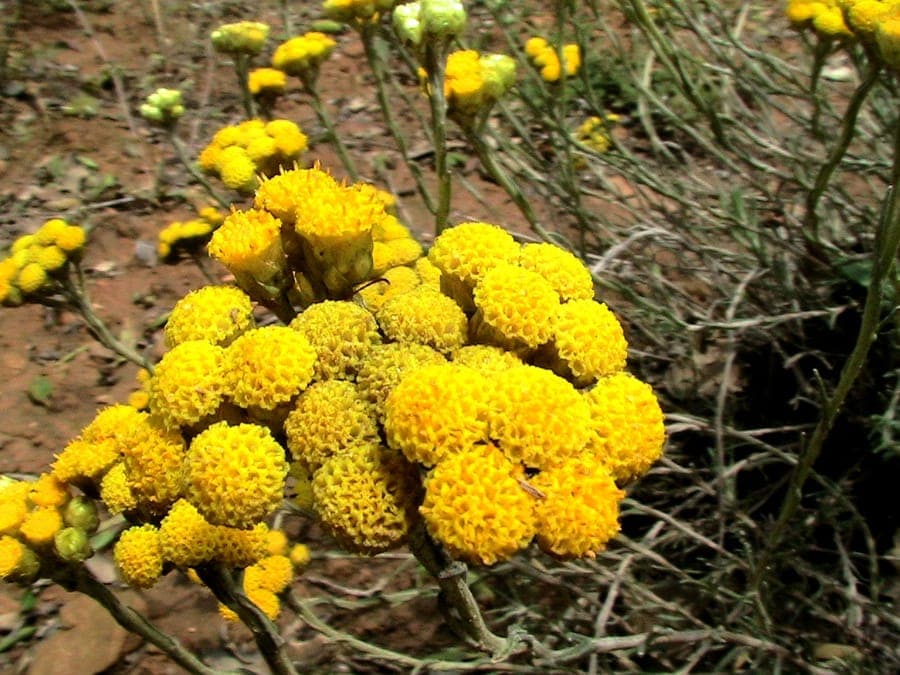
Isidre blanc / CC BY-SA 4.0, via Wikimedia Commons
Helichrysum Stoechas: complete guide
Helichrysum stoechas
Want to see Helichrysum Stoechas: complete guide in your garden?
Full design in HD: €7.99
Look after your Helichrysum Stoechas with the GardenWorld app
Identify plants with your camera and get a care calendar with reminders for this plant.


Overview
Helichrysum stoechas, also known as Mediterranean strawflower, yellow immortelle or goldenflower, is an ornamental shrub from the Asteraceae family. This plant originates from the western and central Mediterranean and grows wild on dry slopes, rocky areas and coasts. The plant is known for its everlasting flowers - they don't wilt after blooming but remain valuable for years. It is extremely drought-tolerant and ideal for Mediterranean gardens, rock gardens or green roofs. This is a perfect plant for gardeners with limited water supply.
Appearance and bloom
Helichrysum stoechas grows as a compact shrub 30-50 centimeters tall. The leaves are narrow, green to grey-green, aromatic and finely hairy. The flowers are bright yellow, button-shaped with papery flower petals. They appear in numerous small clusters from June to October. The flowers dry naturally on the plant but never lose their yellow color - perfect for cut flowers and dried bouquets. The plant gives the garden a subtropical appearance.
Ideal location
Helichrysum stoechas demands a very sunny spot. At least eight hours of direct sun per day is essential. This plant dislikes shade; it tolerates partial shade poorly. A dry, open position facing south or west is perfect. Protect against cold winds from the north. In shade it grows tall and weak.
Soil
Helichrysum stoechas is absolutely undemanding regarding soil. This plant thrives even in very poor, sandy or rocky soils. In heavy clay or nutrient-rich soils it actually grows worse. Excellent drainage is absolutely essential - add sand, perlite or gravel. pH around 7.0-7.5 is ideal. Nutrient-rich soils can cause excessive foliage.
Free preview
Want to see Helichrysum Stoechas: complete guide in your garden? Make a free preview of your design.
Watering
Once established practically no water is needed. This is an extremely drought-tolerant plant. Water only in extreme drought or right after planting for the first four weeks. Excessive water is harmful and causes root rot. In winter don't water if it's raining. This makes it ideal for xeriscape gardens.
Pruning
Pruning is not really necessary but can be done in spring for more compact growth. Pruning helps prevent the plant from becoming too large and straggly. Remove dead wood. After pruning the plant flowers more abundantly. Regular pinching of young plants promotes bushy formation.
Maintenance calendar
Spring: Plant specimens April-May, water for first two weeks. Water until May. Summer: Enjoy flowers June-October, no maintenance. Autumn: Flowering continues, bring indoors in cold regions. Winter: In frost move to cool greenhouse, minimal watering.
Winter hardiness
Helichrysum stoechas is not fully winter hardy. The plant dies when temperatures drop below -5 degrees Celsius. In mild regions it can overwinter outside but protection helps. Optimal is a cool, frost-free greenhouse (0-5 degrees Celsius). In northern regions overwinter indoors or protected greenhouse.
Companion plants
Helichrysum stoechas combines beautifully with other Mediterranean herbs and plants. Group with lavender, rosemary, thyme and sage. Also use with grey-leaved plants like artemisia and santolina. A perfect arrangement for dry gravel beds or green roofs. Combine with other drought-tolerant species.
Closing
Helichrysum stoechas is a must-have for dry, sunny garden spots. The everlasting yellow flowers bring color for years without maintenance. Undemanding, drought-tolerant and aromatic. Ideal for anyone with limited water. Perfect for Mediterranean garden design. Available at quality garden centers in spring. Once established it requires almost no further care.
Frequently asked questions about Helichrysum Stoechas
Is Helichrysum Stoechas winter hardy?
Helichrysum stoechas is not fully winter hardy. The plant dies when temperatures drop below -5 degrees Celsius.
When and how do you prune Helichrysum Stoechas?
Pruning is not really necessary but can be done in spring for more compact growth. Pruning helps prevent the plant from becoming too large and straggly.
How much water does Helichrysum Stoechas need?
Once established practically no water is needed. This is an extremely drought-tolerant plant.
Where does Helichrysum Stoechas grow best?
Helichrysum stoechas demands a very sunny spot. At least eight hours of direct sun per day is essential.
What soil does Helichrysum Stoechas need?
Helichrysum stoechas is absolutely undemanding regarding soil. This plant thrives even in very poor, sandy or rocky soils.

See it in your garden
See Helichrysum Stoechas in your garden
One photo of your garden and a few questions. You see the result in about a minute.
Try it with a photoIdentify this plant in your own garden. Identify a plant
Similar plants
Frikart's aster (Aster × frikartii): complete guide
Aster × frikartii
Everything about Frikart's aster (Aster × frikartii): position, soil, pruning and hardiness of the aster that flowers lavender-blue from July to October.
False aster (Boltonia asteroides): complete guide
Boltonia asteroides
False aster (Boltonia asteroides) covers itself in white daisies from late August to October. How to plant, cut back and combine this tough, tall perennial.
Daisy bush (Brachyglottis greyi): care guide
Brachyglottis greyi
Brachyglottis greyi, formerly Senecio greyi, pairs silver felted leaves with yellow summer daisies. Advice on position, soil, pruning, hardiness and companions.
