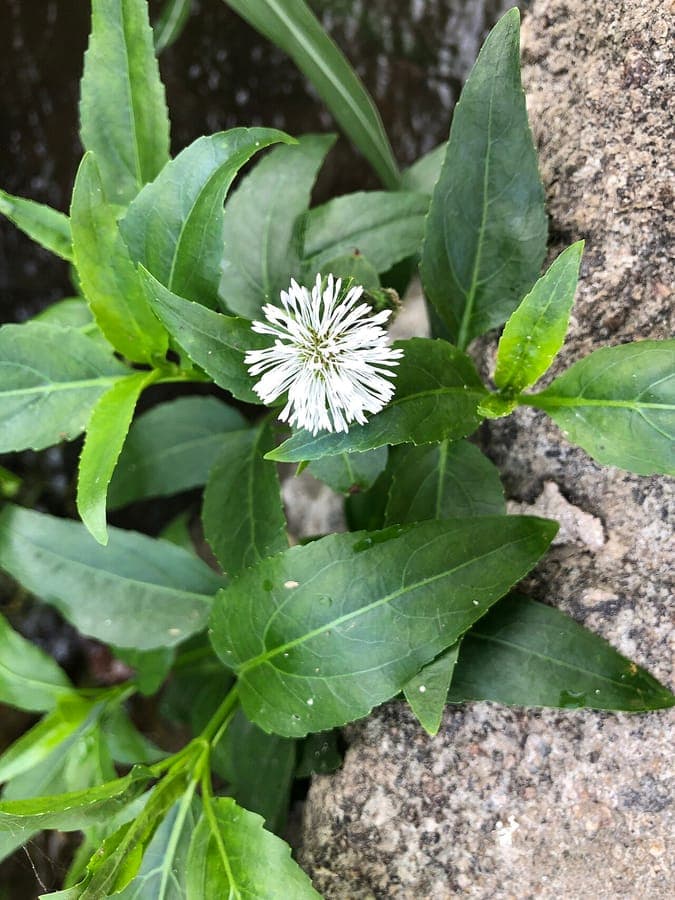
Cheng-Tao Lin / CC BY 4.0, via Wikimedia Commons
Gymnocoronis spilanthoides: complete guide
Gymnocoronis spilanthoides
Want to see Gymnocoronis spilanthoides: complete guide in your garden?
Full design in HD: €7.99
Look after your Gymnocoronis spilanthoides with the GardenWorld app
Identify plants with your camera and get a care calendar with reminders for this plant.


Overview
Gymnocoronis spilanthoides, also known as Senegal teaplant or Temple Plant, is a tropical aquatic plant from the Asteraceae family (daisy family). Native to Peru through Brazil and northern Argentina, this plant is especially popular in aquarium hobbies due to its elegant rooting and rapid growth. Gymnocoronis spilanthoides forms beautiful green stems with fine leaves and is ideal for aquascaping and semi-aquatic cultivation.
Appearance and bloom
Gymnocoronis spilanthoides grows as a slender aquatic plant with opposite, elliptical leaves. The leaves are 2-4 centimeters long, glossy green, and possess a delicate texture. The stems are reddish to greenish-red and can grow 30-40 centimeters tall.
The flowering is discrete: small yellow or whitish-yellow flowers appear in small flower heads along the stems. However, these flowers are not the main attraction - rather, it is the graceful leaves that distinguish this plant.
Ideal location
Gymnocoronis spilanthoides thrives best in well-lit aquariums receiving 8-12 hours of light daily. It is not overly demanding and can grow under moderate light, though growth will be slower. In aquariums, place it in the midground to background.
In warm, humid terrariums it also grows well as a semi-aquatic plant.
Soil
As an aquarium plant, Gymnocoronis spilanthoides grows in aquarium gravel or sand, though it can also float in water. For robust growth, nutrient-rich substrate is preferable. Add a layer of nutrient-enriched fertilizer sand beneath regular aquarium gravel.
The plant needs nutrition from the water column or through liquid fertilizers.
Watering
As an aquatic plant, Gymnocoronis spilanthoides requires constant water. In aquariums, water is constant. Water should be pure and moderately hard to soft (pH 5.0-7.5). Temperature should remain between 20-28 degrees Celsius.
For semi-aquatic cultivation in terrariums, keep soil constantly moist but not waterlogged.
Free preview
Want to see Gymnocoronis spilanthoides: complete guide in your garden? Make a free preview of your design.
Pruning
Gymnocoronis spilanthoides grows rapidly and benefits from regular pruning. Pinch stem tips to encourage branching. Remove lower leaves regularly to prevent algae from attaching to surfaces. The plant can be pruned quite drastically without damage.
Remove dead or yellow leaves promptly.
Maintenance calendar
Spring/Summer: Regular feeding, intense light, frequent pruning. Plant growth is at its best.
Fall: Gradually reduce feeding, pruning still beneficial.
Winter: Minimal feeding, possibly less light, slower growth.
Year-round: Check water parameters, perform regular water changes (25% weekly).
Winter hardiness
Gymnocoronis spilanthoides is not winter hardy in temperate zones. The plant is strictly tropical and requires water temperatures between 20-28 degrees Celsius. At temperatures below 15 degrees Celsius, growth will stop and the plant will deteriorate.
In permanent warmwater aquariums, it grows year-round.
Companion plants
Gymnocoronis spilanthoides grows well with other aquarium plants: Ludwigia, Rotala, Hemianthus, and small ferns. The slender growth fits perfectly in midground planting schemes.
The plant is safe for most fish and will not be eaten.
Closing thoughts
Gymnocoronis spilanthoides is a fantastic choice for aquascapers seeking slender, elegant aquarium plants. Rapid growth, beautiful leaves, and relative ease of cultivation make this plant an absolute favorite. Try this plant in your aquarium and enjoy its tropical beauty.
Available at specialized aquarium shops. Visit gardenworld.app for aquarium and aquatic garden designs. Consult gardenworld.app for professional aquarium styling.
Frequently asked questions about Gymnocoronis spilanthoides
Is Gymnocoronis spilanthoides winter hardy?
Gymnocoronis spilanthoides is not winter hardy in temperate zones. The plant is strictly tropical and requires water temperatures between 20-28 degrees Celsius.
When and how do you prune Gymnocoronis spilanthoides?
Gymnocoronis spilanthoides grows rapidly and benefits from regular pruning. Pinch stem tips to encourage branching.
How much water does Gymnocoronis spilanthoides need?
As an aquatic plant, Gymnocoronis spilanthoides requires constant water. In aquariums, water is constant.
Where does Gymnocoronis spilanthoides grow best?
Gymnocoronis spilanthoides thrives best in well-lit aquariums receiving 8-12 hours of light daily. It is not overly demanding and can grow under moderate light, though growth will be slower.
What soil does Gymnocoronis spilanthoides need?
As an aquarium plant, Gymnocoronis spilanthoides grows in aquarium gravel or sand, though it can also float in water. For robust growth, nutrient-rich substrate is preferable.

See it in your garden
See Gymnocoronis spilanthoides in your garden
One photo of your garden and a few questions. You see the result in about a minute.
Try it with a photoIdentify this plant in your own garden. Identify a plant
Similar plants
Frikart's aster (Aster × frikartii): complete guide
Aster × frikartii
Everything about Frikart's aster (Aster × frikartii): position, soil, pruning and hardiness of the aster that flowers lavender-blue from July to October.
False aster (Boltonia asteroides): complete guide
Boltonia asteroides
False aster (Boltonia asteroides) covers itself in white daisies from late August to October. How to plant, cut back and combine this tough, tall perennial.
Daisy bush (Brachyglottis greyi): care guide
Brachyglottis greyi
Brachyglottis greyi, formerly Senecio greyi, pairs silver felted leaves with yellow summer daisies. Advice on position, soil, pruning, hardiness and companions.
