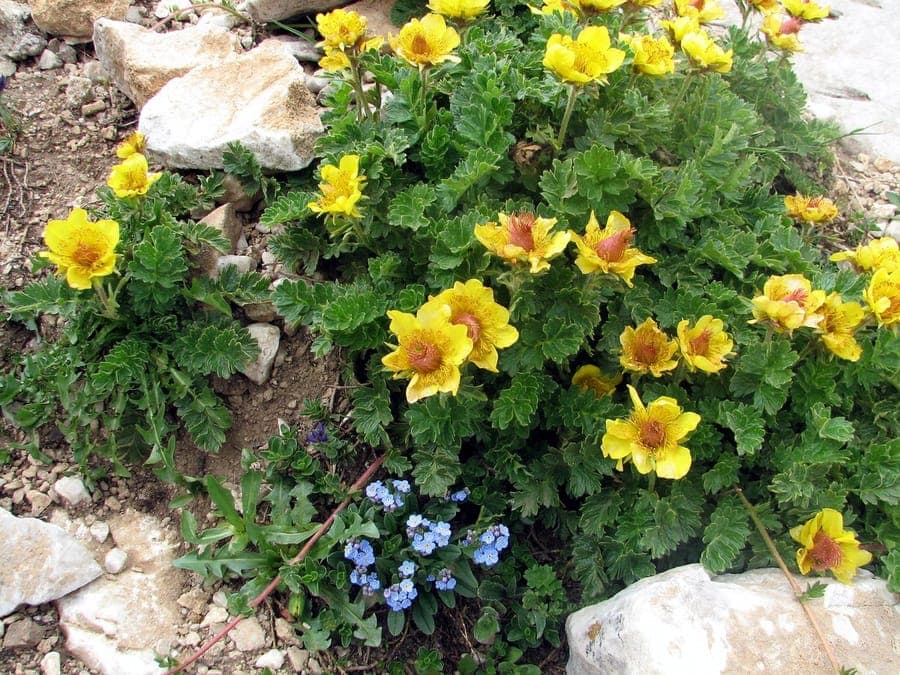
Sonja Kostevc / CC BY 2.5 si, via Wikimedia Commons
Geum reptans: complete guide
Geum reptans
Want to see Geum reptans: complete guide in your garden?
Full design in HD: €7.99
Look after your Geum reptans with the GardenWorld app
Identify plants with your camera and get a care calendar with reminders for this plant.


Geum reptans: Complete Guide
Overview
Geum reptans, the creeping avens, is an elegant alpine plant from the Rosaceae (rose family). This low-growing specimen is native to European mountain regions and is known for its reddish-orange to yellow flowers in summer. This is an ideal plant for alpine gardens, rock gardens, and mountain terraces.
This plant provides seasonal interest with delicate flowers and decorative seed heads. At gardenworld.app, we help you integrate this alpine gem into your garden design.
Appearance and bloom
Geum reptans forms a low, creeping mat approximately 10-15 centimeters tall. The plant has elegant pinnate leaves, deeply lobed and interesting in form, grouped in rosettes.
In July and August, thin flower stems rise above the foliage, each bearing a single yellow to orange-yellow flower. The flowers are five-petaled and characteristic of the Rosaceae with golden yellow color.
After flowering, very decorative, deep-red seed heads develop with long hairy appendages. These seed heads remain interesting for weeks and attract bird seed dispersers.
A unique feature is the creeping growth with elongated runners forming new plantlets, creating established colonies.
Ideal location
Geum reptans requires full sun to partial shade, at least four to six hours of direct sunlight. The plant grows well in lightly shaded spots, especially in very warm climates.
Select very well-drained locations on rocky ground, alpine troughs, or stone walls. The plant is very compact and perfect for rock gardens, alpine displays, and mountain terraces. Protection from strong wind is beneficial.
Soil
Geum reptans thrives in very well-draining soils. The plant prefers gritty to sandy soils, virtually dry but not too poor. A pH of 6.0 to 7.5 is ideal.
Organic matter should be minimal. This plant grows best in poor, dry soils like those found in mountain regions.
Free preview
Want to see Geum reptans: complete guide in your garden? Make a free preview of your design.
Watering
Geum reptans requires minimal watering once established. During the first growing season, water to encourage establishment, then virtually no water needed.
Even when in containers, minimal watering. This plant is very drought-tolerant and excessive water can cause root rot.
Pruning
Geum reptans requires practically no pruning. Remove only dead leaves or damaged parts. Allow runners to grow if you want them to spread.
Maintenance calendar
Spring (March-May): Plant begins growing. Minimal water. Preparation for blooming.
Summer (June-August): Bloom period. Very minimal maintenance. Enjoy flowers and seed heads.
Autumn (September-October): Plant remains green. Minimal maintenance.
Winter (November-February): Plant remains growing. Very minimal maintenance. Winter protection in very cold climates.
Winter hardiness
Geum reptans is very cold-hardy, tolerating temperatures down to -20 degrees Celsius or lower. The plant is adapted to alpine winters.
Companion plants
Geum reptans combines beautifully with other alpine species:
- Silene acaulis (Moss Campion): Pink flowers, very compact
- Sedum: Diverse colors, similar dry preference
- Saxifraga: Diverse forms and colors, alpine-lover
- Armeria: Pink pompoms, compact growth
- Phlox subulata: Pink or purple mini-flowers
Closing thoughts
Geum reptans is an unparalleled choice for alpine gardeners. This elegant plant offers two seasons of interest: summer flowers and decorative seed heads.
Gardenworld.app can help you integrate this alpine specimen into a compelling rock garden design. Design your alpine garden today!
Want more information? Visit gardenworld.app/en for personalized garden advice!
Frequently asked questions about Geum reptans
Is Geum reptans winter hardy?
Geum reptans is very cold-hardy, tolerating temperatures down to -20 degrees Celsius or lower. The plant is adapted to alpine winters.
When and how do you prune Geum reptans?
Geum reptans requires practically no pruning. Remove only dead leaves or damaged parts.
How much water does Geum reptans need?
Geum reptans requires minimal watering once established. During the first growing season, water to encourage establishment, then virtually no water needed.
Where does Geum reptans grow best?
Geum reptans requires full sun to partial shade, at least four to six hours of direct sunlight. The plant grows well in lightly shaded spots, especially in very warm climates.
What soil does Geum reptans need?
Geum reptans thrives in very well-draining soils. The plant prefers gritty to sandy soils, virtually dry but not too poor.

See it in your garden
See Geum reptans in your garden
One photo of your garden and a few questions. You see the result in about a minute.
Try it with a photoIdentify this plant in your own garden. Identify a plant
Similar plants
New Zealand bur (Acaena microphylla): care guide
Acaena microphylla
Acaena microphylla forms a low, bronze-green carpet with red spiny burs in summer. Advice on position, soil, trimming, hardiness and keeping its spread in check.
Apple serviceberry: complete guide
Amelanchier × grandiflora
Everything about apple serviceberry (Amelanchier × grandiflora): white April flowers, edible berries, autumn colour, position, pruning and cultivars such as 'Ballerina'.
Dwarf goat's beard (Aruncus aethusifolius): complete guide
Aruncus aethusifolius
Everything about dwarf goat's beard (Aruncus aethusifolius): position, soil, watering, pruning and hardiness. A compact perennial with lacy leaves for shade and rock gardens.
