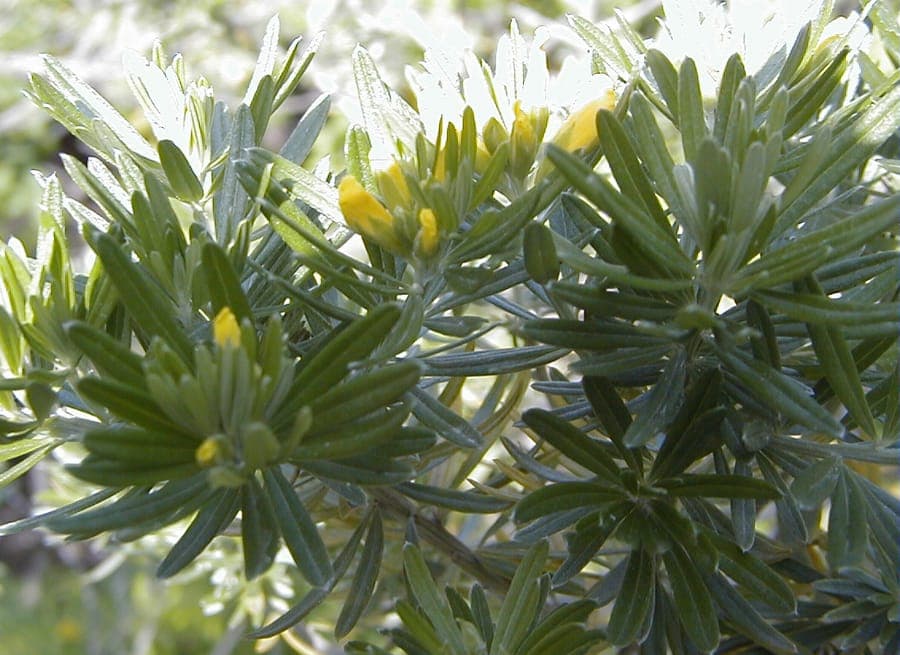
A. Barra / CC BY 3.0, via Wikimedia Commons
Genista linifolia: complete guide to the needle-leaf broom
Genista linifolia
Want to see Genista linifolia: complete guide to the needle-leaf broom in your garden?
Full design in HD: €7.99
Look after your Genista linifolia with the GardenWorld app
Identify plants with your camera and get a care calendar with reminders for this plant.


Overview
The needle-leaf broom (Genista linifolia) is an elegant Mediterranean shrub originating from North Africa and Southern Europe. This plant is known for its very thin, needle-like leaves and its abundance of golden-yellow flowers in spring. While not all Genistas are hardy, linifolia is one of the better choices for temperate climates.
This little plant is ideal for garden owners who want to create a sun-drenched garden feel without being entirely dependent on exotics.
Appearance and bloom
Genista linifolia grows into a compact, shrubby plant of 1-2 meters tall. The plant has very characteristic thin, needle-like leaves that provide minimal leaf area, making it exceptionally drought-tolerant.
The flowers are small, golden-yellow and very numerous. They grow in short, dense clusters on the branches and appear in April and May. The overall effect creates a spectacular golden-yellow mass visible from afar. After flowering, small brown seed pods form.
Ideal location
The needle-leaf broom wants a place with full sun on well-drained, preferably dry soil. Choose a sunny, windy spot, especially at the foot of a south-facing wall. This plant grows naturally in very dry Mediterranean mountain terrain.
The Netherlands and Belgium can be too damp, but in the warmest spots (probably against a south wall) it can grow fine. France and Southern Germany are ideal.
Soil
The needle-leaf broom makes minimal demands on soil. In fact, it actually grows better in poor, dry soils. Sandy, gravelly and even stony soils are perfect. Heavy clay soils without good drainage are fatal.
The pH should be slightly acidic (5.5-6.5). Don't add extra nutrients; this plant grows naturally in very nutrient-poor terrain.
Watering
Once established (after the first growing season) this plant needs almost no water. In very dry periods you may water, but this is more of a gift than a necessity. The plant is extremely drought-tolerant.
Do take care during establishment in the first season: water regularly for the first two months to develop the root system. After that you can stop.
Free preview
Want to see Genista linifolia: complete guide to the needle-leaf broom in your garden? Make a free preview of your design.
Pruning
Prune after flowering (May-June) for a neat shape. Remove about one third of the branch length. This stimulates dense growth and a neater appearance. Avoid severe pruning on old wood.
Use sharp shears and make clean cuts. Pruned branches typically heal well.
Maintenance calendar
Spring (March-May): Flowering. Feed with phosphate-rich fertilizer after blooming. Prune after bloom.
Summer (June-August): Minimal care. Water only in extreme drought.
Autumn (September-October): Preparation for winter. Check drainage.
Winter (November-February): Protect from frost in cold climates. Minimal watering.
Winter hardiness
Genista linifolia is moderately hardy in temperate European climates. At a sheltered, warm spot (against a south wall) it can tolerate down to -10 degrees. In harsher areas it will be damaged or killed by frost.
In the Netherlands and Belgium protection is strongly recommended: winter fleece or protective netting around the plant. France and Southern Germany offer the best chances.
Companion plants
Nice planting partners are:
- Cistus (rock rose): Equal drought preference, white flowers
- Lavandula (lavender): Purple flowers, equal growth preference
- Rosmarinus (rosemary): Blue flowers, equal maintenance standards
- Helianthemum: Small rock flower, colorful blooms
Combine in a Mediterranean motif with other drought lovers.
Conclusion
Genista linifolia is an elegant choice for garden owners who want Mediterranean character without continuous watering. Ensure full sun, perfect drainage, and minimal maintenance. In southern regions this is an absolute tip.
Via gardenworld.app you can place this elegant plant perfectly in a sun-drenched front garden. Order from local garden centers or specialized nurseries in warm regions.
GardenWorld guides you through the perfect integration of this Mediterranean pearl.
Frequently asked questions about Genista linifolia
Is Genista linifolia winter hardy?
Genista linifolia is moderately hardy in temperate European climates. At a sheltered, warm spot (against a south wall) it can tolerate down to -10 degrees.
When and how do you prune Genista linifolia?
Prune after flowering (May-June) for a neat shape. Remove about one third of the branch length.
How much water does Genista linifolia need?
Once established (after the first growing season) this plant needs almost no water. In very dry periods you may water, but this is more of a gift than a necessity.
Where does Genista linifolia grow best?
The needle-leaf broom wants a place with full sun on well-drained, preferably dry soil. Choose a sunny, windy spot, especially at the foot of a south-facing wall.
What soil does Genista linifolia need?
The needle-leaf broom makes minimal demands on soil. In fact, it actually grows better in poor, dry soils.

See it in your garden
See Genista linifolia in your garden
One photo of your garden and a few questions. You see the result in about a minute.
Try it with a photoIdentify this plant in your own garden. Identify a plant
Similar plants
Pineapple broom (Argyrocytisus battandieri): complete guide
Argyrocytisus battandieri
Everything about pineapple broom (Argyrocytisus battandieri), the Moroccan wall shrub with silver leaves and pineapple-scented flowers: site, pruning and hardiness.
Blue false indigo: complete guide
Baptisia australis
Everything about blue false indigo (Baptisia australis): position, soil, watering, cutting back, hardiness and toxicity. A long-lived prairie perennial with indigo flowers.
Warminster broom (Cytisus × praecox): complete guide
Cytisus × praecox
Everything about Warminster broom (Cytisus × praecox): position, poor soil, pruning after flowering, hardiness and what you need to know about its toxicity.
