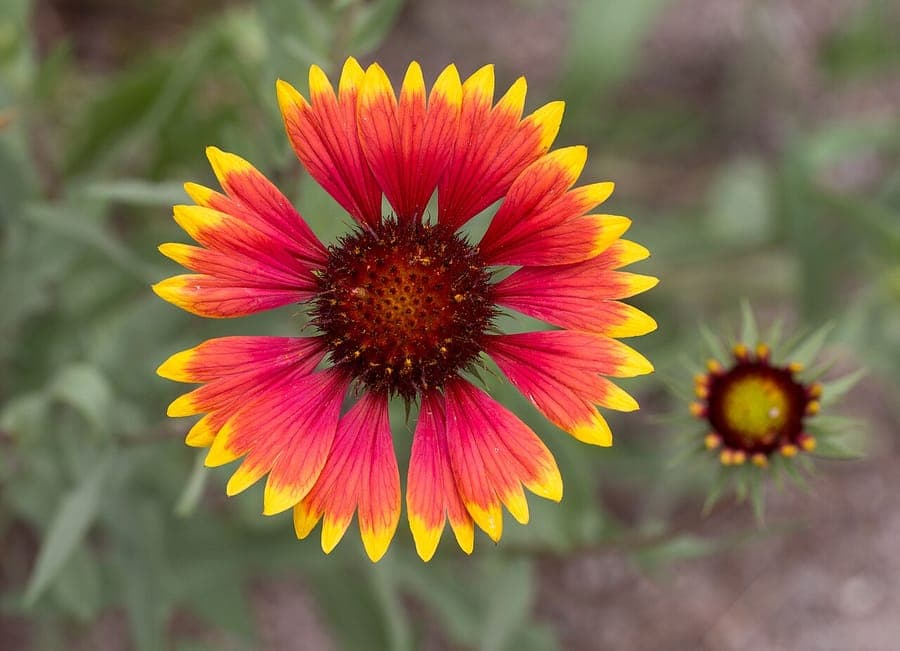
Rhododendrites / CC BY-SA 4.0, via Wikimedia Commons
Gaillardia pulchella: complete guide
Gaillardia pulchella
Want to see Gaillardia pulchella: complete guide in your garden?
Full design in HD: €7.99
Look after your Gaillardia pulchella with the GardenWorld app
Identify plants with your camera and get a care calendar with reminders for this plant.


Overview
Gaillardia pulchella, commonly known as rose-ring blanket flower or firewheel, is a stunning annual native to the American Southwest. This vibrant flower is prized for its striking combination of fiery red and gold petals, making it a favorite among gardeners seeking colorful summer blooms. With its compact growth habit and prolific flowering, Gaillardia pulchella is an excellent choice for borders, containers, and wildflower meadows.
Because Gaillardia pulchella is exceptionally easy to grow and requires minimal care, it is perfect for beginning gardeners. The plant thrives in sunny locations and performs well even in poor soil conditions.
Appearance and Bloom
Gaillardia pulchella grows as a compact plant, typically reaching 30 to 60 cm in height. The flowers are distinctive, featuring double and single blooms in shades of red, orange, and yellow. Many varieties display a characteristic ring of contrasting colors, creating a striking two-tone effect.
The plant produces flowers continuously from June through October, with peak bloom during the summer months. Each flower lasts several weeks, providing extended color in the garden. The finely dissected foliage is soft green and gives the plant an airy, light appearance.
Ideal Location
Gaillardia pulchella performs best in a sunny location receiving at least six hours of direct sunlight daily. While the plant tolerates partial shade, flowering will be less abundant. Full sun ensures the most vibrant colors and densest blooms.
This plant is remarkably wind-tolerant, making it suitable for exposed garden locations. It also handles urban climates and pollution well, further expanding its utility in various garden settings.
Soil
This plant prefers well-draining, loose soil and is not fussy about composition. Sandy or loamy soil works excellently. The pH preference is neutral to slightly alkaline, ranging from 7.0 to 8.5.
Amend the planting hole with compost to improve drainage and soil fertility. Avoid heavy clay soils and ensure water does not pool around the roots, as waterlogging causes root rot.
Free preview
Want to see Gaillardia pulchella: complete guide in your garden? Make a free preview of your design.
Watering
Once established, Gaillardia pulchella is extremely drought-tolerant. During the first four weeks after planting, water regularly but moderately. Afterwards, water only during extended dry periods.
This plant actually prefers dryness to wetness. If you are unsure whether to water, err on the side of restraint. Overwatering is one of the most common reasons this plant fails.
Pruning
Dedheading, or removing spent flowers, stimulates continuous blooming and is highly recommended. Pinch off faded blooms regularly throughout the growing season.
In September, cut the plant back to approximately 15 cm in height. This encourages denser growth in the following year.
Maintenance Calendar
April: Plant seedlings or direct sow seeds after frost danger passes. May-June: Water regularly during dry spells. July-October: Deadhead spent flowers and enjoy abundant blooms. November: Cut back plant; cease feeding.
Winter Hardiness
Gaillardia pulchella is an annual and will not survive winter outdoors in northern climates. To enjoy the plant again next year, collect seed or purchase new seed. Store seed in a cool, dry location until the following spring.
Companion Plants
Gaillardia pulchella combines beautifully with other summer bloomers. Try planting with salvias, sunflowers, and coneflowers. These plants share similar preferences for sun and drought tolerance.
In borders, pair with ornamental grasses and lavender. This combination creates texture and movement that enhances the overall garden composition.
Conclusion
Gaillardia pulchella is an excellent choice for gardeners seeking colorful, low-maintenance summer blooms. With minimal effort, you will enjoy months of vibrant color. Purchase seeds or plants from local garden centers. For more gardening inspiration, visit gardenworld.app to discover plant combinations and design ideas. Explore gardenworld.app for additional garden planning resources and seasonal guidance.
Frequently asked questions about Gaillardia pulchella
Is Gaillardia pulchella winter hardy?
Gaillardia pulchella is an annual and will not survive winter outdoors in northern climates. To enjoy the plant again next year, collect seed or purchase new seed.
When and how do you prune Gaillardia pulchella?
Dedheading, or removing spent flowers, stimulates continuous blooming and is highly recommended. Pinch off faded blooms regularly throughout the growing season.
How much water does Gaillardia pulchella need?
Once established, Gaillardia pulchella is extremely drought-tolerant. During the first four weeks after planting, water regularly but moderately.
Where does Gaillardia pulchella grow best?
Gaillardia pulchella performs best in a sunny location receiving at least six hours of direct sunlight daily. While the plant tolerates partial shade, flowering will be less abundant.
What soil does Gaillardia pulchella need?
This plant prefers well-draining, loose soil and is not fussy about composition. Sandy or loamy soil works excellently.

See it in your garden
See Gaillardia pulchella in your garden
One photo of your garden and a few questions. You see the result in about a minute.
Try it with a photoIdentify this plant in your own garden. Identify a plant
Similar plants
Frikart's aster (Aster × frikartii): complete guide
Aster × frikartii
Everything about Frikart's aster (Aster × frikartii): position, soil, pruning and hardiness of the aster that flowers lavender-blue from July to October.
False aster (Boltonia asteroides): complete guide
Boltonia asteroides
False aster (Boltonia asteroides) covers itself in white daisies from late August to October. How to plant, cut back and combine this tough, tall perennial.
Daisy bush (Brachyglottis greyi): care guide
Brachyglottis greyi
Brachyglottis greyi, formerly Senecio greyi, pairs silver felted leaves with yellow summer daisies. Advice on position, soil, pruning, hardiness and companions.
