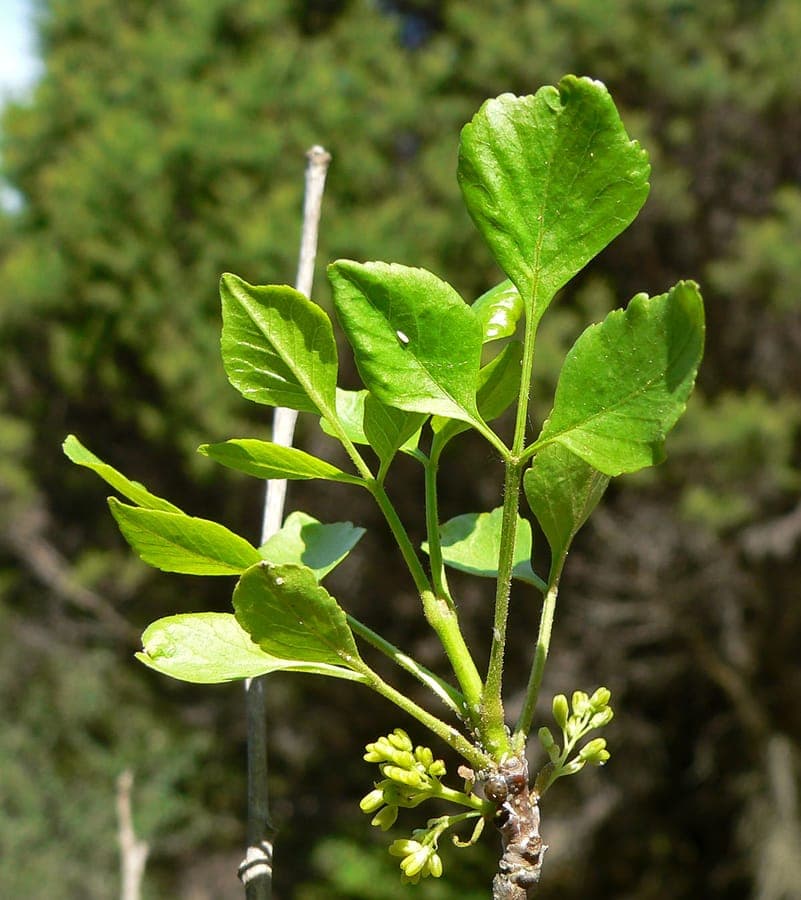
Stan Shebs / CC BY-SA 3.0, via Wikimedia Commons
Fraxinus anomala: complete guide
Fraxinus anomala
Want to see Fraxinus anomala: complete guide in your garden?
Full design in HD: €7.99
Look after your Fraxinus anomala with the GardenWorld app
Identify plants with your camera and get a care calendar with reminders for this plant.


Overview
Fraxinus anomala, commonly known as Utah ash or Dwarf ash, is a distinctive North American small tree native to western mountain regions. This deciduous tree is particularly notable for its unique simple (rather than compound) leaves, instantly distinguishing it from its ash relatives. The tree grows as a multi-stemmed shrub or small tree, offering seasonal interest combined with remarkable drought tolerance.
Appearance and Bloom
Fraxinus anomala grows as a multi-stemmed shrub to small tree, typically reaching 4-8 meters tall. The most striking characteristic is that this ash bears simple (undivided) leaves rather than the typical compound leaf pattern of other ash species. The leaflets are small, lanceolate, and green, darkening through summer. Autumn foliage turns yellow to yellow-orange. Small, inconspicuous yellow flowers appear but contribute little ornamentally. Autumn fruits are small wings (samarae) turning red-brown.
Ideal Location
Full sun is ideal for Utah ash, though it tolerates light shade well. Provide at least four hours of direct daily sunlight for optimal growth and color development. This tree proves highly adaptive and thrives in windy, mountainous locations. For best results, position in sunny, well-ventilated locations that maximize air circulation.
Soil
Fraxinus anomala grows on diverse soil types from sandy to clay-based soils, provided drainage remains adequate. pH can be neutral to slightly alkaline (6.5-9.0). This tree actually prefers dry to semi-dry soils and grows slower in rich, moist conditions. Compacted soils can be gently loosened; root growth improves considerably with such amendments.
Watering
Once established, Utah ash becomes remarkably drought-tolerant and shines on poor, dry sites. During the first two seasons, water regularly for root development. Subsequently, minimal supplemental watering becomes necessary. During extremely dry years, occasional summer watering (July-August) helps, but proves non-essential. Young trees grow faster with moderate moisture availability.
Free preview
Want to see Fraxinus anomala: complete guide in your garden? Make a free preview of your design.
Pruning
Minimal pruning needed. Dead or damaged branches can be removed. For forming a single trunk, lower side branches can be removed during youth. Multi-stemmed growth is actually more natural and recommended. Major pruning wounds heal reasonably well; ensure clean cuts.
Maintenance Calendar
Spring (March-May): Inspect for diseases and pests, water if soil becomes dry. Summer (June-August): Minimal maintenance required, water only during drought years. Fall (September-October): Enjoy autumn colors, no maintenance needed. Winter (November-February): Minimal care, appreciate winter silhouette.
Winter Hardiness
Fraxinus anomala is frost-hardy to approximately -20 degrees Celsius, making it suitable for USDA zones 5-9. In extremely cold zones, young plants may require protection, though mature trees tolerate severe winters. This tree thrives in hot, dry climates as well. Heavy snow loads can persist on the many fine branches.
Companion Plants
Utah ash combines beautifully with other drought-tolerant tree species: Ponderosa Pine, Douglas Fir, other Fraxinus species, Quercus (oaks), Juniperus (junipers), and understory plantings of Mahonia and Berberis. These combinations create authentic western mountain forest landscapes.
Closing Thoughts
Fraxinus anomala offers a unique choice for those seeking a smaller, drought-tolerant tree combining interesting foliage and seasonal color. With its adaptability and minimal maintenance requirements, this tree transforms difficult, dry garden spaces into attractive landscape features. At gardenworld.app, you can perfectly integrate this tree into xeriscaping designs. For anyone seeking sustainable tree accents, this proves an excellent choice. At gardenworld.app, we help you realize perfect tree combinations that enhance your outdoor environment.
Frequently asked questions about Fraxinus anomala
Is Fraxinus anomala winter hardy?
Fraxinus anomala is frost-hardy to approximately -20 degrees Celsius, making it suitable for USDA zones 5-9. In extremely cold zones, young plants may require protection, though mature trees tolerate severe winters.
When and how do you prune Fraxinus anomala?
Minimal pruning needed. Dead or damaged branches can be removed.
How much water does Fraxinus anomala need?
Once established, Utah ash becomes remarkably drought-tolerant and shines on poor, dry sites. During the first two seasons, water regularly for root development.
Where does Fraxinus anomala grow best?
Full sun is ideal for Utah ash, though it tolerates light shade well. Provide at least four hours of direct daily sunlight for optimal growth and color development.
What soil does Fraxinus anomala need?
Fraxinus anomala grows on diverse soil types from sandy to clay-based soils, provided drainage remains adequate. pH can be neutral to slightly alkaline (6.5-9.0). This tree actually prefers dry to semi-dry soils and grows slower in rich, moist conditions.

See it in your garden
See Fraxinus anomala in your garden
One photo of your garden and a few questions. You see the result in about a minute.
Try it with a photoIdentify this plant in your own garden. Identify a plant
Similar plants
Border forsythia: complete guide
Forsythia × intermedia
Everything about border forsythia (Forsythia × intermedia): yellow flowers in March, position, soil, pruning straight after flowering and the best cultivars like 'Lynwood'.
Delavay osmanthus: growing Osmanthus delavayi
Osmanthus delavayi
Everything about Osmanthus delavayi, the Delavay osmanthus: a compact evergreen with fragrant white spring flowers. Position, soil, pruning after flowering and hardiness.
Burkwood osmanthus (Osmanthus × burkwoodii): complete guide
Osmanthus × burkwoodii
Everything about Burkwood osmanthus (Osmanthus × burkwoodii), the fragrant evergreen shrub: position, soil, when to prune, hedging and hardiness.
