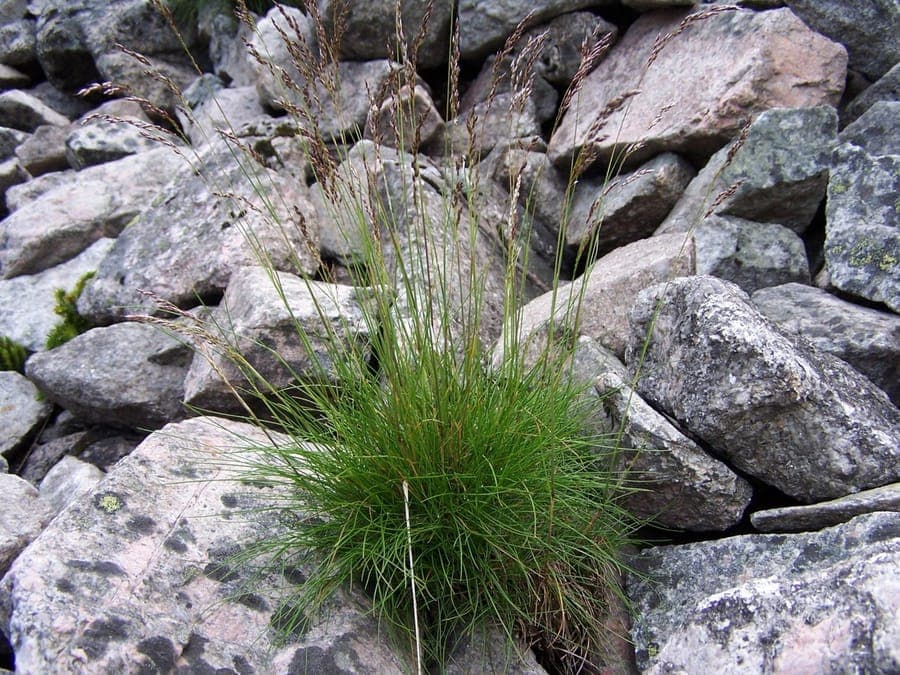
Jerzy Opioła / CC BY-SA 4.0, via Wikimedia Commons
Variegated fescue: complete guide
Festuca varia
Want to see Variegated fescue: complete guide in your garden?
Full design in HD: €7.99
Look after your Variegated fescue with the GardenWorld app
Identify plants with your camera and get a care calendar with reminders for this plant.


Variegated fescue, scientifically Festuca varia, is a European alpine grass from the Poaceae family distributed across European mountains through to the Caucasus. This compact grass species is valued for its dense growth habit, blue-green foliage, and exceptional winter hardiness. The grass grows in small, tight bunches reaching just 15 to 30 centimeters tall, making it perfect for alpine rockeries, stone steps, and rock gardens in mountainous regions.
Variegated fescue is a true alpine plant capable of surviving temperatures to minus 40 degrees Celsius. The species is perfectly adapted to cold, dry alpine environments and naturally inhabits rocky mountain meadows. From June through August, the grass produces yellowish-brown flowers that are subtle yet elegant. This alpine grass fascinates collectors of rock gardens and alpine plant collections.
Appearance
Variegated fescue grows in extremely compact, dense bunches with fine, linear foliage. The leaves display blue-green to grey-green coloration and form stiff, upright clumps. The plant reaches only 15 to 30 centimeters in height, making it highly suitable for rock gardens. Flower panicles appear in June-July and are yellow to yellow-brown, very compact in appearance. The entire plant presents a neat, orderly appearance.
Ideal location and light
Variegated fescue performs best in full sun within alpine settings. Position the grass where it receives at least 6 to 8 hours of direct sunlight daily. The plant tolerates shade poorly and becomes sparse in partial shade. This is a true alpine plant preferring open, sunny, windy positions. More sunlight produces more compact, attractive growth.
Soil and nutrition
Variegated fescue grows in poor, stone and gravel-rich soils just like its natural alpine habitat. Use very well-draining potting soil with plenty of sand, gravel, and small stones. The plant thrives in acidic to neutral soils with pH 4.5 to 5.0. Feeding is almost unnecessary; poor soil is actually preferred. Heavy soils must be substantially amended with gravel.
Free preview
Want to see Variegated fescue: complete guide in your garden? Make a free preview of your design.
Watering
Variegated fescue is extremely drought tolerant. Water only minimally during the growth phase. The plant actually performs better in relatively dry conditions. Overwatering can lead to root rot. In alpine habitats, the grass receives only seasonal rains, so moisture excess is undesirable. Ensure potting soil drains completely.
Pruning and maintenance
Variegated fescue requires virtually no maintenance. Remove dead leaf material very carefully. Pruning is unnecessary; the plant maintains its compact form automatically. The plant grows so slowly that practically no maintenance is needed except occasional removal of dead material.
Maintenance calendar
March-April: Provide minimal feeding or none at all. Water very carefully. May-July: Enjoy the flowers. Water very minimally. August-September: Plant remains highly decorative. No water needed. October-February: Plant dormancy. Do not water.
Winter hardiness
Variegated fescue ranks among the hardiest grasses, hardy in USDA zones 3 to 8, possibly even zone 2. The grass survives temperatures to minus 40 degrees Celsius. In mountain regions, no winter protection is required. This grass proves perfect for extremely cold regions.
Propagation
Variegated fescue can be carefully divided in spring. The plant grows very slowly, however, so division is not frequently needed. Seed propagation is possible but requires extremely patient work in cold, wet seed compost.
Companion plants
Variegated fescue combines beautifully with other alpine plants. Small Sedum species, alpine feather flowers, and small rock plants form attractive combinations. Saxifraga species, Armeria maritima, and small Dianthus work excellently. This grass belongs in rock gardens and alpine collections.
Conclusion
Variegated fescue represents an essential plant for anyone creating alpine and rock gardens in cold regions. With its compact form, exceptional winter hardiness, and minimal maintenance requirements, it proves perfect for mountain gardens. Available through specialized alpine plant nurseries throughout Europe and North America.
Frequently asked questions about Variegated fescue
Is Variegated fescue winter hardy?
Variegated fescue ranks among the hardiest grasses, hardy in USDA zones 3 to 8, possibly even zone 2. The grass survives temperatures to minus 40 degrees Celsius.
When and how do you prune Variegated fescue?
Variegated fescue requires virtually no maintenance. Remove dead leaf material very carefully.
How much water does Variegated fescue need?
Variegated fescue is extremely drought tolerant. Water only minimally during the growth phase.
Where does Variegated fescue grow best?
Variegated fescue performs best in full sun within alpine settings. Position the grass where it receives at least 6 to 8 hours of direct sunlight daily.
What soil does Variegated fescue need?
Variegated fescue grows in poor, stone and gravel-rich soils just like its natural alpine habitat. Use very well-draining potting soil with plenty of sand, gravel, and small stones.

See it in your garden
See Variegated fescue in your garden
One photo of your garden and a few questions. You see the result in about a minute.
Try it with a photoIdentify this plant in your own garden. Identify a plant
Similar plants
Pheasant's tail grass (Anemanthele lessoniana): a guide
Anemanthele lessoniana
Pheasant's tail grass (Anemanthele lessoniana) is an evergreen New Zealand grass with orange-streaked leaves and airy summer flower heads. Siting, soil, care and hardiness.
Korean feather reed grass (Calamagrostis brachytricha): guide
Calamagrostis brachytricha
Everything about Korean feather reed grass (Calamagrostis brachytricha): position, soil, cutting back and planting partners for its glistening autumn plumes.
Northern sea oats (Chasmanthium latifolium): growing guide
Chasmanthium latifolium
Northern sea oats (Chasmanthium latifolium) carries flat, dangling spikelets and thrives in part shade. Learn how to site, water, cut back and partner it.
