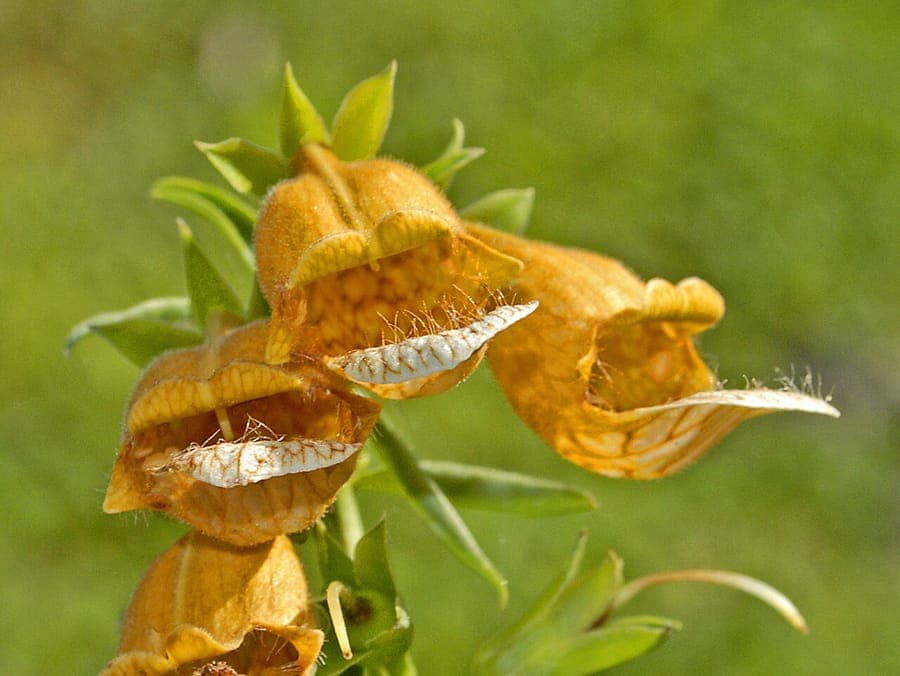
Hectonichus / CC BY-SA 3.0, via Wikimedia Commons
Smooth-leaved foxglove: complete guide
Digitalis laevigata
Want to see Smooth-leaved foxglove: complete guide in your garden?
Full design in HD: €7.99
Look after your Smooth-leaved foxglove with the GardenWorld app
Identify plants with your camera and get a care calendar with reminders for this plant.


Smooth-leaved foxglove (Digitalis laevigata) is an elegant, lesser-known foxglove species originating from Southeast Europe. This stately plant grows naturally in the Balkan region, primarily in woodlands, mountain slopes, and rocky outcrops. Unlike the far more popular Digitalis purpurea, this species has soft pale yellow flowers and relatively smooth leaves, giving rise to its botanical name.
Overview
Digitalis laevigata is a biennial or short-lived perennial plant from the Plantaginaceae family (formerly classified under Scrophulariaceae). Native to the Balkan Peninsula, this plant thrives in shade and partial shade situations where many other foxgloves struggle. The plant achieves moderate height and presents a more cautious, elegant appearance than its more famous relatives.
Appearance and Bloom
The plant grows upright, typically 50 to 100 centimeters tall, with thin, erect stems bearing leaves neatly positioned along them. Leaves are oblong-lanceolate, smooth (hence the name laevigata = smooth), green to grayish-green with subtle texture. Flowers appear in dense spikes, small to medium-sized, in pale yellow color. Each flower is tubular, about 2-3 centimeters long, arranged in a single flower spike. Blooming period runs from June to August in Europe.
Ideal Location
Smooth-leaved foxglove prefers partial shade to full shade. In direct sun, it may suffer scorching, especially where summers are hot. Choose locations under leafy trees or on the north side of structures where 2-4 hours of indirect light are available. The plant also thrives in woodland edge situations. Avoid dry spots; this plant prefers moist, shaded corners.
Soil
Soil should be fertile, rich in humus, and consistently moisture-retentive. Add abundant organic material before planting. pH can be slightly acidic to neutral (6.0-7.0). Heavy clay soils can be improved with compost and sand. Very fast-draining soils require more organic material or mulching. This plant grows better in richer soils than many other foxgloves.
Free preview
Want to see Smooth-leaved foxglove: complete guide in your garden? Make a free preview of your design.
Watering
Consistent moisture is essential. Water regularly, especially during warm periods. Mulch around the plant to help retain soil moisture. During dry summers, water several times weekly. Ensure water goes directly to soil, not leaves, to prevent fungal disease. Deep rooting helps tolerate drought once established, but regular watering promotes better blooming.
Pruning
Remove spent flowers to stimulate continued blooming. Cut back exhausted spikes just above the base. If the plant becomes too tall, gentle pruning in early season helps maintain compact form. No fertilizing usually needed, though feeding in spring helps growth. Digitalis can be long-lived; many gardeners grow new plants from seed.
Maintenance Calendar
Spring (March-May): New growth begins. Water regularly as temperature rises. Prune dead parts from previous year. Summer (June-August): Blooming occurs. Water when dry. Remove spent flowers. Autumn (September-October): Seed heads can remain for birds or seed collection. Reduce watering. Winter (November-February): Dormancy in temperate zones. Minimal care needed.
Winter Hardiness
Smooth-leaved foxglove is quite winter hardy and grows in USDA zones 4-8. In colder zones, shelter may help young plants overwinter. In Northern Europe (Netherlands, Belgium, France, Germany), it grows well as a hardy plant with light shelter where needed. Many garden centers in the region stock seed and plants.
Companion Plants
Smooth-leaved foxglove grows well in shaded gardens with other shade-loving plants. Combine with Hosta, Astilbe, ferns, Geranium, other woodland plants. In partial shade, it also grows with Heuchera, Carex, Tiarella. This combination creates a classic woodland appearance. On woodland garden margins, plant near other wildlife food sources.
Closing
Smooth-leaved foxglove is an elegant, underrated foxglove that adds value to shaded corners. With good moisture care and partial shade, you'll enjoy years of pale yellow blooms. This is the foxglove for gardeners seeking something more refined than the far more common species.
This plant represents the rich plant flora of Southeast Europe and brings elegance to woodland gardens where many other species struggle to thrive.
Frequently asked questions about Smooth-leaved foxglove
Is Smooth-leaved foxglove winter hardy?
Smooth-leaved foxglove is quite winter hardy and grows in USDA zones 4-8. In colder zones, shelter may help young plants overwinter.
When and how do you prune Smooth-leaved foxglove?
Remove spent flowers to stimulate continued blooming. Cut back exhausted spikes just above the base.
How much water does Smooth-leaved foxglove need?
Consistent moisture is essential. Water regularly, especially during warm periods.
Where does Smooth-leaved foxglove grow best?
Smooth-leaved foxglove prefers partial shade to full shade. In direct sun, it may suffer scorching, especially where summers are hot.
What soil does Smooth-leaved foxglove need?
Soil should be fertile, rich in humus, and consistently moisture-retentive. Add abundant organic material before planting. pH can be slightly acidic to neutral (6.0-7.0).

See it in your garden
See Smooth-leaved foxglove in your garden
One photo of your garden and a few questions. You see the result in about a minute.
Try it with a photoIdentify this plant in your own garden. Identify a plant
Similar plants
Summer snapdragon (Angelonia angustifolia): complete guide
Angelonia angustifolia
Everything about summer snapdragon (Angelonia angustifolia): position, soil, watering, pruning and overwintering this heat-loving summer flower with upright flower spikes.
Rose turtlehead (Chelone obliqua): complete guide
Chelone obliqua
Rose turtlehead (Chelone obliqua) flowers from late August to October with pink blooms shaped like a turtle's head. How to plant, prune and combine this perennial for damp soil.
Disc-leaved hebe: complete guide
Hebe pinguifolia
Everything about Hebe pinguifolia, the blue-grey disc-leaved hebe: position, soil, pruning, winter hardiness and good companions for borders, rockeries and pots.
