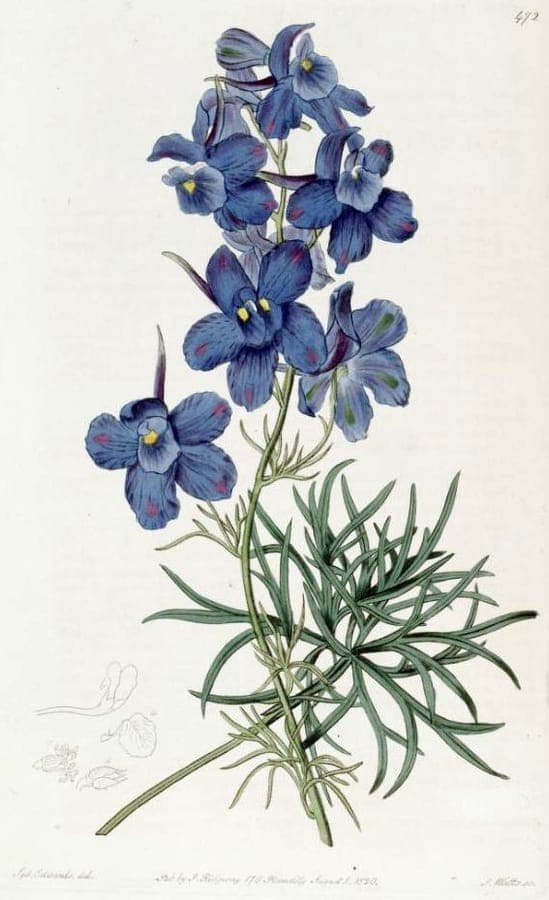
Sydenham Edwards / Public domain, via Wikimedia Commons
Delphinium: complete guide
Delphinium grandiflorum
Want to see Delphinium: complete guide in your garden?
Full design in HD: €7.99
Look after your Delphinium with the GardenWorld app
Identify plants with your camera and get a care calendar with reminders for this plant.


Overview
The Delphinium (Delphinium grandiflorum), also called Siberian Larkspur, is a magnificent perennial renowned for its deep blue flowers. This plant, native to Siberia and northern China, adds refined elegance to any garden border or cut-flower arrangement.
Under the right conditions, the plant reaches heights of 50 to 100 centimeters with densely packed flowers along tall stems. The blooming period extends from June to August, providing prolonged color display.
Appearance & Bloom
The Delphinium distinguishes itself through characteristic, elegantly lobed foliage and impressive flower spikes. The plant grows upright with thin, sturdy stems.
The flowers are the star of the show. They feature a deep blue color, sometimes with white or pink varieties. Each flower is approximately 3 to 4 centimeters large and features a distinctive spur. Flowers are arranged in dense, conical spikes.
After blooming, seed capsules form that can remain decorative until season's end. Foliage stays attractively green throughout the growing season.
Ideal Location
The Delphinium thrives best in warm, sunny locations with at least 6 hours of direct sunlight daily. Afternoon shade can prevent flowers from opening too quickly.
The plant tolerates wind poorly due to its slender stems. Place it in a sheltered spot, possibly behind lower-growing plants that provide support.
A cool, moist summer is ideal. In hot, dry regions, the plant may wilt prematurely.
Soil
The Delphinium thrives best in well-draining, nutrient-rich soil with a pH of 6.0 to 7.5. It prefers neutral to slightly alkaline soil.
Heavy clay soils should be amended with sand and organic material. Ensure the soil does not become waterlogged.
A top dressing of compost in spring provides extra nutrition and improves soil structure.
Watering
The Delphinium needs regular moisture, especially during dry periods. Keep the soil consistently moist but not waterlogged.
Water at the base of the plant, not on the leaves, to prevent fungal diseases. In hot periods, daily watering may be necessary.
During the blooming period, consistent moisture is essential for prolonged flowers.
Free preview
Want to see Delphinium: complete guide in your garden? Make a free preview of your design.
Pruning
The Delphinium benefits from regular maintenance to improve appearance. Remove wilted flowers regularly to encourage continued blooming.
When the plant dries out at season's end, cut it back to 10 centimeters above ground. This helps prepare the plant for next season.
Young plants can be pinched when about 15 centimeters tall, encouraging branching and fuller growth.
Maintenance Calendar
Spring (March-May): Clean up the plant by removing old, dead stems. Water regularly as growth begins. Support tall varieties with stakes.
Summer (June-August): This is the blooming period. Ensure consistent moisture. Remove wilted flowers regularly. Feed to support blooming.
Autumn (September-October): Leave seedheads for decoration until they turn brown. In early October, cut the plant back.
Winter (November-February): The plant rests. No special maintenance needed. Limited feeding if desired.
Winter Hardiness
The Delphinium is fully winter-hardy in temperate climates. The plant tolerates frost of -15 to -20 degrees Celsius without problems.
In very wet winters, crown rot can occur. Well-draining soil is therefore essential. In heavy clay areas, raising the planting location is advisable.
Dieoff after frost is normal and not a problem, as the plant regrows from the roots.
Companion Plants
The Delphinium works beautifully with other perennials in borders. Good combinations include:
Low-growing plants like fairy wand, coneflower, and pink flamingo accent the blue color.
White flowers like bugbane or yarrow create attractive contrast.
Cut flowers like roses, lilies, and baby's breath pair well with Delphinium in bouquets.
Closing Thoughts
The Delphinium is an essential plant for those wanting elegance and color in their border. With attention to drainage, moisture, and regular maintenance, this plant delivers beautiful blue flowers for years. A classic that never goes out of style.
Looking for plant material? Visit gardenworld.app/en or gardenworld.app/nl for more information and resources.
Frequently asked questions about Delphinium
Is Delphinium winter hardy?
The Delphinium is fully winter-hardy in temperate climates. The plant tolerates frost of -15 to -20 degrees Celsius without problems.
When and how do you prune Delphinium?
The Delphinium benefits from regular maintenance to improve appearance. Remove wilted flowers regularly to encourage continued blooming.
How much water does Delphinium need?
The Delphinium needs regular moisture, especially during dry periods. Keep the soil consistently moist but not waterlogged.
Where does Delphinium grow best?
The Delphinium thrives best in warm, sunny locations with at least 6 hours of direct sunlight daily. Afternoon shade can prevent flowers from opening too quickly.
What soil does Delphinium need?
The Delphinium thrives best in well-draining, nutrient-rich soil with a pH of 6.0 to 7.5. It prefers neutral to slightly alkaline soil.

See it in your garden
See Delphinium in your garden
One photo of your garden and a few questions. You see the result in about a minute.
Try it with a photoIdentify this plant in your own garden. Identify a plant
Similar plants
Chinese Aconite (Aconitum carmichaelii): complete guide
Aconitum carmichaelii
Everything about Chinese aconite (Aconitum carmichaelii): position, soil, pruning and care, plus clear advice on its severe toxicity to people and pets.
Bugbane (Actaea simplex): complete guide
Actaea simplex
Everything about bugbane (Actaea simplex): position, soil, pruning and hardiness of this shade-loving perennial with fragrant white spires in September and October.
Grecian windflower: complete guide
Anemone blanda
Everything about Grecian windflower (Anemone blanda): soaking and planting the tubers, position, soil, March to April flowering and naturalising. Tips for a blue carpet.
