
Dlarsen / Public domain, via Wikimedia Commons
Datura wrightii: complete guide
Datura wrightii
Want to see Datura wrightii: complete guide in your garden?
1 minute, no credit card
Overview
Datura wrightii, commonly known as Sacred thorn-apple or Hairy thorn-apple, is a remarkable plant native to the American Southwest and northern Mexico. This member of the Solanaceae family (nightshade family) is renowned for its large, fragrant white flowers that open in evening hours. The plant produces a distinctive nocturnal fragrance that attracts insects and creates an unforgettable sensory experience in the garden.
Although relatively low-maintenance and drought-tolerant, it must be noted that Datura wrightii is highly toxic - all plant parts contain toxic alkaloids. This makes the plant unsuitable for gardens with young children or pets. With proper placement and necessary precautions, however, this plant can provide a spectacular addition to a botanical garden.
Appearance and bloom
Datura wrightii grows as a shrub reaching 60 to 120 centimeters in height. Leaves are dark green, rough-textured, and arranged opposite one another. The leaf surface displays a hairy, spongy texture that gives the plant its "hairy thorn-apple" common name.
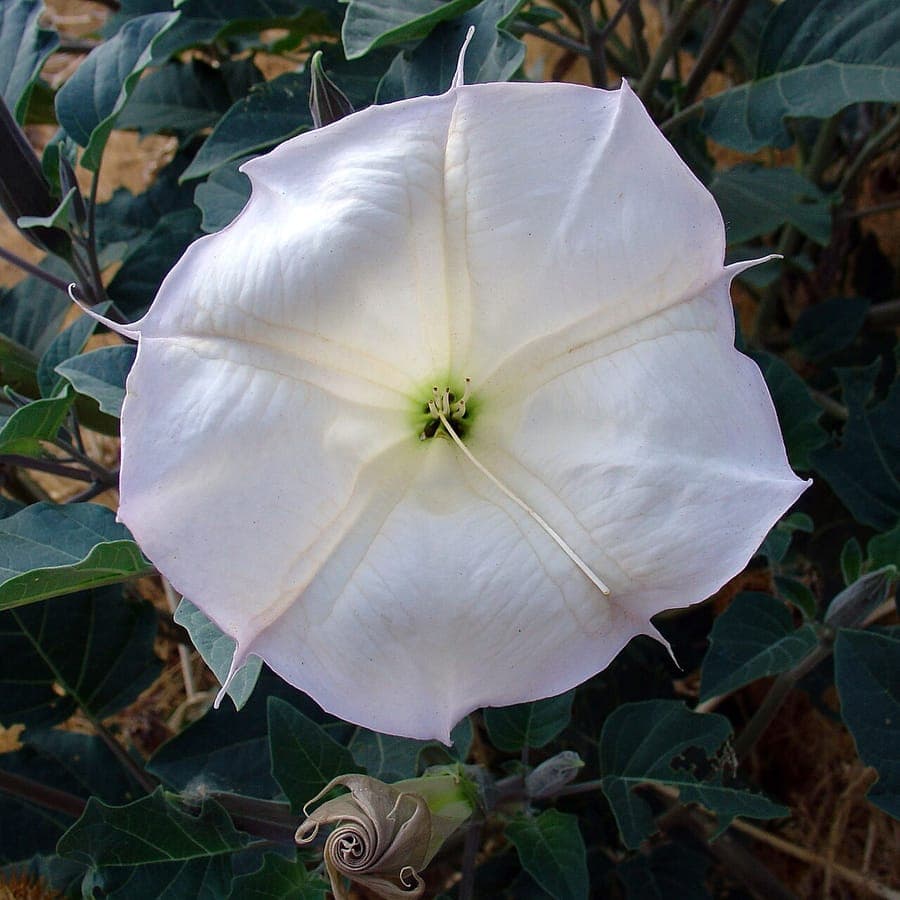
The flowers are the true highlight - large white trumpet-shaped blooms reaching up to 20 centimeters in length. These flowers open primarily in evening hours, releasing a strong sweet vanilla-like fragrance. Following pollination, distinctive spiky seed capsules form that curl downward as they mature. These unique seed pods also serve decorative purposes in dried arrangements.
Ideal location
Datura wrightii performs best in full sun to light shade. The plant requires at least 4-5 hours of direct sunlight daily for optimal blooming. In northern regions with shorter summers, full sun exposure is essential for reliable flowering.
The plant thrives in warm, dry locations and works excellently for xeriscaping projects. Position the plant where you can enjoy the fragrance during evening hours - near patios, terraces, or open bedroom windows is ideal. Avoid locations where children or pets can easily access it, due to toxicity concerns.
Soil
Datura wrightii is not particular about soil type and grows in most soil conditions. The plant performs best in well-draining soil ranging from dry to moderately moist. Heavy clay soils can lead to root rot, so amend with sand or perlite if drainage is poor.
The plant tolerates acidic to neutral pH (6.0-7.5). Fertilization is not essential - in fact, overly rich soils can promote excessive leaf growth at the expense of flowers. Lean soil is actually preferable to highly enriched soil for optimal bloom production.
Watering
Once established, Datura wrightii is notably drought-tolerant. During the growing season, especially during hot periods, water regularly until the plant becomes fully rooted. Once well-established (after 1-2 seasons), watering can be reduced significantly.
The plant endures extended dry periods without difficulty. Avoid overwatering and ensure good drainage to prevent root rot. In regions with regular rainfall, the plant can be maintained by rainwater alone after the first growing season.
Free design
Want to see Datura wrightii: complete guide in your garden? Make a free design now.
Pruning
Datura wrightii requires minimal pruning. The plant naturally assumes an attractive shrub form. Remove only dead branches or excessively long shoots to maintain shape. Pruning is best performed in spring before new growth begins.
Exercise caution when pruning - wear gloves, as all parts are toxic. Avoid contact with eyes or mouth and wash thoroughly afterward. If the plant becomes too large, the base can be carefully thinned to improve air circulation.
Maintenance calendar
Spring (March-May): Begin watering as the growing season starts. Plant can now be positioned outdoors or in containers. Remove any dead branches.
Summer (June-August): Maintain regular watering, especially during heat waves. Enjoy evening fragrance and night blooms. Monitor for insect pests. Prevent seed setting by removing spent flowers if desired.
Autumn (September-October): Gradually reduce watering frequency. Flowering continues. Collect seed for future propagation or remove to prevent self-seeding.
Winter (November-February): Minimize watering. In harsh climates, bring indoors or provide protection. Plant will die in very cold regions.
Winter hardiness
Datura wrightii is not winter-hardy in northern climates. The plant dies when temperatures fall below freezing. In severe winters, the plant will perish even with protection in most northern European gardens. The plant may, however, regrow from seed in the following season.
In temperate climates, the plant may survive winter outdoors if well-protected and winters remain mild. A thick mulch layer can help. For reliable perennial growth in cold regions, container cultivation with indoor winter storage is recommended.
Companion plants
Datura wrightii pairs well with other drought-tolerant, heat-loving plants. Consider rosemary, lavender, sage, and other Mediterranean herbs. Gray-green groundcovers provide attractive contrast.
Ornamental grasses and succulent plantings add textural interest. Ensure all companion plants share similar water and climate preferences. Avoid placing edible plants in close proximity due to toxicity. Maintain adequate spacing to keep the Datura clearly separated from other plantings.
Closing
Datura wrightii is certainly not for every garden, but in the right location this plant provides an unforgettable addition filled with enchanting evening fragrance and spectacular blooms. As long as you remain aware of toxicity and take precautions, this plant can provide years of enjoyment. The nocturnal bloom pattern makes it perfect for gardens primarily enjoyed during evening hours. For those with botanical interests and proper safety measures, Datura wrightii is certainly worth attempting.
Want to see Datura wrightii: complete guide in your garden? Make a free design now.
Upload a photo, pick a style, and get a photorealistic design with plant list in under a minute.
10,000+ gardens designed already
No credit card required


Similar plants
Solanum dolichosepalum: complete guide
Solanum dolichosepalum
Discover Solanum dolichosepalum, an Andean nightshade with striking long sepals. Growing tips, hardiness, and companion planting for your patio.
Solanum ripense: complete guide
Solanum ripense
Discover Solanum ripense, a moisture-loving Andean nightshade for pond edges and conservatories. Growing tips, hardiness, and companions.
Solanum tomentosum: complete guide
Solanum tomentosum
Discover Solanum tomentosum, a thorny South African nightshade with felted leaves. Growing tips, hardiness, and companion planting ideas.