
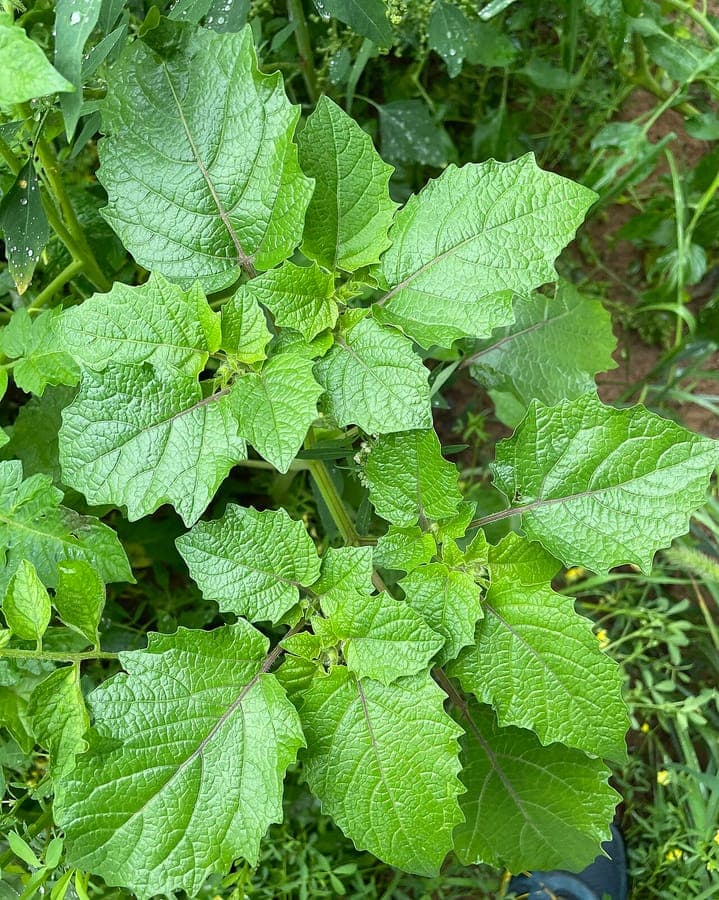
Anastasiia Merkulova / CC BY 4.0, via Wikimedia Commons
Strawberry ground-cherry: complete guide
Physalis grisea
Want to see Strawberry ground-cherry: complete guide in your garden?
1 minute, no credit card
Overview
Physalis grisea, commonly called strawberry ground-cherry, hairy ground-cherry or strawberry-tomato, is an annual or short-lived perennial herb in the Solanaceae family - the same family as tomatoes, peppers and potatoes. The species is closely related to the ornamental Chinese lantern (Physalis alkekengi) and the Cape gooseberry (Physalis peruviana), but is less familiar in European gardens than either relative.
The botanical name refers to the grey, hairy appearance of the plant: 'grisea' means grey in Latin, describing the dense, soft pubescence covering the stems and leaves. The common name 'strawberry ground-cherry' refers to the flavour of the ripe fruits, which connoisseurs describe as sweet, aromatic and reminiscent of strawberries, pineapple or vanilla - a delightful surprise for anyone tasting them for the first time.
The plant is native to the central and eastern United States, from Texas and Florida in the south to New York and Vermont in the north. During the twentieth century it was introduced to Europe as a vegetable and ornamental plant, where it is cultivated on a small scale, mainly by enthusiasts of unusual edible plants. On gardenworld.app you can find ideas about how plants like this can create a productive corner in your kitchen garden or mixed border.
Physalis grisea is botanically related to the better-known tomatillo (Physalis philadelphica) used widely in Mexican cuisine. The ripe fruits of Physalis grisea have a sweeter flavour and are better suited to fresh eating, jam-making or desserts than to pungent salsas.
Appearance and bloom cycle
Physalis grisea is a compact, densely branched plant reaching 30-60 cm in height and spread. The stems are angular in cross-section, yellow-green, and covered with a dense layer of soft, greyish hairs - the characteristic that gives the species its name. The leaves are ovate to heart-shaped, 4-8 cm long, with a wavy margin, and similarly hairy on both surfaces, though more so underneath.
The flowers appear in the leaf axils and are relatively inconspicuous: yellow with a dark purple-brown central spot, about 1 cm across, and nodding. Flowering continues from June to September, with the plant producing new flowers steadily through the season. The fruit begins as a small, papery lantern 2-4 cm across - the characteristic husk shared by all Physalis species. As it ripens, this husk changes from green through beige to light brown, becoming dry and papery. The fruit inside is a small, smooth berry 1-2 cm in diameter, ripening from green through yellow to orange-red.
Ripe fruits have a pleasant sweet-aromatic scent. Unripe fruits and the husks contain alkaloids and must not be consumed; wait until the papery husk is completely brown and dry before harvesting the berry inside.
Ideal location
Physalis grisea thrives in a warm, sunny position. In its native range in the US it grows on open, dry to moderately moist ground: roadsides, gardens and disturbed ground. In cooler, wetter North-Western European climates, a warm, sheltered position is essential.
Recommended situations:
- A south-facing border or kitchen garden, ideally in front of a wall or fence that reflects heat
- A greenhouse or polytunnel for maximum productivity and earlier ripening
- Large containers on a warm, sunny terrace or balcony
- A cold frame or unheated glasshouse for the earliest start
The plant is not frost-resistant: all Physalis species are annual in North-Western Europe and must be raised from seed each year. Start seeds indoors early (February-March) to allow sufficient time for fruits to ripen, which requires 70-90 days from flowering in a typical growing season.
Soil
Physalis grisea is not demanding in terms of soil quality but performs best in a light to moderately fertile, free-draining medium. A pH of 6.0-7.0 is ideal. The plant does not tolerate heavy, waterlogged clay: wet roots lead to root rot and sharply reduced productivity.
Good soil preparation for the kitchen garden:
- Work compost or well-rotted manure into the top 20 cm of soil before planting
- Add coarse sand or perlite to heavy soil if necessary to improve drainage
- Mulch the root zone with straw or wood chip to reduce moisture loss and suppress weeds
In pots, use a good-quality, open potting mix with 20 per cent perlite or coarse sand added. Do not reuse the same potting mix from the previous year for Physalis, as pathogens can persist in the substrate.
Watering
Physalis grisea has moderate water needs. It does not tolerate prolonged drought - which causes flower and fruit drop and reduced yields - nor persistent waterlogging. Regular, even watering is the key.
In the kitchen garden: water when the top 2-3 cm of soil feels dry. During dry spells this typically means two or three times per week. Avoid wetting the foliage to prevent fungal disease; water at the base of the plant, preferably in the morning so the plant has adequate moisture during the day but the soil is not excessively wet overnight.
In pots, more frequent watering is needed, sometimes daily during hot weather. Always check the growing medium first: insert a finger and water when the soil at 2 cm depth feels completely dry. Overwatering is a common mistake that leads to yellowing leaves and root rot.
Drip irrigation is an excellent method for Physalis in the kitchen garden: it keeps foliage dry, delivers water exactly where needed and reduces labour.
Free design
Want to see Strawberry ground-cherry: complete guide in your garden? Make a free design now.
Pruning
Physalis grisea requires minimal pruning. The plant branches naturally and freely and does not need intensive cutting. Useful interventions include:
- Thinning shoots: Remove excess shoots early in growth to keep the plant open and airy. Good air circulation reduces the risk of fungal disease.
- Removing diseased leaves: Remove affected leaves immediately to prevent the spread of disease.
- Topping: As with tomatoes, removing the growing tip above the fifth or sixth lateral shoot directs the plant's energy to already-set fruits. This is optional but useful if the season is running short.
- After harvest: The plant is annual; clear the spent plants after the season ends and compost them. Do not leave fallen fruits on the ground, as they may self-seed and appear as volunteers the following year.
Maintenance calendar
- January - February: Order seed. Choose a reputable supplier; seed saved from your own ripe fruits the previous year also works well.
- February - March: Sow indoors on a warm windowsill or under grow lights. Germination temperature 20-24 degrees Celsius. Pot on when seedlings have two true leaves.
- April - May: Harden off plants outdoors during the day; bring in if frost threatens overnight. Plant out permanently after mid-May in a sheltered, sunny position.
- June - August: Main growth and flowering period. Water regularly; feed with a potassium-rich liquid fertiliser (tomato feed) every two weeks. Fruits develop slowly.
- August - September: Harvest the first ripe fruits when the papery husk is brown and dry. Continue harvesting until the first frost.
- October - November: After the first frost, clear the plants and compost them.
Winter hardiness
Physalis grisea is not frost-resistant. All green parts die at the first frost, typically in October in North-Western Europe. In its home range in the central US, the plant can sometimes survive as a short-lived perennial, but in the North-Western European climate it is strictly annual.
No protection measures can carry the plant through a Dutch or Belgian winter. The only way to grow the species year after year is to re-sow each late winter or early spring. Save seed from the ripest fruits of the previous season: allow them to ripen fully, remove the flesh, rinse the seeds thoroughly and allow them to dry completely before storing in a paper envelope in a cool, dry place. Seed remains viable for 2-4 years.
In pots, the plant can be brought indoors before the first frost to extend ripening. On a bright windowsill at 15-18 degrees Celsius, fruits will continue to ripen for several weeks. At gardenworld.app you can plan your kitchen garden and visualise how annual edible plants like Physalis grisea fit alongside perennials and other vegetables in a coherent design.
Companion plants
Physalis grisea combines well with other warm-season annuals and vegetables in the summer garden or kitchen garden:
- Solanum lycopersicum (tomato): same family, similar requirements for warmth, sun and fertile soil. Both thrive together in a greenhouse or polytunnel.
- Capsicum annuum (pepper): also Solanaceae, heat-loving, a good companion in the greenhouse.
- Ocimum basilicum (basil): a herb that thrives alongside Physalis and pairs well with the sweet fruits in the kitchen.
- Tagetes patula (French marigold): repels soil nematodes that can affect Solanaceae, making it a valuable kitchen garden companion.
- Courgette / zucchini: fills space alongside Physalis and has similar warmth and water needs.
- Physalis alkekengi (Chinese lantern): a close relative grown for its large, ornamental orange husks in autumn.
Closing
Physalis grisea is a rewarding novelty for the adventurous kitchen gardener. The sweet-aromatic fruits - eaten fresh off the plant, made into jam, caramelised as a dessert or roasted in a savoury salad - surprise and delight at first encounter. The plant is straightforward to grow in a warm, sunny position and produces a generous harvest of the small, papery-wrapped fruits in an average summer. Seed is available from specialist seed suppliers and heirloom seed companies. Grow this lesser-known Physalis species alongside more familiar vegetables and discover a new dimension of flavour in your kitchen garden. Garden centres such as those found across the UK and Europe occasionally stock young plants in season as an interesting alternative to the more widespread Cape gooseberry.
Want to see Strawberry ground-cherry: complete guide in your garden? Make a free design now.
Upload a photo, pick a style, and get a photorealistic design with plant list in under a minute.
10,000+ gardens designed already
No credit card required


Similar plants
Solanum dolichosepalum: complete guide
Solanum dolichosepalum
Discover Solanum dolichosepalum, an Andean nightshade with striking long sepals. Growing tips, hardiness, and companion planting for your patio.
Solanum ripense: complete guide
Solanum ripense
Discover Solanum ripense, a moisture-loving Andean nightshade for pond edges and conservatories. Growing tips, hardiness, and companions.
Solanum tomentosum: complete guide
Solanum tomentosum
Discover Solanum tomentosum, a thorny South African nightshade with felted leaves. Growing tips, hardiness, and companion planting ideas.