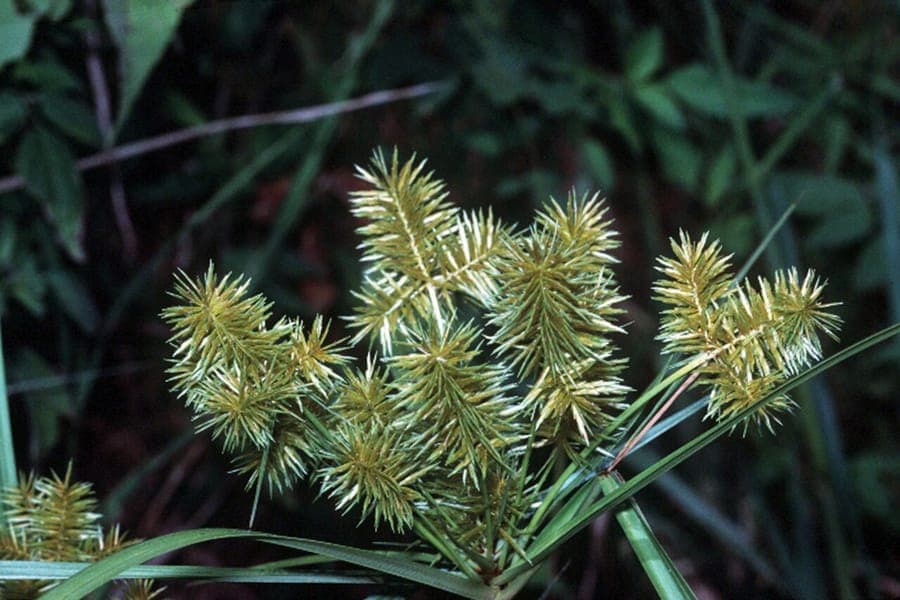
Robert H. Mohlenbrock / Public domain, via Wikimedia Commons
Cyperus strigosus: complete guide
Cyperus strigosus
Want to see Cyperus strigosus: complete guide in your garden?
Full design in HD: €7.99
Look after your Cyperus strigosus with the GardenWorld app
Identify plants with your camera and get a care calendar with reminders for this plant.


Overview
Cyperus strigosus, commonly called False Nut Sedge or Straw-colored Flatsedge, is a North American sedge from the Cyperaceae family. Native from Canada through the United States to Cuba, this plant offers unique visual appeal with fine foliage and showy red fruits.
Appearance and Bloom
The plant displays bunch-form growth with slender, consistently green foliage. Brown flowers are inconspicuous, but distinctive red fruits become the main attraction, creating vibrant color against green leaves. The plant achieves moderate height and self-seeds readily in suitable conditions.
Ideal Location
False nut sedge thrives in half-shade to full sun along water margins, in seasonally inundated grasslands, and at marsh transitions. The plant tolerates variable groundwater levels and performs best where seasonal flooding occurs. Allow space for natural self-seeding.
Soil
This sedge grows on slightly acidic to neutral substrate (pH 6.4-7). Soil fertility is not critical but moderate nutrients (5 on 10-scale) yield best results. Water drainage can be moderate - the plant prefers seasonally wet to moist ground. Heavy clay soils perform well.
Watering
During growing season (May-October) water regularly - 2-3 times weekly in dry periods. The plant tolerates winter drying well. Resume watering when growth restarts (April). In garden settings, regular misting supports establishment.
Pruning
Pruning is minimal. Remove dead foliage before growing season (late March-April). After seed ripening (October-November), remove spent seed heads unless you want self-seeding. Allow natural bunch form to develop.
Free preview
Want to see Cyperus strigosus: complete guide in your garden? Make a free preview of your design.
Maintenance Calendar
April: Begin growing season, start regular watering and feeding. May-June: Full growth, water 2-3 times weekly. July-August: Flower preparation, monitor moisture. September-October: Fruit set, allow seeds to ripen for sowing. November-February: Minimal care, water only during prolonged drought. March: Clean dead material, prepare for new season.
Winter Hardiness
Cyperus strigosus is moderately hardy - survives to -2 degrees in temperate climates. In Netherlands and Belgium it tolerates mild winters but temperatures below -5 degrees risk damage. Deeper water features (80+ centimeters) prevent winter mortality. Many populations self-seed annually for renewal.
Companion Plants
False nut sedge pairs beautifully with other North American marsh plants like yellow loosestrife, white marsh St. John's-wort, and various buttercup species. Smaller sedges provide fine textural contrast. In wild gardens, combine with reeds, arrowhead, and marsh ironweed.
Final Thoughts
Straw-colored flatsedge deserves wider recognition in North European gardens. With minimal care requirements, self-seeding ability, and persistent red fruits providing year-round bird food, this sedge offers lasting ecological and aesthetic value. Perfect for wild water features and ecological garden designs. Available at Intratuin and Gamma.
Design wild water features with gardenworld.app for more inspiration and plant combinations!
Frequently asked questions about Cyperus strigosus
Is Cyperus strigosus winter hardy?
Cyperus strigosus is moderately hardy - survives to -2 degrees in temperate climates. In Netherlands and Belgium it tolerates mild winters but temperatures below -5 degrees risk damage.
When and how do you prune Cyperus strigosus?
Pruning is minimal. Remove dead foliage before growing season (late March-April).
How much water does Cyperus strigosus need?
During growing season (May-October) water regularly - 2-3 times weekly in dry periods. The plant tolerates winter drying well.
Where does Cyperus strigosus grow best?
False nut sedge thrives in half-shade to full sun along water margins, in seasonally inundated grasslands, and at marsh transitions. The plant tolerates variable groundwater levels and performs best where seasonal flooding occurs.
What soil does Cyperus strigosus need?
This sedge grows on slightly acidic to neutral substrate (pH 6.4-7). Soil fertility is not critical but moderate nutrients (5 on 10-scale) yield best results.

See it in your garden
See Cyperus strigosus in your garden
One photo of your garden and a few questions. You see the result in about a minute.
Try it with a photoIdentify this plant in your own garden. Identify a plant
Similar plants
Carex conica: a small evergreen sedge for edges
Carex conica
Carex conica is a compact evergreen sedge from Japan and Korea. A guide to 'Snowline', where to plant it, soil, tidying, dividing and how hardy it really is.
Carex oshimensis: the evergreen striped sedge
Carex oshimensis
Carex oshimensis is an evergreen Japanese sedge with fine, striped leaves. How to plant, place, tidy and divide 'Evergold' and the EverColor series in your garden.
Orange New Zealand sedge (Carex testacea): a guide
Carex testacea
Orange New Zealand sedge (Carex testacea) turns copper and orange in sun and cold. Where to plant it, which soil it likes, how to tidy it and how hardy it is.
