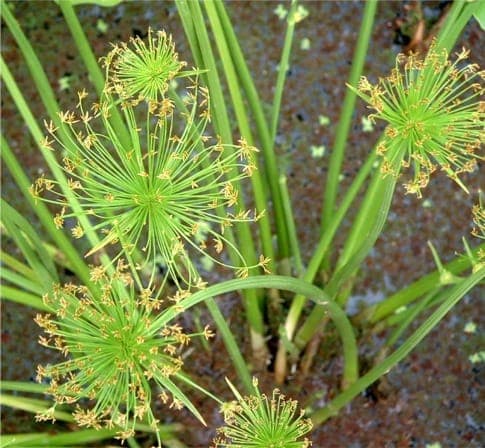
Wikimedia Commons / Cc-by-sa-3.0, via Wikimedia Commons
Cyperus haspan: complete guide
Cyperus haspan
Want to see Cyperus haspan: complete guide in your garden?
Full design in HD: €7.99
Look after your Cyperus haspan with the GardenWorld app
Identify plants with your camera and get a care calendar with reminders for this plant.


Overview
Cyperus haspan, also called dwarf papyrus sedge or papyrus plant, is an elegant water-loving plant from tropical and subtropical regions worldwide. This plant is a much smaller cousin of the famous papyrus (Cyperus papyrus), forming elegant, leafless stems topped with distinctive umbrella-like clusters.
The plant grows to 60-90 centimeters and is perfect for pond margins, marsh gardens, container cultivation, and shallow water features. In temperate climates it's grown as a houseplant or seasonal plant since it lacks winter hardiness. This is a unique addition for anyone wanting tropical flair in their garden.
Appearance & Bloom
Cyperus haspan distinguishes itself through characteristic form. The plant consists of long, leafless stems (culms) growing upright from wet or moist soil. Atop each stem radiates a distinctive leaf cluster (involucrum) creating an iconic "umbrella" or "palm" shape.
Flowers appear between leaflets and are small, yellow-brown, and visually unremarkable compared to the plant's architectural form. The real appeal is structure - fine, grass-like, elegant, and highly ornamental. The plant grows continually during warm seasons.
Ideal Location
Cyperus haspan thrives in very wet, sometimes underwater conditions. This is no drought-lover. Plant directly along water - pond, stream, or artificial water basin. In normal gardens it works best in very moist, even wet spots.
Sun is preferred for vigorous growth - minimum 4-6 hours daily sunlight. The plant tolerates partial shade but grows more compactly and slowly. Shade results in weak, thin stems.
Soil
Cyperus haspan is undemanding regarding soil type provided it remains wet. The plant grows in pure mud, wetland substrate, and even underwater media. Add abundant organic matter (compost, peat moss) to maximize moisture retention.
The plant feels at home in neutral to slightly acidic soil. pH 6-7 is ideal. In more alkaline soils growth is diminished.
Free preview
Want to see Cyperus haspan: complete guide in your garden? Make a free preview of your design.
Watering
Cyperus haspan requires far more water than most plants - it essentially must stay constantly wet. Ideal is permanent water (10-20 centimeters depth) in which the plant stands. It can also grow in very moist potting soil if watered daily.
In containers: fill a saucer permanently with water so the pot root zone stays constantly moist. Never allow drying - this kills the plant.
In winter, if kept indoors, slightly less water, but always moist.
Pruning
Cyperus haspan requires minimal pruning. Remove only dead, brown stems as you spot them. This stimulates new growth. The plant continuously produces new stems from underground rhizomes.
You can cut the plant back in spring if you want to keep it more compact - cut to roughly 30 centimeters and it regrows quickly.
Maintenance Calendar
March-April: Start plant in warm conditions. Regular water from day one.
May-September: Growing season. Regular water, weekly feeding at moderate strength.
October-November: Slower growth. Reduce water slightly but keep moist.
December-February: Rest period (especially indoors). Keep consistently moist. Minimal feeding.
Winter Hardiness
Cyperus haspan lacks winter hardiness - it cannot tolerate frost. In temperate climates, overwinter it indoors:
- Dig up roots in October
- Store in moist sand/peat in cool (10-15°C) location
- Water lightly monthly
- Replant in May after frost danger
Alternatively: treat it as annual and replant seasonally.
Companion Plants
Pair Cyperus haspan with other water plants:
- Pontederia: Beautiful blue flowers, similar moisture needs
- Acorus: Green grass-like contrast
- Louisiana iris: Colorful flowers, water-loving
- Thalia: Even more tropical, much larger
Combining different sedge types creates much greater visual texture.
Closing Thoughts
Cyperus haspan appeals to tropical plant enthusiasts and water gardeners. This elegant sedge brings African and Asian atmosphere to your garden. Plant it along a small water basin or in wet containers and enjoy its architectural beauty year-round.
Discover more water plants and aquatic garden designs at gardenworld.app. Cyperus haspan can be grown from rhizome fragments or seed, available from water plant suppliers.
Frequently asked questions about Cyperus haspan
When and how do you prune Cyperus haspan?
Cyperus haspan requires minimal pruning. Remove only dead, brown stems as you spot them.
How much water does Cyperus haspan need?
Cyperus haspan requires far more water than most plants - it essentially must stay constantly wet. Ideal is permanent water (10-20 centimeters depth) in which the plant stands.
Where does Cyperus haspan grow best?
Cyperus haspan thrives in very wet, sometimes underwater conditions. This is no drought-lover.
What soil does Cyperus haspan need?
Cyperus haspan is undemanding regarding soil type provided it remains wet. The plant grows in pure mud, wetland substrate, and even underwater media.

See it in your garden
See Cyperus haspan in your garden
One photo of your garden and a few questions. You see the result in about a minute.
Try it with a photoIdentify this plant in your own garden. Identify a plant
Similar plants
Carex conica: a small evergreen sedge for edges
Carex conica
Carex conica is a compact evergreen sedge from Japan and Korea. A guide to 'Snowline', where to plant it, soil, tidying, dividing and how hardy it really is.
Carex oshimensis: the evergreen striped sedge
Carex oshimensis
Carex oshimensis is an evergreen Japanese sedge with fine, striped leaves. How to plant, place, tidy and divide 'Evergold' and the EverColor series in your garden.
Orange New Zealand sedge (Carex testacea): a guide
Carex testacea
Orange New Zealand sedge (Carex testacea) turns copper and orange in sun and cold. Where to plant it, which soil it likes, how to tidy it and how hardy it is.
